Skip to content

Outline an Argument (Technical Writing Exercise)

Business Writing Exercise

Business Writing Exercise

This week we finish our series on document structure, so I’d like us to take a moment to remember what that structure looks like.

For your writing exercise this week, I want you to outline an argument. This argument can be the thesis of an essay or a defense of your position vis a vis your roommate’s dirty dishes. It can be the message of a document you’re working on right now, or a proposal you’ve been wanting to make to your boss.

Whatever the point you’re trying to make, you can make it stronger with a little structural design. So make an outline! Big Roman numeral I is “Introduction,” so use your A, B, and C to describe how you’re going to introduce your topic. Then give another numeral for each of your body points — supporting evidence — and draw your argument’s conclusion within your document’s conclusion.

As you build your argument, pay careful attention to the order and relationship among your body points, and see how it compares to last week’s discussion of organization methods.

When you’re finished, share your argument with us on the discussion board. I’ll let you know if I’m convinced.

Courtney’s Work-In-Progress Update

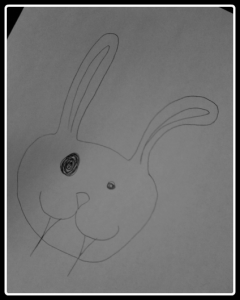
The notorious fanged demon bunny

The notorious fanged demon bunny

A Sucker Born Every Minute

When Aaron and I were discussing in what way I would be contributing to this blog, I told him he was allowed to give me one (1) assignment. He acknowledged this, seemed to agree to my terms–and then proceeded to give me assignments numbering two. That’s (2), if you were wondering. If I weren’t a sucker for invitations to (a) share openly about my work and (b) talk up books I enjoy reading, I would have stuck to my guns and picked only one of the two.

But I’m a reader and a writer. I love books, and I derive great satisfaction from acquainting others with these rectangular worlds I so adore. If my recommendation sparks someone’s interest in a certain book, it’s like introducing a new friend to an old friend and seeing them hit it off. And I also love writing. We writers don’t often get the chance to ramble on and on about the people and worlds that exist nowhere but in our own heads. Generally, our fellow writers are the only ones who’re interested…and even they tend to get the glazed-donut-look in their eyes after we’ve monologued for half an hour. Or less. So when Aaron informed me that one of my assignments was to update the world at large about how my current novel is going…you’d better believe I jumped at that chance like a kangaroo at a sock hop.*

But no worries, Gentle Reader. Though I’m thrilled to have the opportunity to tell you about my work-in-progress, I promise not to push you to the donut point. Prudence, thy name is brevity; I shall endeavor to abide by that.

I also promise to keep the ( ) and the … and the — to a minimum. Onward!

The Working Title

Until several days ago, the working title of the work-in-progress was the grammatically incorrect SHADOWS BURNING DARK. Thanks to a Facebook status update, in which I invited friends to compare several titles and vote on their favorites, the working title changed to THE OTHER SIDE OF MIDNIGHT, which in turn changed to SHADOWS AFTER MIDNIGHT. Working titles are funny things: They can feel rather set-in-stone; they are, in fact, quite susceptible to weather (i.e. the writer’s mood); and, as far as editors are concerned, they are frequently moot. No matter how attached we writers might become to our working titles, we must bow to the authority of marketing departments and editors, who can predict the salability of a particular title far better than we can. ‘Tis a sad state of affairs, but ’tis the reality with which we must deal.

The Work-In-Progress

So, as of now, my working title is SHADOWS AFTER MIDNIGHT (henceforth, SHADOWS, in this post). SHADOWS is a paranormal (young?) adult novel about a demon-hunting college student named Peter. Peter belongs to a supernaturally gifted family that has spent millennia protecting humanity from–you guessed it–demons. His girlfriend, Holly, had a run-in with a demon last year, and now that same demon is back. Peter’s not sure if the demon is after Holly again, or if there’s a new target; either way, he has to get Holly and her friends out of reach as quickly as possible. There’s jealousy drama with his older brother, there’s a cousin who holds a grudge because Peter was responsible for her twin’s death ten years ago, and there’s a demon that manifests both as a horde of zombies and as a cartoon bunny with stiletto fangs. Great fun.

As of this posting, SHADOWS consists of approximately 58,000 words. My guess is that I’ll wrap up the first draft somewhere in the neighborhood of 80k. I’m working from an outline that tells me I’ll have fifteen chapters when I’m finished. So far, eight chapters are complete, four chapters are partially complete, and three chapters consist of nothing more than summary headings. Of the eight completed chapters, three are at the beginning, and two reside somewhere toward the middle. The other three, Chapters 12, 13, and 14, lead up to and contain the novel’s climax. Currently, I’m trying to finish Chapter 14, which involves extricating Our Hero from zombie clutches. And he has to rescue the girl and his brother and his friends. Or maybe the brother rescues him. I’m really not clear on that point yet. Furthermore, I suspect that one of the main players is about to die, but I don’t know who. Will it be the damsel in distress? The heavy metal drummer? The snarky kid sister? Or the Tragic Representative Of Redemption from Book One? (Ah, yes, there’s a Book One. SHADOWS, Gentle Reader, happens to be Book Two. Have I not mentioned that?) And what if I don’t want them to die, but they do anyway?

The Confusion

Such is the beauty of the work-in-progress. You get it all worked out in the outline. You know exactly who’s going to do what, and when, and where, and especially why. And then you start writing the first draft…and if you’re doing your job as a writer, you won’t “keep your feet” (thank you, Bilbo), and your characters will take over your story without so much as a by-your-leave. This is the reason I must doubt the prognosticative powers of my outline. Peter and Holly, the demons and their friends–their ideas are often different from mine. Their voices don’t always sound like what I imagined. They often say things I didn’t expect them to say, and they react to each other in ways I didn’t predict. In this, my first draft, I’m trying to listen to their voices, sort out who’s who, and follow where they lead me.

The most fun is when they take me where I never thought I could go. Where am I bound next? I haven’t a clue…but I’ll keep you posted!

*Kangaroo at a sock hop? Did I actually say that? Oy vey.

(But wait! There’s more! If you click on the link above–and here it is again for good measure–and if you buy a product, This Starving Artist will get a few bucks. Consider it your small contribution to The Arts. ;o)

Photo credit Courtney Cantrell.

Introductions Are in Order

Courtney Cantrell, contributing editor

Courtney Cantrell, contributing editor

Or perhaps I should call it a Character Description.

Whatever the case, I’m proud to announce UnstressedSyllables.com’s newest contributing author, Courtney Cantrell.

Courtney is the co-creator of our Facebook writer’s group, Mightier than the Sword, and one of my dear friends. Though we’d run in overlapping social circles for years, I met her through her private blog over on Blogger. Like me, she is an English / Writing Major from Oklahoma Christian University, and a long-time novelist.

Her art is achingly beautiful, her poetry is sometimes touching (always compelling), and her prose will make you sit up and pay attention. Her Triad series, in particular, is among the best traditional fantasy literature I’ve ever read (published or not).

All that to recommend her, and she’s agreed to help teach you for free. Count yourself lucky!

Courtney’s going to start off with a new weekend feature, “What I Learned about Writing this Week,” and also share some of her experiences as a full-time creative writer in her own articles. Please extend her as generous a welcome as you’ve given me, and let us both know what you think of her contribution to the site. I’m confident you’ll find it amazing.

Photo credit Courtney Cantrell.

Chart Your WIPs (Creative Writing Exercise)

Track the status of your projects as they move from shapeless rocks to beautiful works of art.

Track the status of your projects as they move from shapeless rocks to beautiful works of art.

WIPs, or Works-in-Progress, are often the favorite topics of creative writers. I realize now I was a fool to wait so long to invite you to talk about yours!

That’s this week’s Creative Writing exercise, though. In light of our recent discussion of the various stages of manuscript development, I want you to tell me what you’ve done. Have you written a first draft? Have you toiled through a month of prewriting and put 30,000 words on the page before your project’s inner fire flickered out? Have you finished six novels and hundreds of rounds of rewrites?

Let me know. If you’ve only got one WIP, tell me where you are with that one. If you’ve done more than one, chart it out. It can be amazingly useful to compare the different stages of writing and where you’ve spent your time on different projects. Compare the amount of prewriting you did to the amount of revision your manuscript needed, or to how many times you abandoned it along the way. Compare how many times you shared your document out for feedback with your completion rate.

Here’s a list of some of the things I’ve found useful:

Prewriting

How much prewriting did you do? If you want to sum up your prewriting in one sentence (“I did a lot of prewriting,” or “Prewriting is for pansies!”), feel free. I’ve been putting a bigger focus on prewriting in the last year or two, though, so for my chart, I broke it down into the major categories I’ve found important.

  • Character Descriptions. How many characters did you get sorted out before you started writing your WIP?
  • Scene Descriptions. How many scenes did you figure out before you started writing? I’m usually satisfied with a 1-2 paragraph description of what happens in the scene. (If you’re not used to working in scenes, you can count chapters instead.)
  • Sample Scenes. How many scenes did you write before you settled into writing the whole manuscript? This can include prologue scenes that didn’t make it in the final cut, exciting excerpts, or even brief stories about your characters or setting that were never meant to be a part of the finished manuscript.
  • Promotional Stuff. How many different ways did you try to describe your story idea? This includes both short and detailed plot synopses, teaser scenes, and even query letters.

Writing

How many times did you go back to the manuscript to write new material? This includes complete rewrites (I’ve had several novels where I threw out huge chunks of the source material and rewrote whole chapters from scratch), as well as major additions. If you’re not writing out at least a whole scene at a time, count it as “Rewrite” in the following category.

Reviews, Revisions, and Edits

I said yesterday that this is the part where you actually make your work of art, and it shows in the number of categories I give it. If you want to keep it brief, tell me how many times you’ve revised your document (reading through from start to finish, and making any changes at all). Tell me how many people you’ve shared it with, and if it’s finished now.

If you want to go into detail, these are the categories I used for my chart:

  • Read-through. How many times have you read the document from start to finish, with a focus on the reader’s experience (so only stopping to make minor notes or corrections along the way)?
  • Rewrite. How many times have you rewritten the document, making major changes to characters or plot? In my experience, most novels need at least one big rewrite, backfilling all the material you found out you needed by the end of the first draft, that you couldn’t have possibly known about when you first started.
  • Revisions. How many times have you gone through the document deliberately trying to improve the story’s flow? This is where you make changes to voice and style that give your document polish and shine.
  • Line- and Copy-Edits. How many times have you crawled through your document, an inch at a time, checking every sentence for grammatical errors, every word for typos? It’s a grueling process, and once you’re rich and famous you’ll be able to pay people to do this part for you, but until then it’s an important part of the process. (If you’ve got great test readers who catch a lot of your errors for you, you can certainly count their feedback in this column).

Dedication

In my chart I forgot to separate this into its own section, but it’s some of the information I find most useful, looking back through my old projects and trying to keep up with my current ones. For each project, tell me if it’s finished to your satisfaction, unfinished-but-in-progress, or unfinished and totally abandoned.

I’ve been working on this long enough that it’s insufficient to just say which state a project’s in now — I need to keep track of how many times it’s been in each state.

  • WIP Finished. How many times have you decided, with absolute certainty, that your project was finished, and you had no more work to do on it (apart from shopping it to editors and agents, anyway)?
  • WIP Abandoned. How many times have you decided, with absolute certainty, that your project was a complete waste of time, and not worth working on ever again? (To avoid artificial inflation, I only count the times that decision persisted for more than a week.)
  • WIP Resumed. How many times have you returned to your abandoned or languishing project and made real progress again?
  • WIP Rebooted. How many times have you returned to your abandoned or languishing project, skimmed over it to find the really great material, and then threw the bulk of it in the trash and started over from scratch? It’s an agonizing process — even worse than starting from nothing — and anyone who can get from WIP Rebooted to WIP Finished deserves a gold star.

So! Those are all the factors that I think matter. Feel free to add or subtract, and figure out where you stand with all your current writing projects. It can be a great motivator, but it can also be a valuable analytical tool. Keep your chart up to date, and it will help you learn where you lose interest, where you get your best work done, and which processes to avoid in your own writing career.

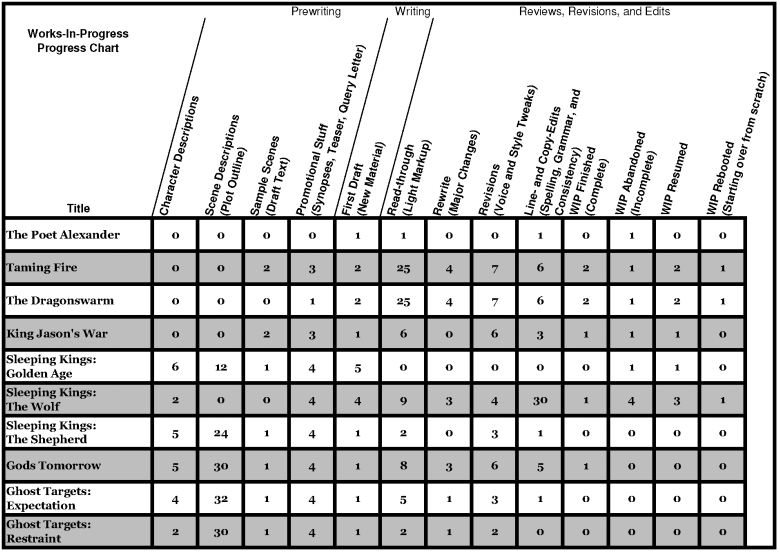
In case you’re curious, here’s mine (with some best-guess estimates on the older projects).

My current works in progress, in all their glory

My current works in progress, in all their glory

If that chart looks like it would actually be useful to you, you can get a PDF here (better for printing), or download the Excel spreadsheet template (in case you want to make some changes).

Feel like sharing yours? Tell us about it in the comments, or start a new thread over on the discussion board.

Writing in Drafts

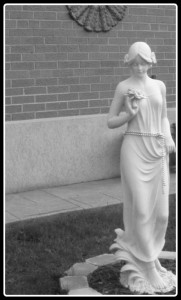
A marble masterpiece - worth the work (Courtesy PinkMoose on Flickr / CC BY 2.0)

Back in 2008, I was talking my good friend Julie into participating in National Novel Writing Month, and she expressed some concern that her writing wouldn’t be good enough. I thought about it for a moment, trying to figure out how to encourage her enough that she would go ahead with it, and at the same time admit that, y’know, her writing really wouldn’t be good enough. No point in setting the bar impossibly high, right?

I’m a terribly clever guy. I told it to her like this:

Writing a good novel is a lot like carving a beautiful statue from marble. You want your finished product to be a perfect, glorious testament to your skill as an artist, but that finished product is the end result of a long and complicated process. You don’t start out by getting the detail on the face, or the delicate fold of a robe. You don’t even start out with the broad strokes. The first step in carving an exquisite statue is digging a giant, shapeless hunk of rock out of the ground.

It’s the same with writing a novel, but not in the way you think. You might imagine the story idea is the shapeless hunk of rock. Or possibly really getting to know your protagonist. Or maybe it’s the plot…once you’ve nailed down the plot, you’re ready to get started making your statue. With a novel, though, you don’t even start working on it until you’ve got a rough draft.

That’s right. A finished novel is your starting spot. It’s liberating, if you look at it in the right way (and that’s the whole point of National Novel Writing Month — teaching people to look at it in the right way). It’s also an astonishingly brilliant metaphor, and I should win awards just for coming up with it.

Two days later I read one of the NaNoWriMo pep talk emails that had gone neglected in my inbox for a week or so, by Nancy Etchemendy, and it made precisely the same point. Bah! I could write a very angry blog post on the unbelievably original things you come up with, that get published by somebody else the next day.

That’s not what this one is about, though. This one is about your hunk of marble. This one is about stonecarving.

Prewriting

I could write a whole book about prewriting — the benefits of pulling some of your thoughts and ideas together, the value of getting to know your characters and guessing at your plot before you begin writing it.

Prewriting, for most people, starts with an idea. That idea might be a compelling character, or a stark new fantasy world. It might be a plot twist, or just a particularly intriguing scene. Maybe it’s a glimpse of a dream, or a snippet of an overheard conversation. Sometimes it’s even a plot — a whole storyline, with all the twists and turns — but just an idea.

Everyone’s got a story idea. Everyone. Interview all the people you know — all the people who don’t read, all the people who prefer the movie version to the book, all the people who can’t be bothered to write a status update, let alone a blog post — and I’d be willing to bet nearly every one of them has a story idea. I’d wager the ones who claim they don’t are just too shy to admit it.

Story ideas aren’t books, though. They’re not even the beginnings of books. They’re just thinking about maybe writing a book someday. I’ve got some specific advice for formalizing your ideas, for capturing your elusive prewriting thoughts and preserving them in silicon, but you haven’t really started writing a book until you’ve gotten from the dark and stormy night all the way to “The End.”

The First Draft, and the Rough Draft

Carlos caught me in chat the other day, and asked, “What do you call the version of a written work that you send off to your editor? After rough draft, before final draft.” It took me most of ten minutes to answer that question.

The problem we kept running into (for me, anyway) was that he wasn’t allowing nearly enough steps in the process of imperfection. Writing a novel is a lifetime spent in the state of imperfection. We’ve got dozens of names for all the different types of you’re-not-done-working-on-it-yet, and just the one for the finished product.

It’s not set in stone anywhere, the terms we use, but I ultimately told him that the purpose of editors was to turn drafts into manuscripts, so you’re already to “final draft” before you ever send anything off.

On the way there, though, you’ve got the first draft — that shapeless hunk of stone you threw together over the space of a month, or a year, or the better part of a decade. Once you’ve got that done, you’re ready to get to work. You start with a read-through, during which you evaluate the block you’ve got to work with, and decide what shape your finished work is going to end up in. You do a rewrite, some big carving with a heavy chisel as you evaluate your characters and rearrange your plot until, overall, your draft looks like the story you had in mind by the time you got finished writing.

The Draft Manuscript

Even then, you’re not done. You refine your story further with revision and edits, honing in on the fine detail of your statue. In your novel, these details are things like symbolism and foreshadowing, dynamic dialogue and poetic exposition. This is where your voice shines through, where your clever turns of phrase start to delight readers and the whole book becomes a true representation of your genius.

This is what you dream of making, really, in those lonely days at the end of October. This is what you worry you’re not really cut out for. This is what you think of as a novel. Not necessarily the sort of thing you’ll find wrapped in a perfect binding on the shelves at Barnes and Noble, but your novel. Your manuscript.

No one writes these in November, though. No one writes these into a New Document in Microsoft Word. Manuscripts comes from final drafts, and final drafts come from rough drafts, and rough drafts from come from first drafts. It’s a remarkable process, and a grueling effort, and one of the noblest pursuits of mankind.

This noble accomplishment, this wondrous apex of your individual writing prowess, is your draft manuscript. In other words, this is the thing countless editors and agents are going to glance at, and then politely but firmly issue your rejection.

The Finished Manuscript

The finished manuscript is something different altogether. It’s the product of multiple reviews by multiple readers and editors. It’s polished to a sheen. It’s perfect. It’s complete.

That’s worth striving for, it’s an amazing destination, but you can’t possibly get there until you understand all the stops along the way. I’ve heard far too many people give up because they’re incapable of sitting down and dashing off a finished manuscript, and seen some really great first drafts abandoned because they weren’t already beautiful.

Learn the process. Learn the craft. Your draft can be astonishing at every step along the way, as long as you know what to expect of it, what to look for…and exactly what you need to do to keep improving.

Photo credit PinkMoose.

Stressed and Unstressed Syllables

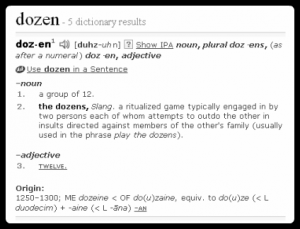
Dictionary.com -- Saving lives every day!

Dictionary.com - Saving lives every day!

The easiest way to find which syllables of a word are stressed and which are unstressed (for a school assignment, for instance) is to look the word up in a dictionary. I generally use dictionary.com or dictionary.net these days, but you can get a range of good definitions for most words (even if you’re a little iffy on the spelling) by typing “define:word” into the Google search bar.

If you’re a regular reader, you might be wondering why I’m suddenly talking about basic grammar. If you came here from Google, you might be wondering why I suddenly stopped….

I run Google Analytics as a way to keep track of my visitors to the site, what pages they’re finding interesting, and what Google search terms are sending readers my way. This site is still young enough that the Analytics reports aren’t terribly interesting yet, but I have been getting a handful of visits every day from people searching Google for information about unstressed syllables — not my site, but the actual pronunciation rules.

I’m here to help. Every time I see one of those searches show up, I feel a little guilty for getting in the way of their quest for information, so today I’m adding a new post to answer those questions, and a new category (For School) for occasional discussion of the basics.

Syllabic Stress

So, if you’ve come from Google wanting to learn more about syllabic stress, here’s your easy answer:

Look it up.

Yeah, this still isn’t the right site for you, but I can give you some pointers. Most online dictionaries (and all paper dictionaries) include pronunciation guides along with definitions, and those guides almost always indicate stress. The trick is knowing how to read them.

There are  basically two standard ways of indicating stressed syllables: by adding a vertical stress mark after each stressed syllable, or by making each stressed syllable bold or UPPERCASE (or BOTH). You can see an example of the stress marks at Dictionary.net:

Doz’en

And you can see an example of the bold syllable at Dictionary.com:

[duhzuhn]

I prefer the latter method, just because it’s more intuitive.

Looking a Little Deeper

Now, I realize it’s not always helpful to go to a dictionary when you need to know syllable stress, but really learning which syllables are stressed and which syllables are unstressed is a surprisingly difficult task.

The point of learning syllabic stress is understanding which syllables are pronounced more forcefully (or stressed), but the difficulty comes from the fact that English doesn’t really have standard stresses. Not only can things like regional dialects change the way we pronounce words, but stress can change based on the shape of the surrounding sentence.

There are languages out there with rigorous rules governing syllabic stress (like classical Greek) and languages with essentially no syllabic stress (like French). We definitely don’t have standard rules in English, and depending who you ask we may or may not have syllabic stress. We may have two levels of stress (stressed syllables and unstressed syllables) or we may have four (primary stress, secondary stress, tertiary stress, and quaternary stress). If you’ve ever been confused trying to nail down exactly which syllables in a word are stressed, that’s probably why.

If you’re just trying to figure it out for a school assignment, I’d recommend looking up a bunch of words in the dictionary and comparing the dictionary’s markup with the way you pronounce the words. Try to recognize a pattern. You can always check out the wikipedia page and other online resources for more detailed discussion, too, but if you actually want to get it right — if you really want to learn English syllabic stress — there’s no better way than diving into old-fashioned poetry.

Read a bunch of sonnets in iambic pentameter (they’re easy to find), and then start writing your own. It won’t be long before you find that you can spin iambic lines without a thought.  In the process, syllabic stress will become second nature to you (with all the quirks and nuances that go with it). You’ll be a better poet, too. Win/win.

There’s your English lesson for the week. Come back tomorrow for advice about writing novels in your free time.

Organize Your Ideas

Organize your ideas to get the most out of your writing.

About a year ago my wife informed me we were going to have a second child. It was something we’d been talking about for a little while, but then in an instant it became real. Immediately my heart was flooded with one, overwhelming emotion. I looked my wife in the eyes and said tenderly, “Well, crap! Where am I going to put all my stuff?”

I’m such an excellent father….

But, see, when we bought our current home we were childless. We got a three bedroom place, with a large master, an equally-large second bedroom (which I made into my library/office), and then a small third (which we made into a guest room). It wasn’t too long before we had need for a nursery, so we dressed the small room up in pretty colors, stuffed it with toys and changing tables and a crib, and eventually deposited a pretty baby girl in there.

The other room was mine, though. We painted it dark green and gray, hung thick black curtains and lined the walls with heavy bookcases. I filled the shelves with my books, and packed the rest of the floorspace with my computer desks. I loved my sprawling, quiet office tucked away in a back corner of the house. It also had a huge closet, stuffed floor to ceiling with spare computer parts, old drafts of manuscripts, and notebooks full of papers I’d written back in high school.

Then came the second child, and suddenly we couldn’t afford the luxury of a dedicated office. We decided to try having the kids share a room, but there was no way they were going to share that tiny nursery, so I packed half of my books away in boxes to throw in the attic, and set two whole bookcases out by the curb. I painted over my dark green walls and hung frilly white curtains. And then I started on the closet….

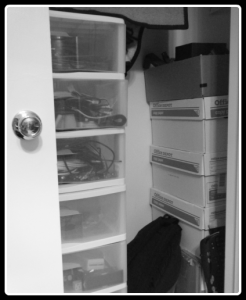
The closet in the nursery was about half the size of the closet in my old office, so I had to do some serious evaluating. For a long time, I had no idea how to compress all my stuff into the smaller space. Then one day I was grabbing a new tape measure at WalMart and I spotted a big, cheap, plastic set of drawers at the end of an aisle. Instantly, I knew that they were the answer. I took them home, tucked them into the back of the smaller closet, and got to work organizing.

Organization Methods

Okay, so where’s the writing parallel? I promised before a detailed post on organization methods, which are the key to implementing solid structure in the body of your document. It doesn’t matter whether your document is an email or a blog post or a hundred-page user manual — if your document contains more than one item, you need to find a good way of organizing that information.

In other words, your ideas are like my closet. And, extending the metaphor, your organization method is like my chest of drawers.

What you’ve got to do, to create a strong document, is find the best way to divide up that jumbled pile of thoughts and ideas and present them to the reader. Actually, let’s carry the metaphor farther, because you’re not just presenting these ideas one time to one reader. You’re gathering them together, collecting them, and then storing them in a document that lots of different people could come back to, at different times, looking for different information.

Your job is not just to make sure the right stuff is in the closet. You need to figure out where to put everything so that when your readers come looking, they can find exactly what they’re looking for.

Choosing Your Drawers

When it came to my closet conundrum, I chose the drawers I did because they were the perfect fit for my smaller closet. Shallow enough that they wouldn’t interfere with the doors closing, wide enough to fill most of the closet but with enough gap on the sides to stack boxes for more long-term storage. They were also pretty heavy-duty, which was useful because I wanted to put power supplies and hard drives and big piles of cables in them.

The point of all that? Your content dictates the proper organization method. A filing cabinet wouldn’t have done the job for me, because it would have been too deep. Shelves wouldn’t have been convenient, either, because I had too many loose parts. I needed heavy-duty drawers of a certain size.

You’ll encounter the same thing when you go to organize your document. Maybe your information follows a very specific linear path, or maybe it doesn’t. Maybe your information builds in degrees, or maybe it’s rigorously parallel.

If you’re writing a blog post or a short story, you probably want to use Chronological order, telling the event of your story in the order they happened. If you’re writing a business report, it might call for a Chronological order, or it might call for a Parallel construction — maybe a list of standalone problems and the solutions you’ve attempted so far.

Here are the most common organization methods, with a few thoughts about each:

Chronological.

A straightforward and relatively simple method, chronological organization sees you starting with the point furthest in the past, and moving continually toward the future. Most stories and works of fiction use a chronological or modified chronological organization, but any document describing events in time could be presented in a chronological organization.

Reverse Chronological.

Same as chronological, but the organization moves from the present back into the past. Note that in both cases it’s important to use a steady linear progression. Deviations — introducing events out of sequence — can create real confusion for the reader. Obviously some fiction works make great use of deviations (usually in the form of flashbacks), but even those have to be handled carefully, and there’s virtually no place at all for deviations in non-fiction works.

Thematic.

This method presents the elements of your document in groups based on theme or category. If you were writing an essay about war, for instance, you might divide it into sections based on ethics, politics, and economics. Thematic organization is often an obvious method that still leaves you needing some other method of organization within the thematic sections.

Parallel.

Parallel construction presents like things in a like way. The most common instance of parallel construction is the FAQ — a list of frequently asked questions, each presented as a standalone item, in an identical format. Question: Answer. Consistency is important in any organization method, but it’s crucial in Parallel construction, since the items in your list create easy direct comparisons.

Least to Greatest (or Greatest to Least).

Your document builds from a small starting point to a grand conclusion, or drills down from a major catastrophe all the way to the tiny bug causing the problem. Depending on the context, it might be “Least Expensive to Most Expensive,” “Least Offensive to Most Offensive,” or “Least Significant to Most Significant.” (Note that you can use the adjectives “Recent” and “Specific” to classify the first and last items in this list under this entry. They’re common enough to deserve their own entries, though.)

General to Specific (or Specific to General).

Your document starts with a broad statement and, from it, derives a more detailed conclusion (or, alternately, starts with a narrow premise and proves a much wider principle). This is the basic deductive method of the logical syllogism, and it lends itself well to argumentative documents pursuing a specific reader response.

The goal of each of these methods is to create a logical flow, so that a reader starting at the beginning can easily follow the thread of the document through to the end. When you employ it well (especially when you also include good headings), a reader can also approach your document looking for just one piece of information and find it quickly, just like I do when I go to my closet and pull out the drawer dedicated to power cords.

Enjoying the Benefits

There are other benefits to good organization, too. When I sorted all the stuff from my closet into drawers, I suddenly realized a lot of stuff didn’t fit. That wasn’t because I didn’t have enough drawers, or enough room, but just because some of the stuff in my closet didn’t match any actual purpose I could have for it.

In other words, it was junk. One of the biggest problems with unstructured documents is the prevalence of junk information. If you’re just throwing ideas into your paper, it’s hard for the reader to tell how the ideas are related to each other, but it can also be hard for you to recognize when they don’t really relate to each other.

Once you have an organization method that matches the purpose of your document, you’ll probably discover that some of the things you intended to say don’t really fit. That might require you to reevaluate your method, but it could just as likely indicate that those things don’t belong in your document. That’s one of the real benefits of a good organization method.

The other big benefit is clear transitions. How awesome would it be to write great transitions every time, without a lot of extra effort? It’s easy, with good organization, but you’ll have to wait for a future post to learn the details.

Photo credit Aaron Pogue.

Email Context Audit (Business Writing Exercise)

Business Writing Exercise

Business Writing Exercise

I talked last week about the importance of writing good introductions to establish context (especially for readability down the line), and that message is never more important (or overlooked) than when you’re sitting down to write an email.

We still occasionally run into the big formal business letters and memos on company letterhead, and so we’re in the habit of thinking of emails, by contrast, as casual communication. It’s certainly less work to put together an email, but as a direct result of that most of our official written communication these days takes place in the form of emails.

Sure, adding a lot of formal structure to emails would make them just as much of a nuisance as memos and business letters, but at the opposite extreme, leaving out information in the name of convenience will ultimately cause problems.

So your exercise for this week is an email context audit. Open up your email client (personal or work, whichever you prefer), and look at the last ten non-reply emails you sent — that is, new emails starting new conversations. Copy out the opening paragraph of each email, and add it to a list, then read over all the items in the list and see how easy it is for you to tell what each email message is talking about. Chances are good you still remember each of those emails, so try to guess how well you’d be able to figure the meaning out a year from now, too.

Then test yourself. Go back one year, and list the opening paragraphs of ten non-reply emails you sent on this date last year. How many of them make sense to you now?

This is an audit, a self-evaluation, and there’s a real possibility you’ll come out of it with a perfect score. If you don’t, if you find in your archives a bunch of unintelligible one-line emails or messages that start in the middle of a conversation, take some time to practice improvement. Revisit your ten newer messages, and try writing a short, clear introduction for each of them. Save them as a reminder, or (as long as they don’t contain any sensitive business secrets), share them on our discussion board. If you don’t need to improve your introductions, feel free to make a post and brag about that, too.

Start a Story (Creative Writing Exercise)

The lovely Kelley, writing at a coffee shop

Creative Writing Exercise

You had to see this one coming! After a week spent discussing introductions, it’s only logical to make that the assignment.

But, more than that, it’s fun. Today you get to start a story you’ll never have to finish. Give it flash, give it bang. Promise big, and use up your entire special effects budget on page one.

Or, if you want to really try to follow my advice, give us a fantastic character. Introduce us to someone unexpected, someone new, and someone worth knowing.

And do it quick! You’ve got 250 to 333 words for this week’s assignment. That’s shorter than normal, so take some extra time to polish, revise, and make it perfect.

Then post it on your blog, or save it in your Google Docs folder for next November, or share it on our discussion board for all to see!

Photo credit Julie V. Photography.

The First Page

It was a dark and stormy night, when a couple of guys who were up to no good started making trouble in my neighborhood. True story.

Nearly everything I said about introductions in Tuesday’s post, Negotiating a Connection, applies to Creative Writers just as much as it does to the Business Writers. The big exception is attitude. When it comes to a technical document, having to write the introduction is a nightmare. When it comes to stories or novels, often the beginning is the funnest part. That’s partly because Creative Writing is more fun than Business Writing, but it’s mostly because we don’t care as much. That’s not really a good thing.

Most of the problems we run into with creative introductions are problems of indulgence — we spend our precious first page chasing some cool big payoff instead of doing the crucial, unexciting work of negotiating a connection with readers and bringing them up to speed so they can enjoy the rest of the story.

That might sound like I’m saying your first page shouldn’t be cool or exciting. I’m not saying that. If your first page isn’t cool and exciting, nobody’s buying your story. Nobody’s going to get to page two. The important part is to make sure it’s the story that’s cool and exciting, though, and not some gimmick intro designed just to draw the reader in. I’ll talk a little bit about the worst common pitfalls, and then say a word or two about how to do it right.

Chasing Clever Pick-up Lines

Okay, sure, sometimes pick-up lines work wonders, but for the most part you’re better off with a clear, honest introduction that reveals exactly who you are and hints at what you have to offer.

One of the biggest problems for new writers trying to craft engaging intros is the temptation to chase after the clever pick-up lines, though. We all wish we could be the one who came up with, “It was the best of times, it was the worst of times.” Most of us would settle for, “It was a dark and stormy night.” No matter what, there’s this impression that the first line of the book has to sell the book, and I know writers who have spent as long obsessing over their opening lines as they spent writing the novels!

As a general rule, if someone gets to the first page of your story, you’ve probably got more than a line to snag them. They know what you’re trying to do, and they’re still listening. And, sure, you can certainly drive them off with a bad opening line, but as long as it’s not offensive (umm…literarily), you’ve probably got their attention for at least a paragraph. If you can hook them enough to keep them reading beyond that, you’ve probably got them for a whole page. By the end of the page (in my opinion) you should really be done with introductions and into your story.

Now, by all means, if you come across a fantastic opening line that fits with your story, you should use it. That’s gold, baby! It’s not necessary, though. Leave the brilliant tagline to your publisher’s marketing department, and focus your efforts on creating a smooth and accessible introduction to your work.

Worldbuilding Prologues

Worse than the pick-up line (and far more common) is the tedious introduction, complete with references. I said before that you should be done introducing and started telling by the end of the first page, but it’s not at all uncommon for writers to put that off for tens or even hundreds of pages! You might have noticed I left the “new” off there, too. Robert Jordan used the hundred-page prologues to great effect, but even his got tedious. I was being unnecessarily snarky when I said it, but I accused The Stand of being a hundred-page story with a seven-hundred-page prologue.

Ultimately, though, you’ve got a story to tell. That’s why you’re writing, and that’s why your reader is reading. It’s your job to tell the story, and every moment you spend not doing that, you’re letting the reader down.

That’s where we get back to the “necessary evil” introductions I talked about on Tuesday. The introduction you’re supposed to be doing on the first page isn’t necessarily the same as the one you want to do. The introduction you’re supposed to be doing is the one that brings the reader up to speed, as quickly as possible, and then gets out of the way so the story can start.

Too often, we want to explain. Not just bring the reader up to speed, but explain everything they’ve missed. After all, there was nuance there! There was subtlety! The fantasy genre is the worst for this, but every genre has its culprits. You feel like you have to explain the whole world so your reader can properly appreciate what happens to the character at the beginning of the story.

For many readers, though — especially for fantasy readers — figuring out the world is half of the fun of reading your story. It’s a puzzle. It’s a survival game. The reader opens up a new book excited to explore a mysterious world and discover the depths of the writer’s imagination. They like picking up on clues, teasing out inferences from casual asides. If they wanted a complete and detailed run-down of your cosmology, they’d be reading the Wikipedia page. When they open your book, they want to directly experience the story.

That doesn’t mean your thousand-year history is wasted, or the artificial language you made up for a now-extinct race of Elvish philosopher-kings. Weave it into your narrative, drop hints and passing references, and find opportunities to make it part of your story. Work it in on page five and page seventeen and as a twist ending on three-forty-three. On page one, though, your only job is to get the reader ready, and then get the story started.

Finding the Right Spot

So…what should you do in an introduction?  I’ve already told you not to be clever and exciting, and not to be boring and detailed. What does that leave?

It’s a long answer. I’m not starting a series here (Hah! For once!), but I am promising more information in the future. Beginnings are big, and I’m sure much more ink will be spilled on this topic. For now, I’ll make it simple: character and story.

Before you can write a good introduction, you need to figure out the answers to a few questions:

  • What is your story?
  • What actually happens to your character(s)?
  • Who is your main (or first) point-of-view character?
  • How is that character different from your reader?
  • What does your reader expect from this genre?
  • What will your reader assume about your character?
  • How does your story fit into those expectations? How does it differ?

Once you can answer those questions, you know where to start. Whatever happens to your character(s) needs to start happening at the top of page two, so you’ve got about three hundred words available to bridge the distance between your first point-of-view character, and your reader. Don’t try to find a cheesy pick-up line, don’t start quoting the Encyclopedia MiddleEarthica, just make some quick introductions, and get these two people talking.

After that, everything the reader needs to know can come from the character. After that, you’re telling a story.

Photo credit picsbycam.