Skip to content

Negotiating a Connection

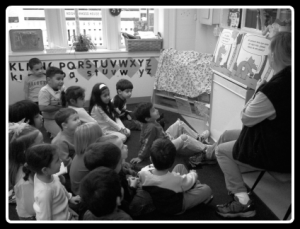
Negotiating a Connection (Courtesy aussiegall at Flickr.com / CC BY 2.0)

Once upon a time, you had to write an intro.

Maybe it was for a business letter (probably a query letter, if you’re one of my Creative Writing readers). Maybe it was for a memo you had to write at work. More likely it was for an English class, or the essay portion of an exam. You had the whole body of your document ready, carefully crafted, ready to spill upon the page, but you found yourself hesitating at the first line. You had no idea how to start.

That’s a normal problem. Actually, no, it’s a whole handful of normal problems. Sometimes you have no idea what to say in the introduction. Sometimes you know exactly what you want to say, but you have no idea how to get started. Sometimes you know exactly what you want to say, but what you want to say is the body of your document so there’s no point to an introduction. Sometimes you know exactly what you want to say, but it’s way, way too complicated to sum up, and you don’t even know where to start.

And, of course, sometimes you have no idea what to say at all. You don’t have the body of your document ready, but you need to get started somewhere. All of these problems come crashing together at the bottleneck that is the intro. The first paragraph. The first word. Once upon a time, you had to write an intro, and chances are pretty good you hated it.

The Other Problem

In all that list of problems you might have encountered, there was a big one missing: the reader’s.

I hinted at this issue back in my introduction to the series, but it’s critical to understanding the problem of introductions, and it’s the key to taking the stress out of writing your own. The problem is the gap between what you know (as the writer) and what your reader knows (as the reader). See, there’s something else that happened once upon a time. Once upon a time, you picked up a business letter, or a memo, or an essay someone else had written, and you found yourself two or three paragraphs in, wondering what it was you were reading.

Good readers are able to figure out what a document is about, and what they can get out of it. Good writers don’t make them.

The purpose of an introduction is to bring the reader up to speed. A friend of mine called it a roadmap. It’s an overview of what this document is, and where it’s going. A good introduction completely brings the reader into the conversation, and then the body of the document carries on the discussion.

An Introduction to Metadata

Another way of saying that, without all the metaphors, is that an introduction establishes the document’s context. That’s complicated a little bit by the fact that every document has another element that also works to establish context, and it’s likely one you’ve never thought much about — the document type itself.

I often refer to this as the document’s metadata, the information conveyed by the document, but not conveyed within the introduction, body, or conclusion. In a business letter, this includes the letterhead, the date, and the addressee. In a memo, it’s the subject line. In a paperback novel, it’s the cover art and the glowing recommendation by Stephen King. Every part of the document, every element of the template and format conveys information to the reader, and all of this information establishes an expectation before the reader ever gets to the first word of the actual message.

I may talk about document metadata at more length in the final post in this series, but it’s important to introduce it now, because it impacts your introduction. Your introduction needs to establish the context of your document, and then get out of the way. If your document’s metadata includes your name, you probably don’t need to include your name in the introduction. If your document’s metadata includes a detailed subject line, you probably don’t need to include that subject verbatim in the introduction. Your introduction is an opportunity to present all of the contextual information a reader would need to get into the body of your document, that isn’t already present in the document’s metadata.

Of course, sometimes your metadata betrays you. Sometimes you need to use your introduction to correct a reader’s wrong assumptions. Maybe you’re writing a friendly, creative message in a formal, professional business letter format. Use your introduction as an opportunity to change the reader’s expectations by establishing a different voice. Maybe you’re releasing a serious, time-sensitive policy memo as a company-wide email. Use your introduction to clarify the special circumstances and make sure your readers know what is expected of them.

Writing a Good Introduction

When I started my first day teaching Technical Writing last fall, I got up in front of the class…and froze. My heart raced, and my words failed me. I looked out at all those eyes, all those students waiting to hear my words of wisdom, and all I could think about was my paralyzing panic.

My dad is (among many other things) a Speech professor, and when I told him about that experience, he had some simple advice for me. “Think about the students.” He said that any public speaker, no matter how practiced, how polished, how perfect, would lock up just like I did if they let themselves get caught in a cycle of self-evaluation while presenting to a crowd. It’s human nature. He said the key was to turn my attention outward, to think about what it was the students needed to know, and focus on answering that need, and then the words would come easily.

He was right. I probably wouldn’t have survived the semester without that one bit of advice, but it was spot on. And, when it comes right down to it, that’s also the key to writing great introductions. Don’t think about your paper. Don’t think about your document’s body, or your list of points, or how smooth or silly your opening line is. Think about your reader. Think about the person or people who will be reading this document (now, and in the future), and tell them what they need to know.

I’ve given you some samples of things they might be looking for in the discussion of metadata, but that’s only a portion of it. You’ll need to establish your general topic. Maybe you need to clarify whether this document is informative or persuasive. Maybe you need to clarify whether this document is entertaining or technical. Maybe you need to provide an executive summary — a quick overview of the document’s contents — and maybe you don’t.

If that’s aggravatingly vague, it’s because every document is different. There are some standard elements from document type to document type, and I’ll try to hit on those in more detail when I discuss the document types directly, but for the document you’re working on right now, it’s enough to know that the purpose of the introduction is to bring the reader up to speed. When you launch into that opening sentence, you’re not discussing your topic yet. You’re not perfecting presentation, or conveying information. Right now, you’re not even communicating.

Instead, focus on that disconnect and do what’s necessary to fix it. Figure out where your reader is, and where your document takes place, and say the words that need to be said to create a link between the two. That’s what I mean when I talk about negotiating a connection. That’s a good introduction.

Photo credit aussiegall.
Structured Resolutions (Business Writing Exercise)

We’re in the midst of a conversation about document structure, and in the first week of the new year, so let’s take this opportunity to combine two useful self-improvement exercises in one.

Business Writing Exercise

Business Writing Exercise

Have you figured out your resolutions for the new year? Do you even do that sort of thing? If so, are you in the habit of writing down your goals? If the answer to all of those is “yes,” this week’s writing exercise should be an easy one for you. I want you to write out all of your New Year’s Resolutions in document format (that is, not just a bulleted list). Instead of “weight loss,” write, “This year I’m going to lose X pounds to hit a target of Y. I’m going to do this by…” etc. Make paragraphs out of your resolutions. I don’t mean big honking English-class essay paragraphs, but two to three sentences, adding some meat to the bare-bones list of resolutions you might have scribbled on a markerboard on your fridge.

I want you to write an introduction (again, two to three sentences is fine) for anyone who doesn’t already know the assignment, explaining the purpose of the document. Then organize your list of resolutions in a logical organization (take your best guess at the meanings behind the names I listed in last week’s post: Chronological, Thematic, Parallel, Least to Greatest or Greatest to Least, and General to Specific or Specific to General). Try to write smooth transition sentences, keeping in mind your organization method when you do so.

The final document should be 250 to 750 words (or longer, if you want to include more resolutions). If you’ve got a personal blog, you could easily accomplish two tasks at once — finish your assignment for me, and then publish your goals for your friends and family. Either way, you can also share it on our discussion board.

Dream Sequence (Creative Writing Exercise)

The lovely Kelley, writing at a coffee shop

Creative Writing Exercise

This week I talked about document structure and got into detail on chronology and point of view, and now it’s time to stop talking and start doing.

Your assignment this week is to write out a dream sequence. Of your own. This should be as close to non-fiction as you can manage.

If at all possible, write out the story of a dream you had last night (or recently). If not, to the best of your ability, recreate a particularly interesting dream you’ve had in the past. If you can’t even manage that, I’ll settle for a dream that seems like the kind of dream you would have (see how generous I am?).

What I want you to do, though, is try to retell the dream exactly as you experienced it. Remember what I said about telling a story in order, start to finish? You’ll learn just how hard that is to do when you start trying to tell the story of a dream. Why? Because our subconscious minds don’t obey that rule, and our subconscious minds play a big part in the development of our works in progress.

So this is an experiment in control. I want you to really grapple with the uncontrollable crazy behind your eyes that’s trying to tell you how to tell your story…and at the same time,  I want you to practice telling a story. Give me 200 to 500 words, and if you’re brave enough, post it up as a new topic on the discussion board.

I can’t wait to hear what you’ve been dreaming about!

Photo credit Julie V. Photography.

Simplify Your Storytelling

Storytelling, Simple and Straightforward

I’ve got a couple really simple rules for most of the new writers that I work with: tell your story from start to finish, and tell it from the narrator’s point of view. That sounds obvious, right? Well you’d be amazed how much my writers hate to hear it.

My dad wrote his first book for National Novel Writing Month two years ago. He’d been a storyteller all his life, but that November was his first attempt ever at writing it down. I guided him through some prewriting, I gave him some pep talks along the way, and then November rolled around and he cranked out an 83,000-word book, all on his own. He spent a couple months on rewrites and edits, and then he asked me if I could look it over for him — give him some feedback.

That’s the first time I saw the pain and frustration and anger in a writer’s eyes, when all I had to say was, “Simplify your storytelling.”

Chronology and Point of View

Essentially, my feedback again and again boiled down to those two rules I mentioned before:

  • Tell your story from start to finish.
  • Tell your story from the narrator’s point of view.

Every chapter seemed to start with a teaser, a paragraph situated mid-way through the chapter’s storyline, and then a big narrative jump back to the beginning (picking up where the last chapter left off), and then catching up to the teaser, and then moving on. More than that, every chapter featured point-of-view scenes from two or three different characters — sometimes also making big leaps in time, sometimes overlapping. As I read the story, I had a lot of trouble telling when I was in the narrative, from sentence to sentence, and almost as much trouble telling who I was (or who I was following). The plot was fantastic, the story was excellent, but the storytelling kept getting in the way.

So I told him what you’d hear in any creative writing course. Stick to as few points of view as possible, only change during major scene changes, and only change for a reason. Point-of-view changes tend to jar readers, even when they’re done well, and when they’re done by new writers they can just be achingly confusing. The same is true for complicated chronology. Flashbacks, flashfowards, teasers and blunt-edged foreshadowing and narrative dialogue all serve, primarily, to keep your reader from knowing what’s going on. That’s not your job as a writer. Your job isn’t to be clever. Your job is to tell a story. So often the first step in doing that well is to discipline yourself to just stay out of the way.

So my advice for new writers is to just keep it as simple as possible. Start your story at the beginning, and make sure that everything that happens on the page happens in order. Start your story peeking over the shoulder of one character (your protagonist) and stick to that character until you write “The End.”

Practicing What I Preach

That anecdote I told earlier, about reading through my dad’s book, might seem a little cruel for me to share with the world, but the fact is it says nothing about my dad’s ability as a writer. In the last three years I’ve seen the same thing in every one of the novels by new writers I’ve looked at (which amount to nearly half a dozen). I’ve seen the same thing in the amazing novel of my writer friend Courtney, and she’s got as much experience as I have. Oh, and you’d better believe I saw the same thing in my books. Maybe not on the same scale, but it was there.

And you know how I responded? I simplified my storytelling. I’ve got nine novels under my belt, and all the training to justify any artistic flourish I want to include, but I decided I wanted to practice what I preached. So the next novel I wrote, I wrote in fixed chronology, fixed point of view, and with as much direct narrative as possible. I’ll talk in another post what exactly that last phrase means, but essentially I tried to make sure every sentence described something that actually happened — something that would be visible on camera if this were a movie. That stripped out all the inner monologues, all the dream sequences, all the figuring and misdirection and flowery description. I did my best, cold turkey, to write a simple and straightforward story.

Learning the Craft

I realize I might be on the verge of losing a reader or two, with this post. How cold and analytical and boring would the world be if all of our short stories and novels read just like news reports? Or, worse, recipes….

We’d be trading in Memento for Dude, Where’s My Car? We’d be trading in Lost for Bill and Ted’s Excellent Adventure. Right?

Not necessarily. When I tried it, it was with a NaNoWriMo novel, a quick one-off that I spent all of two months thinking about before I committed it to paper. My wife, who’s read everything I’ve ever written, said it was my best work by far. My friends who’ve read it have become fans. I have test readers constantly asking me when the next book in the series will be done. It’s not boring and lifeless. It’s not plodding and simplistic. It’s just a good story, plainly told.

That’s because simplicity in the presentation doesn’t have to mean simplicity in the content, but that’s not the whole of the argument, either.

When it comes down to it, this isn’t the right way to write, and I’m not pretending it is. This is a tool, this is an exercise or a mindset to work in while doing your writing. I said from the start that this is advice I give to new writers. As you pick up practice, as you gain experience and start to learn how to read the same page as both a writer and a reader, you’ll get better and better at decorating your storytelling with all the beautiful touches that make great artwork out of simple stories.

As a new writer, though, that shouldn’t be your focus. Unfortunately, until someone points it out to you, it’s not terribly easy to tell the difference between storytelling (with all its artistic flourishes) and just writing a story. These embellishments show up in new writers’ work, not because they’re trying to overstep their ability, but because it’s the sort of stuff they’ve seen in Lost and Memento and there’s this feeling that a good story has to look like this.

As a teacher, as a writing coach, I approach it the same way the renaissance masters approached their training. I separate artwork (the true expression of an individual’s unique vision) from craftsmanship (the mastery of skills and abilities necessary to express that vision). That’s the whole point of these two rules. That’s definitely the point of this post:

Learn to think of writing as your craft.

Think of writing as a set of skills and abilities you need to develop, not a finished product you need to create. Yes, you’ve seen works of art that included masterful touches of chronology or point of view. The first step to getting there yourself is learning how to dissect the things you’ve seen — to take apart the storytelling from the story, the content from the presentation — and then learn, one at a time, to do your best version of each of those things.

So, when it comes time for me to give advice to new writers, I like to recommend starting with the story. A good story will sell papers. Save the polish and shine for your master works. While you’re still getting started (or just for a change of pace, if you’ve been doing it for years), take a shot at simplifying your storytelling, and present a compelling tale as clearly as you can.

Building with Words

Your Words and Ideas, All in a Jumble <br>(Courtesy <div xmlns:cc="http://creativecommons.org/ns#" about="http://www.flickr.com/photos/zscheyge/49012397/"><a rel="cc:attributionURL" href=

My two-year-old daughter got a set of building blocks for Christmas, and that got me thinking about how to make you a better writer. No, really.

One of her favorite games for a long time now has been “stack and smash.” She started doing it with empty thread spools, putting two or three together in a tower, then knocking it over. She’d laugh and laugh. We watched her motor skills improve as she got better and better at stacking the blocks, sometimes making a broad base with two or three spools so the tower could climb higher.

She didn’t do any of that to improve hand-eye coordination or to master planning and structural design. Her only goal was to get a bigger smash. As she’s grown, we’ve bought her more and bigger and varied building blocks sets to get those side benefits — to get her thinking ahead, and planning, and recognizing the cause-effect of a poorly constructed tower toppling before she got to smash it — but her focus has only ever been on the payoff, and so this new set of blocks rather befuddled her.

It’s got arches and round pillars. It’s got smooth edges instead of interlocking bits. It’s designed to make beautiful buildings, not just a tall tower to be pushed over. She looked at the picture on the box, and she looked at me, and she asked, “How do I do that?”

Creating Deliberate Structure

Chances are good that’s where you are, with your writing. I’m not suggesting you’re producing two-year-old quality literature, but I suspect you’ve gone just far enough in your development as a writer to achieve what you had to everyday — whether that’s a shaky tower ten blocks high that’ll still make a satisfying crash, or a bare-bones email to your coworker that conveys the critical information “without any of that flowery stuff.” You’re getting by, but when you see a beautifully crafted document you just shake your head and wonder how you could possibly do something like that. In all likelihood, you wonder why you would even bother.

I’ve given some answers in earlier posts, and I’ll give more as we go along, but ultimately I assume if you’re reading this blog you’re at least interested in trying. And the first step in answering how you could do something like that is the same for your documents as it is for my daughter’s towers — creating deliberate structure.

Your building blocks aren’t red arches and blue columns and yellow cubes. Yours are words and sentences, facts and ideas, but if you just throw them together, pile them on top of each other in whatever order you happen to grasp at them, you’re going to end up with just as shoddy of a structure. I said before that writing is a mental game, and here’s another example. Before you start on any document, you should take a moment to consider the structure.

  • What’s your foundation?
  • What’s your purpose (the ultimate shape of your document)?
  • What are the main points or themes you’re going to use to convey that idea (your building blocks)?
  • Which of those points are most important?
  • Which of those points are most complicated or unclear?
  • How are you going to organize your points?
  • Which bits involve informing, and which bits involve persuading?
  • How can you arrange those bits to get the best effect?

Does that sound a little overwhelming? I understand if it does. That sort of deliberate planning is exactly what so befuddled my daughter. She’s an adventurer, though, and she’s competitive enough that when I built a little clocktower out of two rectangles, an arch, a pillar, and a triangle, she wanted to show me that she could do the same. You’ve got to have a little bit of that drive, to just get started, and then from there it’s just practice.

Following Good Blueprints

Of course, it helps to have some patterns to follow. I’ll get into that. This post is just the first in a three- or four-part series on the structure of your documents. To get you started, though, I wanted to briefly introduce the major elements of document structure, and some of the standard ways of resolving the issues I brought up earlier.

Every document should start with a strong introduction. This is the foundation of your structure, and if it’s weak or shaky or just thrown-together, your whole document will inherit that instability. If you skip it altogether, the first paragraphs of your body become the foundation, and that means they’re serving dual purpose and probably not doing very well at either of them. I know introductions can be daunting, and I hope to address that in my next post in this series, Negotiating a Connection. The most important thing to know, though, is that your reader starts into your document with little idea what to expect, whereas you start it off knowing exactly what information it will contain. That disconnect is what creates the need for an introduction, and that’s exactly what you’re trying to address. Focus on building introductions that will give your reader a basic understanding of the overall document — its purpose and its structure — and then smoothly transition into the actual body of your document.

The body of your document, of course, is the message itself. It’s the information you’re trying to convey. Here’s where most of your planning comes in, structurally, because the introduction and the conclusion are already pretty set in stone. When you get to the body, though, you have to decide how to organize this big pile of ideas and words that you’re trying to convert into information. The best method of organization varies from document to document, but here are some of the most common ones:

  • Chronological (or Reverse Chronological)
  • Thematic
  • Parallel
  • Least to Greatest (or Greatest to Least)
  • General to Specific (or Specific to General)

The second post in this series will focus on all of these organizational methods in more detail, with some discussion of when each one might be appropriate, and some of the pitfalls each one brings with it. In all likelihood you’re already using some combination of these methods without thinking about it, but taking a moment to understand what’s going on behind the scenes (and approaching the structure of your document with deliberate intent) will help you to make a clearer, stronger document out of the techniques you’re already using.

And last comes your conclusion, another troubling element that you know you need to have, but don’t really know how to build. How are you supposed to restate the point of your document without just repeating yourself? If you could sum up the document in one paragraph, why did you need to write the whole document in the first place? The answer to that, again, is in deliberate structure. When you know your document structure, when you understand the real purpose of the body element and of the conclusion, it becomes a lot easier to put the right words in the right places. I’ll devote a whole blog post to helping you out with that.

For now, think about the documents you’ve written before, whether they were essays for college classes, or an email you sent your boss yesterday. Think about what you’ve done right, without even thinking about it, and about what you’ve done wrong, leaving your words shaky and ready to fall. If you know what you need help with — any particular problems you keep running into — let me know in the comments. I’ll be glad to address them as soon as I get the chance.

Photo credit zscheyge.

Weekly Writing Exercises

In a post last Wednesday, I invited you to come back on Friday to start practicing your writing skills. Then Friday rolled around without an update. I could try to spin that as some Karate Kid-style, existential exercise in reality and expectation, but it was actually a much more mundane problem.

I didn’t have any blank paper.

See, it’s been my intention all along to incorporate weekly exercises and contest challenges and other little writing assignments into this blog, but I waited until Wednesday of last week to start thinking about how. I’ve got a mechanism for reader response already available — the comments section on every post — but the blog design really doesn’t lend itself to particularly long comments. More than that, I wanted something that would make it easy for you to post your submission and get direct feedback. After all, the purpose here is to make you into a writer, not just a commenter on my articles.

The obvious answer to that is a discussion forum, so right after I posted my invitation on Wednesday, I got to work trying to add a forum to the website. Turns out, that can take more than two days. There was also a minor distraction in there, on the order of thirteen different houseguests over a four day period. That was madness.

Anyway! It’s done now. UnstressedSyllables.com is now proud host to The Scribblebook, a forum designed expressly for you, my readers. You’ll need to sign in to post on the forum, but even if you don’t want to register for an account with Unstressed Syllables, you should be able to use any openID for the forum — using your login with GMail, Facebook, or any of a bunch of major sites — so it shouldn’t be a huge hassle. (That said, if you do have problems signing up, or find it frustrating, let me know in the comments and I’ll do everything I can to make it easier.)

For now, though, it’s time for you to get writing! Three days past time, actually, so let’s get right to it.

For Work – Business Letter to Santa

Business Writing Exercise

Business Writing Exercise

We discussed the business letter format in passing this week, and we’ll get to it in more detail in the next week or two, but I’d like to see what you can do now. Maybe you’re showing off your chops, proving to me that this blog doesn’t have anything to offer you at all. Maybe you’re setting up a phenomenal Before and After contrast, stumbling through a crude letter format now so you can really shine once I teach you how to do it right.

Either way, have fun with it. Write me a one-page business letter (no more than 250 words, and 100 would probably be acceptable) politely thanking Santa Claus for a gift you received this Christmas, but pointing out a mistake on his part and asking for a full refund. If that’s just too silly for you, substitute in your Aunt Edna, or WalMart Corporation. Mainly I want to see how well you can duplicate the business letter format, and how you structure the message in a formal correspondence.

When you’ve written your business letter, you can tuck it away safely in a shadowy corner of your My Documents folder, or post it up on the discussion board for all to see. I encourage the latter, but it’s certainly not required. Any writing practice is useful writing practice, but it certainly helps to get feedback.

For Play – Someone Else’s Christmas

If you’re not interested in perfecting your business letter format, write me a story instead. With Christmas so much on our minds, it just seems obvious to tell a Christmas story, but I want you to practice some of that “getting better at being a person” that I mentioned earlier in the week.

So tell me about your Christmas, but tell me about it from the point of view of someone else who was involved. Tell the harrowing tale of your brother-in-law who drove in through a blizzard to make it to Christmas dinner at your house, through his eyes. Tell me about the sister who couldn’t make it, or the random cashier at the grocery store who offered a surprisingly exuberant “Merry Christmas” as you made your way through the checkout line.

Write a blog post of 200 to 600 words titled “My Christmas” and write it as though you’re somebody else. It’s good practice at blogging, good practice at writing from a set point of view, and good practice at seeing the world through your fellow man’s eyes — and that’s certainly something worth doing at Christmastime.

Again, if you feel like sharing your work, post it as a new topic on the discussion board. I look forward to reading your stories!

Tricks Writers Know (or “Whom Cares about this Stuff?”)

I’ve been writing for a week now, and I haven’t given you one word of practical advice, have I? Oh, sure, there’s promises aplenty, and I do need to spend some time negotiating a connection before I can start transferring knowledge, but when it comes right down to it, you’re here to learn how to write better. And what have I taught you?

In three posts, I’ve told you to expect simplicity, to stop believing in the blank page, and to think like a writer so you’ll be better at thinking like a human being. That’s more than just promising future advice, and it’s more than just groundwork. That is real, practical, makes-you-a-better-writer education right there. I’ve seen it time and time again, and I can tell you from experience: the first thing most people need, to improve their writing, is an attitude adjustment.

Changing Your Mind

I know you see the words “attitude adjustment” and you think of the strict old lady English teacher you had in Middle School, telling you to get up to the chalk board and diagram this sentence or you’re gonna get a smack from the hard-edged ruler. That’s not what I’m getting at. In fact, that’s the problem. That’s the stress that keeps you from writing, that’s the bad attitude that makes writing such a pain. Writing doesn’t need to be like that, but the only way to make it any better is to get over that experience, to put that mindset behind you.

That’s what I’ve been trying to accomplish. So, yeah, I promise big. I tell you that you can write better, with less effort, because until you believe that, you’re going to approach writing with fear and aggravation, and that’s going to get you nowhere. I tell you that idly scribbling down stories when you’re bored is going to make you a better person, and that writing a business letter to cancel your magazine subscription is heroic because, if you’re not already a writer, it’s so easy to respond to that long-ago frustration by compartmentalizing and pushing away. It’s so easy to convince yourself that trying to write well is a huge waste of time.

I know. I’ve always been a writer, but I spent a long time going through that process with math, because I was lousy at math in high school. There’s nothing to fear in math — it’s just numbers and rules — but I had a lot of math teachers who managed to create genuine anxiety in their quest to make math matter to me. That didn’t help. That drove me away. How many of you have gone through that same process with writing? It was challenging, it wasn’t particularly entertaining, and the people who could have made things clearer to you instead took it way, way too seriously….

I hang out with those kinds of people. Those kinds of people are my friends. So I definitely know they’re out there, and I know how much harder they’re making writing for all of you. The thing is…it doesn’t need to be. Writing is a mental game, and just like any game it’s got its rules. It’s got professional contenders who none of us would want to go up against in a casual match (those are the scary English professors), but most of us just want (or need) to put in a half hour, here and there, maybe three days a week. We want to be good enough not to embarrass ourselves, maybe even hope to impress the girl from the next cubicle over who stepped outside to watch us play, but nothing serious.

Writing can be like that, but you have to get there mentally before you can start practicing. That’s because, as I said, it’s a mental game. Good writing happens in your head. Prewriting, templates, structure and grammar and layout and design all develop in your head before you put a single word down on paper. As long as you’re fighting against your training, as long as you’re afraid of writing or nervous about it, you’re not bringing your A game.

Playing the Game

Still too vague? Let me get specific. Let’s consider “who” versus “whom.” The grammar rule goes that “who” acts as a subject and “whom” acts as an object, and for some of you that’s already enough language to bring back the menacing specter of the Middle School English teacher. That’s diagramming sentences.

I never learned how to diagram sentences. When I’m dropping “who” or “whom” into a sentence, I don’t think in terms of subjects and objects. I use the same trick you’d find in any “grammar for dummies” book: try out the sentence substituting in “he” or “him” for “who” or “whom.” If you don’t already know that trick (and it sounds useful to you), it’s explained briefly but clearly here.

It’s a simple rule, though, and it makes it easy to get “who” versus “whom” right nearly every single time. The problem is, the only people who care to get “who” versus “whom” right are people who are already writers. There’s another trick I use, to keep “effect” (usually a noun) and “affect” (usually a verb) straight. For example, “Your vote could affect our children’s lives! Just imagine the effect it will have.” Too close in pronunciation and meaning to easily keep separate, these words require a much more nuanced rule to keep them straight. Right?

It can be. Dictionary.com will give you two pages of information and link to more. But I solve the problem with a two-word phrase. The most common usages involve “effect” as a noun and “affect” as a verb. If you can grasp that, all you need is some handy way of remembering which is which. “Cause and effect” is a pretty easy one (two nouns). If you can just set in your head that it’s “cause and effect” and not “cause and affect,” then you know the “e” one is the noun. For me, I find the phrase “special effects” an easier one to keep straight — I’ve seen it in writing often enough that I know the proper spelling, and the pluralization marks it pretty clearly as a noun phrase.

Really, though, the problem isn’t coming up with a reliable trick or perfectly memorizing a grammar rule. The problem is caring enough to get it right in the first place. If you wrote an email to your boss saying, “How are we going to deal with the affects of this decision?” chances are good you’d get away with it. Chances are good, for most of us, that close enough is close enough. We’d rather settle for comprehensible writing than strive for good writing, because good writing is so hard!

It’s not. It’s really not. Once you have a handful of tips and tricks under your belt, writing well is mostly just a matter of trying to write well. As soon as you decide to try to keep “affect” and “effect” straight, you’ll be able to do it. That’s all there is to it.

It’s a mental game. I’m not asking you to become an Olympic-level contender, but I would really like to see you play. Come back Friday for our first scrimmage.

Practicing Humanity (or The Storytelling Process)

Writing is Practicing Humanity

Benefits of Writing

I’m confident that writing makes you a little bit better at being a person. Then again, I’ve been writing since I was five or six, so I’m probably a little bit biased. Still, give me a moment and let me see if I can explain why I feel the way I do.

Here it is in a nutshell:

Your job as a person is to examine and understand the world around you, to empathize with new people in a way that lets you see them as real people (not just extras in your life story), and to comprehend the short- and long-term ramifications of events both in and out of your control.

Your job as a person (no matter who you are, or what you do) is to be an observer, a communicator, and a creator, and every moment you spend writing you’re working on those things. Usually you’re working on all of them on every page.

This goes for Technical Writers and Creative Writers alike, but the effect is far more dramatic for Creative Writers so I’ll focus on them. Still, if your focus is on business writing, I encourage you to consider the implication even as I talk about faerie worlds and mythical dreamscapes.

People are Creators

We spend every moment of our lives building imaginary worlds, whether we’re the creative, artsy types, or the serious extrovert businessmen I was talking to up above. I started making up stories when I was a little kid, expanding on my vague grasp of the legends of Robin Hood and King Arthur to build fantasy stories of knights and dragons and kidnapped princesses. I spent much of my teenage years developing and perfecting the geography, political climate, and thousand-plus-year-history of a fantasy world for a series of books I never ended up writing. When it comes right down to it, I’m the creative, artsy type. I’ll admit that.

Even without that drive, though, people are constantly building worlds. When we sleep, we dream. All of us are, whether we remember it or not. During our most restful hours, we’re building imaginary worlds, filling them with dynamic characters, and watching stories unfold. We do the same thing when we’re wide awake, though. When I wake up in the morning and check the weather, I interpret a few little bits of data (a couple numbers and an angry cartoon raincloud) and I imagine a world with appropriate highs and lows and weather phenomena. That’s the real world (inasmuch as a weatherman’s predictions can be called non-fiction), but it’s not anything I’m directly observing. It’s a picture of an imaginary world that I’ve built in my head, that I anticipate becoming the real world.

You carry around your created world with you everywhere you go, all day long, and spend your time incorporating new information into it. When someone tells you Dave is going to be late to the meeting because he got stuck in traffic, you can perfectly imagine the scene. When you get a call from a friend, grief and horror thick in her voice, you immediately begin building possible, imaginary worlds in your head, and when she forces the reality through her sobs, you take that little tragedy and insert it into the reality you carry around with you all the time.

I’ve got seven or eight worlds I’m working on, all the time. I tinker, I adjust, and I do everything I can to keep them in line, consistent, believable. One of them is real, but the work I do in any of those worlds helps me be better at maintaining all of them. I spend my time practicing a deep and active awareness of the world I’m unconsciously building, and that makes me better at living in it.

People are Observers

Maintaining your personal copy of reality is about more than just interpreting phone calls and weather reports. You do it every time your eyes report a new sight, every time your ears report a sound, or your fingertips report a new sensation. We spend all of our time collecting information, noticing our environment, and we don’t just pack that information into our imaginary world and then forget it. We’re not just sensors, we’re observers. We’re evaluators.

If Dave is going to be late to the meeting because he’s stuck in traffic, does that suggest maybe the other guys who haven’t popped into the conference room yet are also out late? How many of them drive a similar commute to Dave’s? What about that sad phone call we got? It’s not just a moment’s grief, it’s a life-changing circumstance. Part of our job as people is to learn from our experiences and adapt our future behavior, whether it’s a matter of avoiding peril or avoiding traffic jams, responding to a loss by our favorite football team or responding to the loss of a loved one. The human experience is one of constant conflict, obstacles popping up in our everyday lives that we have to deal with, that we overcome just to move on to the next one in the hopes of finding some resolution.

Those are all the words we use to describe the structure of a story, and it’s no coincidence. Storytelling is practicing life. Every story is a little sample life, a demo, a simulation that can reveal deep truths or provide flawed data depending how well it’s built. The same is true of assumptions and conclusions we draw every day, in real life. The better you are at grasping a broad, complex environment and allowing for the strange, dynamic behavior of all the characters in it, the better you’ll be at predicting outcomes and planning profitable responses. In other words, while you’re practicing making up stories, you’re actively getting better at dealing with the unexpected and prospering in the serial dramedy that is life.

People are Communicators

And, in all of this, we see again and again people communicating with people. We share worlds through words, and to a large extent your ability to survive the myriad alien worlds of all the people you come into contact with every day depends on your ability to communicate your world, and understand theirs.

Maybe that’s writing an email to ask for a deadline extension, or maybe it’s crafting your memoirs to change the way the world perceives you. Maybe it’s the novel that changes the world, or maybe it’s the boring daily blog that lets your mom feel like you’re not really so far away, after all. Whatever communicating you do, it relies on your ability to grasp the world you’re in as well as the world your reader is in, and to find the common ground between the two of them.

I’ll talk more, in a much more technical way, about practical methods of establishing that connection and keeping it clear, but the best method is constant practice in a harmless environment. Every time you write a scene where two characters try to discuss an important plot element and it goes badly — maybe you find yourself throwing up your hands in disgust and shouting, “Gah! I just can’t write dialogue!” — you’re practicing communication. You’re analyzing what does and doesn’t work, looking at that exchange from the outside, in a safely sandboxed environment, and as a direct result you’ll be a little bit better next time you’re face to face with a coworker trying to work out whose turn it is to clean the coffeepot.

Hobby writing makes you better at professional writing. Hobby writing makes you better at friendly correspondence, and better at chatting and emailing and posting updates to Facebook. Hobby writing is everyday practice at communicating, and communicating is one of the most important things you do, as a person.

Practice Humanity

Are you convinced yet? If not…give it at try. There’s not really anything to lose, and you might discover an aspect of yourself you never knew. More than that, you might find yourself getting better and better at being you.

It doesn’t matter how good a writer you are. You’ll get better with practice, but it’s the making that matters, more than the thing made. Write in a private journal, if you need to keep it secret. Start a blog to keep friends and family current on your world. Strike up some old-fashioned correspondence with a faraway friend, or enroll in National Novel Writing Month and start figuring what your plot will be next November.

Whatever kind of writing appeals to you, dive right in. Explore. And let me know what happens.

Filling in the Blanks

Between my About page, my introductory article, and just the name of the website, I’ve already made a lot of big promises. Turning Technical Writing into a simple, stress-free task is no small feat, but we’re going to get started right now.

While reading that introductory material, you may have noticed that I referred to Technical Writing more than once as “filling in the blanks.” When you know what you’re doing, that’s all it needs to be. I’ve heard students and engineers and writers alike complain about how intimidating the blank page is. I’ve been there, too. Somewhere along the way, though, I realized that there are no blank pages. Not in Technical Writing, and not in Creative Writing, either. Maybe there’s a blank line, maybe there’s a blank box that needs a few paragraphs of text, but by the time you start working on a project, there’s no blank page.

Creative Writers handle this with prewriting (a topic I’ll discuss at length in other articles). If you wanted to write a short story or a novel, but found yourself overwhelmed by the blank page, you could address that stress by creating a mock Table of Contents, figuring out a detailed character list, maybe even developing a full plot synopsis. Once you’ve got several of those together, you don’t have a blank page anymore. You have a title and a chapter number and a character name, and you know where you’re starting from, where you’re headed, and all you have to do is write down what happens along the way.

That’s still a lot of work, and I’ve never promised anywhere “Effortless Syllables.” In Tech Writing, too, you’ll have to work hard on researching technical details, expressing yourself clearly, and fixing any errors along the way. What I have promised (and will again), is that the process of expressing yourself clearly and fixing errors can become accessible and even natural to you. There aren’t any mysteries to it.

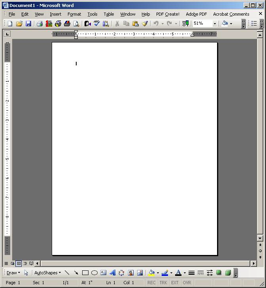
Business Letter Blank Page

Business Letter Blank Page

Back to our blank page, though. I briefly outlined above how a Creative Writer solves the problem of a starting point, but for Technical Writers it’s even easier. Let’s say, as an example, that I find myself in a situation where I have to write a business letter. I open Microsoft Office (or OpenOffice.Org Writer, or even Google Docs), and what does that software throw at me? A blank page. Terrifying, right?

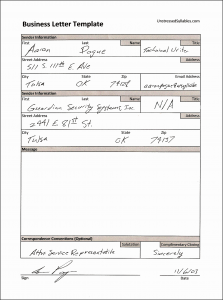
It doesn’t have to be. Not to a Technical Writer. Not to anyone with much experience writing business letters. I know from long experience that a business letter starts with a letterhead containing author-identifying information (most often a return address), then comes the date, then the inside address, and the body of the letter, and so on. I know the structure of a standard business letter, and once you know that, the blank page could just as easily be a form full of blanks.

I always fill in the easy stuff first. I’d start off with my letterhead and the date, then fake in as much as I know of the internal address, then add a salutation and skip down to the bottom to add my signature block. Hah! I’m 90% finished writing my business letter! I’ve filled in fifteen out of sixteen boxes, until the only one left is the one in the middle labeled “body” or “message.”

Standard Business Letter as a Form

Standard Business Letter as a Form

And I can already hear you objecting that that’s the hard part! You’re right. It doesn’t need to be stressful or challenging or mysterious, but the message is the hard part of writing a business letter. It should be! The message is the unique information, and the process of organizing and communicating information is one of the noblest, most amazing things people do. Filling out that final box is, in a way, heroic.

The point of this article, though, is that you shouldn’t have to guess where to start. You shouldn’t have to fumble around with formatting and layout. Your sole focus should be on communication, on getting to your message and figuring out how to say it. Surprisingly enough, getting straight to the hard part actually makes your job easier.

It’s pretty simple to see how that works with business letters, because we’ve all read plenty of business letters in our lives. Most of us have even written a few. That same process that I went through applies to nearly all technical documents, though. We have certain familiar document types, certain repeated templates, that have become standard formats, and once you learn how a particular document type works you can open up a blank page and just dive right in. Once you learn the shape of a document, you can tell at a glance exactly what information goes where. Not only that, you can fill in the easy stuff right away, and know what’s missing.

That’s what’s so daunting about the blank page. It gives you no feedback. It gives you no reference. There’s no sense of where to start, or how much to say, or when to say it. A standard document template strips away all that guesswork, and leaves just one or two empty boxes where you have to write down what it is you know, that someone else needs to know. That last step is one I can never do for you.

The document types, though? Those are my specialty. I can teach you how to write a business letter in your sleep. I can teach you how to write a memo, how to make a new document type from scratch, and force it into the shape you need. I can teach you shortcuts, handy tips, and critical rules. I can even teach you the difference between “who” and “whom,” and how to keep “effect” and “affect” straight. All of that information is available, but before it does you any good, you have to find the courage to get started.

That’s my goal. That’s what this blog is for. There’s countless resources out there to teach you grammar rules, and limitless clever and beautiful templates available as free downloads, but none of those are any good until you know what your document is supposed to do. That’s what we’ll work on here.

What’s in a Name?

I have just made the startling discovery that I can turn you into a better writer.

As you may have seen in my About page, I’ve recently become a Technical Writing professor. There’s an old saying some of you are probably already thinking about that goes, “Those who can, do. Those who can’t, teach.” I’ve been doing for years, though — I’m actually pretty good at it — but I’d only barely scratched the surface until I started teaching.

Technical Writing is a fascinating topic to teach, too. Oh, don’t get me wrong, technical writing is an incredibly boring process and profession, but for a professor it becomes a fascinating challenge to figure out how to teach these essential real-world skills (dull as they are) to a bunch of kids who have no interest in taking an English class in the first place.

My challenge was made easier by having a bunch of amazing students. Before I ever met any of them, though, I spent months trying to figure out how keep their attention, how to make them care, how to package my years of experience and natural talent into a product they would actually buy. Over the course of this blog I’ll talk a lot about that process, about the topics that struck me as crucial and the clever little tactics I made up to make my material more engaging, but in our first class period I discovered what I had to offer they would really be interested in getting.

Simplicity.

My audience consisted of programmers and engineers and Biology Majors — really brilliant people, but not people who cared about writing. They were in an English class only because it was required of them, and it was required of them because, whether we like it or not, writing has become a critical part of our everyday lives.

So there before me, that first day of class, I saw a room full of students frightened and frustrated by the reports and essays and documentation they had to do in their Major classes (and will have to do in their jobs once they graduate), and here I was supposed to force them through an English course consisting of more than a dozen serious writing assignments, including a big ugly semester project.

They didn’t know that yet — most of them had only vague guesses what technical writing might be, and no clue at all what to expect from the class — but I knew what it required, and I knew how they would respond when they started looking through the course schedule’s due dates. Before they could do that, before they could decide with absolute certainty that this was going to be the worst class in the world, I stepped up in front of them, and I told them what Technical Writing had to offer.

This class is going to teach you how to do the writing you have to do every day. This class is going to teach you how to do it well, and how to do it with as little effort as possible. This class is going to strip the specter of fear from the blank page, and make professional writing just about as frightening as sending an email.

And that’s what this site is going to do for you. Unstressed Syllables is all about taking the anxiety, the confusion, the helplessness — the everyday stress — out of your writing projects. It’s about breaking down writer’s blocks, and converting blank pages into fill-in-the-blanks forms. It’s about making programmers and floor managers and photographers and housewives feel as confident with a pen as we English Majors and Technical Writers do. It’s writing advice for everyone.

And the site is called Unstressed Syllables because you’ll find that focus in every article — a dedication to making you better at any kind of writing. I’ll have articles here about poetry and prose, blogs and business letters, tutorials and tech manuals. If you’re only interested in one or two of those, that’s what the categories are for. I’d encourage you to read it all, though, because ultimately good writing is good writing, and every moment you spend thinking about it makes your writing better…and easier!

Of course, practice makes perfect, so you can expect exercises to go with the advice: contests, writing prompts, template tests.

Even if you don’t want to do the homework, though, I encourage you to participate in the discussion. If you’ve got a question, ask it. If you’d like to suggest a topic or request a review, contact me. You can leave comments on any of my posts, you can participate in the discussion boards, or you can just send me a private message. Whatever method works best for you, works for me. But writing is about feedback, writing is two-way communication, and I encourage you to let me know what you think as you read through these pages. Let me know what works, what doesn’t work, and how this advice impacts the writing you do every day.