Skip to content

On Needing to Write: My First NaNoWriMo

Last week I haunted you all with threats of the pending National Novel Writing Month, stating a little prematurely that “Next month, you’re going to write a novel.” I watched (and even commented on) your public reactions to that claim, and some of you were rightly terrified at the time investment looming oh-so-near.

Others of you, though, shivered with anticipation. Especially Courtney, who’s said in several ways and in several venues now that she can barely wait for November to get here.

For my part, I spend about equal time in both camps. That’s actually how I’ve felt every fall for four years now.

That first year, when I challenged Dad and Heather to write their novels, I knew I had to be in the mix with them. Obviously I had to be. Not only that, I had to set a good example.

I had to show them this thing was doable — even as I was preparing pep talks and writing exercises and emails that ended up being precursors to Unstressed Syllables writing articles. And, in case you don’t remember last week’s story with perfect clarity, that was the same year I’d already written 100,000 words over the summer and finished up two long-languishing novels.

I had a feeling, as November approached, that I would probably be better off sitting it out. I could point to June and July as ample evidence it was doable, and I could probably do a better job coaching if I wasn’t so distracted with my own project. Right?

As a matter of fact, I settled on that as my final decision. I wouldn’t write anything in November. I told them both that, gave them my defense — partly out of feat I’d already done more writing in one year than the human body could handle, so if I even tried…I might find that the well was already dry again. And I couldn’t handle another drought.

When I got to work on their prewriting assignments, though, I needed to tell them how much time to allot to each. I needed to know what was clear, and what needed explanation.

So I wrote up some assignments — make up character descriptions for five characters, draft a mock ToC for your unwritten novel, figure out the big arc of your Conflict Resolution Cycle. And I then I ran through each of them with what I knew would eventually be my next novel, Sleeping Kings: The Shepherd, which was the sequel to one of the two I’d finished that summer.

And somewhere in the middle of that, I realized I had to do it. I had to write. Not only that…early in October, scribbling down character backstory, I found myself absolutely on fire to get started writing right then.

I didn’t. I pushed down the urge, buried myself in other work (and, of course, I had plenty). I didn’t even tell my dad and sister that I’d changed my mind. But as I worked through my own prewriting exercises, I knew for a fact I was going to write in November.

And I did. Hah! When November hit me, I hit right back, and that need to write never once abated. After nearly four years of not writing, I couldn’t hold myself back.

I broke 50,000 words on Thursday, November 15, and on the afternoon of the 30th I typed “The End” as words number 121,957 and 121,958. My first NaNoWriMo was also my best (so far, anyway), and I’ve been chasing that hunger ever since.

What I Learned about Writing this Week…from Sybil and Dexter

School Daze

During my latter high school years and my first few semesters of college, I thought I wanted to be a psychologist.

Oh, I retained my dreams of writerhood — but I also harbored the saddening yet firm conviction that one such as I could never make a living at writing. Part of my joy in writing has always been finding out what makes people tick and integrating that knowledge into my characters. I also wanted to use my talents to help others, so psychology seemed a great fit.

Much to my dismay, I discovered fairly early on that to pursue this vocation to its fullest, I would need at least a master’s degree, if not a doctorate. Since I had no interest in being in school until age 30, I dropped Psych to a minor and eventually graduated with a bachelor’s in English/Writing. But even though I didn’t complete my Psych major, the classes I took in that field have continually provided me with some of the best writing resource materials.

My very first psych class was Abnormal Psychology. Technically, I shouldn’t have been able to get into that class, as I hadn’t taken the General Psych prerequisite. A mix-up at the registrar’s office landed me smack dab in the middle of schizophrenia, psychosis, and personality disorders — and though I struggled to understand half of what was going on (not having learnt the basics, you see), I loved every moment of it.

That first semester, my greatest challenge was the research paper. I’d never in my life written a research paper, didn’t really know what a research paper was, much less how to craft one. I was completely mortified at my ignorance when, in my second or third consultation with my professor, he informed me that an article out of Reader’s Digest would not, in fact, qualify as legitimate source material.

Needless to say, I shifted into a somewhat more scientific mode (and eventually received a B on the paper and in the class, I might add).

The topic for that first ever research paper was dissociative identity disorder, formerly known as multiple personality disorder. There must be something in my own psychological background that’s responsible for my decades-long fascination with this condition, but I don’t know what that something is. Suffice it to say I’ve always been fascinated, and writing that research paper only served to heighten my interest.

Present Daze

Fast-forward to today, and I’m working my way through my To-Read Shelf (my collection of books I intend to finish before the year is out, angels and ministers of grace defend me). My current read happens to be Sybil by Flora Rheta Schreiber – the famous case of a woman diagnosed with sixteen different personalities in the 1950s.

This book is certainly not fare for the faint of heart or weak of stomach. Halfway through the novel, the writer chronicles the beginnings of Sybil’s dissociation: the result of horrible abuse (starting in infancy) by her mother, as well as her passive father’s refusal to acknowledge the abuse consciously or do anything about it. I happened to be eating breakfast when I got to the gritty part, and I had to set my food aside. Sybil’s description of what happened to her turned my stomach the way no horror novel ever has.

Still, this woman’s story sucks me in. I am a firm believer in the concept gnothi seautonknow thyself — and I see clearly Sybil’s efforts to know herselves through uncovering the truth of her past. As her therapy progresses, she discovers the true nature and development of her own character…

…and the nature and development of character are, of course, what we writers are all about. No wonder I can’t disconnect from this story until I read all the way to the end.

So, that’s Sybil: tracking her sixteen different personalities and trying to integrate them into a coherent whole. Another current writerly fascination I’m harboring is the TV show Dexter (based on the novels by Jeff Lindsay).

Dexter is a serial killer who lives by the rules his adoptive father bequeathed to him, the main one being that he kill only other serial killers. He does forensics for the Miami Metro Police Department, which lets him access the records of his intended victims. The character narrates the series, giving a mind-blowing view into the thoughts and emotions — or, rather, lack thereof — of a psychopath.

An ironic side note: According to Wikipedia, the Latin word dexter means “right hand side, skillful, fortunate, favorable, proper, fitting” — which leads me to wonder about author Jeff Lindsay’s sense of humor.

Anyway. Yes, I know it’s fiction. Yes, I know that much of Dexter’s viewpoint is simplified and sensationalized for the sake of putting on a good TV show. Still, what makes it so good — especially to this abnormal psych buff — is its verisimilitude. It jives so well with what I studied in that undergrad class so many years ago…

…and I find myself rubbing my hands gleefully together, knowing that if I ever write a psychopath, I now have some easily accessible source material.

Near-Future Daze

But wait — what’s that I hear? Could it be…? Is it really…? Why yes, I do believe it is! Dearly beloved inklings, we are gathered here today to celebrate the quickly approaching start of NaNoWriMo! Yea verily, Aaron has mentioned it a few times over the last week or so, I do believe. I hope you’ve been paying attention, because it’s time to go out to the garage, open the hood, and check to make sure the engine is a go. We still have time to tinker — but not nearly as much as we had a few weeks ago!

And for me, that’s where Sybil and Dexter come in — ’cause I’ve got the third novel in a trilogy to write, and my main character is gonna be facing one humdinger of a psychopathic demon. Dexter couldn’t have entered my creative life at a better time. As for Sybil, I’m thinking of the development of her personality and wondering about the genesis of my favorite demon’s abnormal psychology.

It’s all pointing in the same direction, folks. Here’s to the merging of lines into an explosive point at 0:00 a.m. on November 1, 2010!

And that’s WILAWriTWe!

Photo credit Julie V. Photography.

On Document Style: How to Use Section Breaks in Microsoft Word

No, you’re not mistaken — that’s a title you’ve seen before. It was the title of the application article on my last Document Style series, and it’ll probably be the title of the third article in next week’s, too.

Because that’s what we’re doing. Whether you’re trying to manage text columns, headers and footers, or any other page layout elements in Microsoft Word, you’ve got to understand and work with the program’s Sections and Section Breaks.

I’m not going to duplicate the content, though. This week I want to talk to you about how to use those sections to fill your headers and footers with the document context information I talked about in yesterday’s post, so if you skipped the first post on section breaks in Microsoft Word, go back and read it now. Once you’re up to speed, we’ll get right to work.

Modifying Header and Footer Text

Now, before you start messing with the sections, the first thing you need to know how to do is put anything in a header and footer. That depends a little bit on your software version, but it’s not too hard to find.

If you’ve already got a header or footer, you’ll see it as grayed-out text above or below the document’s page text, and even though you can’t select it or type over it, it’s really easy to get access to modify. Just double-click anywhere in the header or footer area (the easiest way to make sure you’re in the right place is to double-click the gray text, but that’s not strictly necessary), and now the page text will become grayed-out and uneditable, and the headers and footers are yours to control.

At that point, we’ll say you’re in Header and Footer Mode. Word basically toggles between the two — either you can edit the headers and footers, or you can edit the page text. You can never work on both at the same time.

If you don’t already have something in the header or footer, though, Word doesn’t bother tracking your mouseclicks in that area, so you’ll have to access it another way. In older versions of Word, you’d use the menu to go to View | Header and Footer, which toggles you into Header and Footer Mode and places your cursor in the header of the currently-selected page. In newer versions, you’ll find Header and Footer as an option on the Page Layout ribbon, and once you enter Header and Footer Mode Word will provide an extra ribbon just for that.

Managing Word’s Helpfulness

Once you’ve got information in your headers and footers, that’s when you need to start worrying about Word’s section breaks. If you’re trying to make a really professional-looking document, anyway, you’ll want to manage your headers and footers, and Word goes a long way to help you with that…and sometimes goes a little too far.

There are three key things you’ll eventually want to do:

  • Different odd and even pages
  • Different first page
  • Different front matter

I’ll address them in reverse order, because the last one is the easiest to explain.

Different Front Matter

“Front matter,” in case I haven’t already explained it, refers to things like a Foreword, a Letter from the Author, an Introduction if you’ve got one, and (most commonly) a Table of Contents. The reason you want a different header and footer in the front matter is because of an old standard: Roman numeral page numbers.

So you’d want your Table of Contents to start on i and maybe run through to iv, but then Chapter 1 should show, in the footer, “Page 1” (even though it’s actually like the seventh or ninth page in the document).

The way you handle that is with Sections. Insert a Section Break between the end of the front matter and just before the beginning of the body (put your cursor before the “C” in “Chapter One” and Insert | Breaks | Section Break – Next Page).

Now that you’ve got a break, switching into Header and Footer Mode will now show a little title in the box outlining the header and footer, labeling it as “Header (Section 2)” or something to that effect.

By default, Word will go ahead and duplicate your initial Header and Footer across all the sections. It uses a setting called Same as Previous which you’ll find highlighted in the Headers and Footers toolbar. As long as that’s on, anything you change in the Section 2 Header will also change in the Section 1 Header (and vice versa).

Once you turn it off, though (just click on it, and it’ll toggle off), you can change the Page Number settings in Section 1 to Style “i,  ii,  iii…” and Start With “i,” then change Section 2 to Style “1, 2, 3…” and Start With “1.”

That’s all it takes.

Different Front Page

You’ve got a couple more options, too. You can tell Word if you want a Different First Page header and footer (and that’s the first page of the section, not necessarily of the whole document).

This feature is often handy when you’re dealing with something other than a book, because the first page almost always contains all the information you would put in a header and footer (author, title, section, subject, and even the page number should be pretty apparent).

By far the most common way to use Different First Page is to turn it on, and then just delete everything in the First Page Header and First Page Footer.

Different Odd and Even Pages

You can also turn on Different Odd and Even, which lets you format the fronts of pages in a bound document (right-hand pages, or odd pages) differently from the backs of pages (left-hand, or even). They’re usually done as mirror images of each other, so instead of the page number being right justified in the footer, it’s right-justified on the odd pages and left-justified on even pages, meaning it’s always on the outside edge of the page.

That only matters when you’re printing front-and-back, but it can add a really professional look to documents produced that way.

On Document Style: Headers and Footers

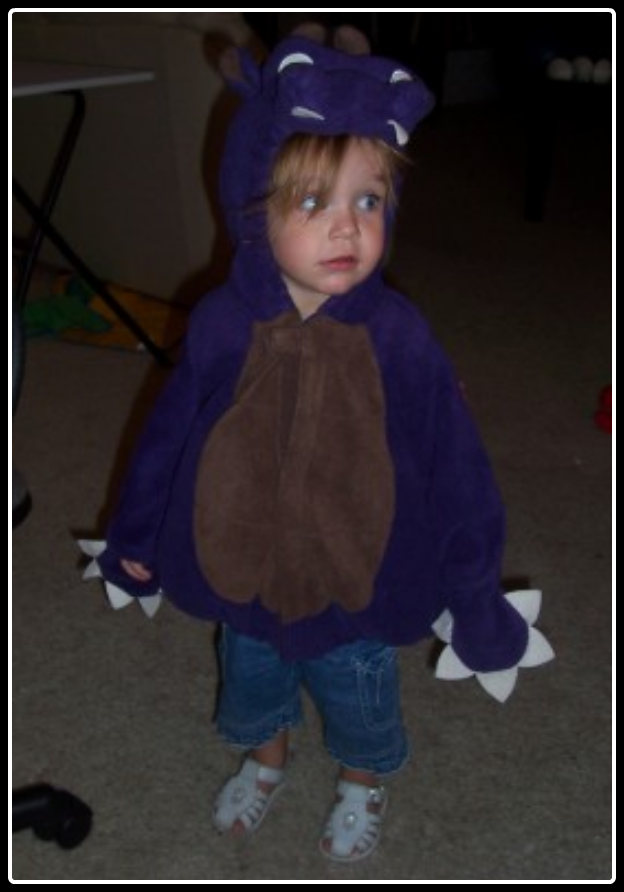
Yesterday I told a story about Annabelle playing pretend, whether that meant announcing herself to be a ferocious dragon to scare off things that go bump, or an innocent young babe to get away with outright disobedience. Either way, there’s magic in a little bit of delusion.

And if you read the article when it went live yesterday…swing back by today. I finally added an illustration to it, and it’s just about the most adorable illustration you’ve ever seen.

Establishing Document Information

I’m not supposed to be talking about Annabelle today, though. I’m supposed to be talking about document design, carrying on a series I started a few weeks ago on finishing a fully-formatted document.

That’s a bit of a broad topic, because “document” covers too much ground, and so does the toolset available under the heading “fully-formatted.” There are a handful of style elements that are critical to creating a professional-looking document, though, and their elements are pretty consistent no matter what document type you’re working with.

One of the most important of those is the statement of your document type itself. A good template not only tells an author where to put critical information, it also tells a reader at a glance exactly what they’re looking at. In the same way, the header and footer elements of your page setup can inform (or remind) a reader exactly what they’re looking at any time they glance at any given page of the document.

Remember that, the next time you’re reading a professionally-formatted document — whether it’s a textbook or a memo from middle management. Look over the header and footer and see just what information is there. Chances are good you’ll find a page number, giving you constant context for the information you’re evaluating. You’ll also probably find the document’s title repeated, and may find something more detailed, whether it’s the document’s form number, its preparation date, maybe a chapter heading, or even just key words for the current section.

Whatever elements are included, they serve as an anchor on every single page of the document, reminding you what it is you’re reading, and where you currently are within that information.

Establishing Author Information

One of the most valuable of those elements (although, admittedly, I might be biased here), is author information. That’s where yesterday’s story fits in, because there are certain things that take on different meaning coming from, say, a dragon, than they would from a toddler — and even that would come across differently than it would from an infant.

As readers we constantly evaluate the information we’re reading based on who it is providing that information to us. And I’m going to tell you the same thing I’ve been telling my creative writers for the last three weeks: it’s your job to tell your readers everything they need to know before they need to know it.

That’s why your title page comes at the front of the document, and it’s why the name of the author is one of the most common elements to stick in a header. The very first line of every single page in the document tells the reader exactly who it is that’s telling them this.

Managing Section Breaks in Microsoft Word

So…you’ve seen headers and footers, you’ve got a basic idea what they’re for and how you should use them…but how do you use them? The short answer: it depends. On your writing software, among other things.

I’ve promised to walk you through document setup in Microsoft Word for this whole series, so that’s what I’ll show you. If you want to skip ahead, I’ll tell you that Headers and Footers are a Page Layout element that you’ll want to View — the caps in that sentence should be enough to cover your software version, one way or another, for at least the last decade. If you’re using something older than that, you’re on your own.

If you don’t feel like sleuthing it out, just come back tomorrow. I’ll provide screenshots, and walk you through setting up headers and footers in Microsoft Word.

On Document Style: Declaring Your Variables

As I’m sure all three-year-olds do, our precious little Annabelle has an incredible imagination, and she puts it to great use. As a storyteller, of course, I’ve cherished every moment of that. Or…well, nearly all of them.

I don’t know if I’ve mentioned it here, but one of my proudest moments as a father so far was when, barely a year old, Annabelle first started playing dragon. I started growling at her when she was teeny tiny — it was adorable, seeing her startle, and then clap and laugh. As she got closer and closer to her birthday, though, she started growling right back, chasing me around the living room and down the hall….

And…well, it’s not just that she was playing dragon, but that she was playing dragon nine months before she ever started playing princess. “That,” I’d tell visitors, as they watched her stomp around and swipe at them with her terrible claws, “that’s my girl!”

When she got old enough for words, I taught her how to use that pretense. If she told me she was scared of something, I’d act a little thoughtful, and then ask, “Well…would a dragon be scared of those shadows?”

And she’d laugh and say, “No, silly!”

And I’d say, “Well, why don’t you just be a dragon? One good growl at those shadows, and they won’t dare mess with you!”

I didn’t mind too much when she finally did start playing princess, though. That went hand-in-hand with playing dress-up, and she was just so terribly lovely, clopping down the hall in kid-sized attire that still looked monstrously oversized on her tiny frame, preening as perfectly as any pureblood princess ever did.

I love the way she sees every story as an interactive opportunity, new material for her pretend time, no matter how much she likes the actual show. And she sees that sort of opportunity everywhere she goes, in everything she does.

I never know, from one day to the next, what I’m going to come home to. Sometimes it’s, “Hi, Daddy! I’m glad you’re home! I’m a puppy!” Sometimes, “Hi, Daddy! I’m glad you’re home! I’m a medical doctor!” And, no matter what else, she’s also always a superhero.

It’s absolutely precious…most of the time. The last year it’s taken on a new aspect, though. See…she’s paid especially shrew attention to the new interloper in her home — Baby Alexander — and she picked up with an astonishing rapidity that he got away with things she doesn’t get away with.

And, ever since, she’s added a new persona to her repertoire. “I’m a baby!” She throws a toy, or grabs something away from her brother or cousin, and then when we go to scold her, she looks up with a big smile and says, “I don’t understand. I’m just a baby.”

She remembered lessons I’d taught her a year earlier, and figured out how to use pretending to her advantage. All of a sudden, it wasn’t so cute.

One night she was sitting in her chair at the table when Trish brought her a plate of dinner and she grunted, “Nuh uh! I don’t want this.”

I looked her in the eye, and said, “That’s what we’re having.”

“It’s not what brother’s having.”

“Brother’s a baby,” I said, knowing immediately what her answer would be.

“I’m a baby!”

I thought for a moment, and then said, “Are you sure?” She nodded, and I shrugged. “Okay,” I said. “Well, you may not know this, but babies don’t get to do a lot of the things big girls get to do. They don’t get to watch TV.”

Her face fell. I went on gravely, “And they don’t get to play with crayons or paint or bubbles. They don’t get to play on all your big girl toys outside. And they don’t get to go swimming, or eat ice cream, or read at bedtime–”

And I watched her eyes get wider and wider through it all, thinking to myself, I am such a genius. As I rambled on, she finally waved both hands frantically to get me to stop, shaking her head.

I cut myself short, and she took a deep breath, and then said, “Silly Daddy. I’m not that kind of baby. I’m a big girl baby.”

I smiled patronizingly (appropriately enough). “There’s no such thing as big girl babies.”

“Of course there is!” she said seriously. “Me!” And she beamed, thrilled in her total victory. “Now get me some cereal.”

On NaNoWriMo: How to Get the Most Out of National Novel Writing Month

Hmm…I seem to have started something of a panic among those of you who already know NaNoWriMo. Take a deep breath. You’ve got a month and a half still before you’re even supposed to start.

I started discussing it now for those who haven’t done it before, though. It can take some convincing, especially if you want to get the most out of it. And I’ve got another two or three weeks of material on the topic, so I gave myself plenty of lead time.

If you already know what you’re doing, though, you can probably chill out. A little bit of healthy panic never hurt anybody, but you’re at least three weeks away from Out Of Time.

Set Your Goals

For those of you who are new to the idea, though, it’s time to start thinking about it. Yesterday I laid out some of the basics behind the idea, but if you’re actually going to follow through on it, you need to know more than what it is. You need to know what you’re actually going to do.

Start by figuring out where you are. How much have you written? I’m not talking about your current work-in-progress (Chris Baty strongly advises against bringing a WIP into NaNoWriMo, although I’ve broken that rule more than once). No…how much have you written ever? Have you ever finished a book? How long was it?

It doesn’t matter what the answer is. The official 50,000-word target is intended for people who’ve never written a word, and it’s perfect.

If you’ve been doing creative writing for a while, though, you might already have half a million words scattered across a handful of works. That’s precisely how Courtney and I entered our first NaNoWriMos.

If that’s where you are, finishing a book in 30 days will be thrilling, but finishing 50,000 words won’t feel like much of an accomplishment. If you’ve got more than two books written, I recommend figuring out what your average book length is, knocking 20% off that, and calling it your target for November.

No matter what…make sure it feels big. Your goal should be a challenge, it should force you to reach, every day. And, more than that, it should force you to settle. “Good enough” is the whole theme of NaNoWriMo. If you can hit your target with clean, polished prose, you’re doing it wrong.

Choose Your Premise

And as long as I’m telling you what to do, let me add this: come up with an elevator pitch for your book. I don’t care if you’re the kind of writer who does detailed outlines, or the kind who only enjoys a story while it’s still surprising you — if you’re going to do NaNoWriMo, you need to be able to talk about your book.

Now, you’ll have plenty to say about your experience. It’s big and grueling, so there’s lots to discuss. And you’ll have plenty to say about the directions your narrative takes, the funny things your characters do, but you’re also going to need to be able to discuss the book. Because here, more than anywhere else, we’re dedicating ourselves as writers to the production of a single thing.

So figure out what that thing is. If you’re an outliner, then you can make it your synopsis. If you’re a pantser, make it your premise. What’s the book’s gimmick? What’s the setup? What’s so fascinating about the main character, or the setting, or even the narrator? What most clearly defines the reader’s experience with your book?

Figure it out. It doesn’t have to be final, it doesn’t have to be perfect, but it should be clear. And short! Make it 1-3 sentences, so you can memorize it and repeat it often. Come up with a tagline for your book, and you’ll be able to cling to that when November’s writing waters get choppy.

Tell Your Friends (Creative Writing Exercise)

The lovely Kelley, writing at a coffee shopThe main reason you need a tagline, though, is because you’re going to have to talk about your book. A lot. The “Na” in NaNoWriMo makes it a social endeavor, and every NaNoWriMo winner I’ve ever spoken with has agreed that the social support/pressure of working alongside all the other participants is one of the best aspects of the program.

It doesn’t do any good to try NaNoWriMo in secret. It’s too tough for you to stick it out. Just like any huge change of lifestyle, NaNoWriMo requires an explicit commitment. Don’t hesitate, don’t spend any time worrying about it — if you’re putting in the time to read this blog at all, I can tell you with confidence this is something you want to do. This is something you should do.

So before you have time to talk yourself out of it, tell your friends. Tell your family. Tweet it or update your status on Facebook, right now. “I’m going to write a novel in November.”

Go ahead. Do it right now. I mean it.

And just like that, you’re committed. Now, take a deep breath, let it go, and then start thinking about the stuff I said above. Figure out your personal goal, come up with a premise, and then go write a blog post explaining just what it is you’ve committed to. Your friends and family are going to want to know.

Feel free to blame me. I don’t mind. In fact, come December, I’ll be taking credit for all your incredible accomplishments anyway, so you really might as well.

On NaNoWriMo: Writing a Book

Yesterday I told you how I bullied my dad and older sister into writing their first novels. I’m pretty sure both of them would jump at the chance to thank me for it.

I can’t do that for you. I’m going to do my best to try — as Unstressed Syllables lumbers toward its first November — but in the end, I’ve got no way to hold you accountable.

So, instead, I’m going to try to sell you on it. Brace yourself for another one of my incredibly compelling sales pitches.

50,000 Words

For the purpose of this discussion (and any NaNoWriMo discussion, for that matter), we’ll call a novel anything over 50,000 words. Chris Baty (the founder of NaNoWriMo) always meticulously points out that, by some standards, 50,000 is a bit small for a blanket definition of “novel.”

He’s right, too. I’ve had a couple agents reject Gods Tomorrow, at 70,000 words, for being too short. Then again, I’ve got class notes from this very week that place 50,000 words square in the target range for Young Adult novels, and it’s way too long for the highly coveted Tween category.

It’s just an arbitrary number. Any book over 50,000 words can defensibly be called a novel (it’s certainly too long for “novella”), and if you need a larger target to suit your pride, you can always adjust your daily numbers accordingly. I certainly do. (But more on that later.)

30 Days

Anyway! The NaNoWriMo challenge is to write an entire novel during a single month (the official month being November). Last year, as readers of my other blog may well remember, I got together with my writing group for a kickoff party at IHOP on the evening of October 31. We waited until midnight — the official first moments of November — and then one and all we dove into our writing with a frenzy.

Every year I encourage friends and family to participate in NaNoWriMo. And every year, a handful of them tell me, “This is just a really bad month for me.”

Actually…that’s not true. Every year, every one of them tells me that (and I know I say the same thing). November is a really bad month for NaNoWriMo, what with Thanksgiving in the middle of it. December would be tough, too, with Christmas and New Years.

I always have a hard time getting anything done in January, because I’m too busy working on all those resolutions, and February’s too short — might as well pick November if you’re willing to cut two days out of your target anyway, right?

And then March has Spring Break, April has Easter, May has Memorial Day weekend, and after that we’re into the summer — with vacation plans, and the kids are home from school, and if you live anywhere near where I do, it’s just too hot to think….

There’s no good month to write a novel. That’s the point of NaNoWriMo. There’s never enough time to write a book until you make the time. And, I promise you, it’s easier to make the time for a one-month commitment than it is to make the time every day, every month, for the rest of your life.

NaNoWriMo gives you an opportunity to get started. It puts a boundary on your ambitions, a concrete goal on your lifelong dream. NaNoWriMo challenges you to get a book written — something you’ve always wanted to do — and it gives you the framework to just get it done.

There’s no time for self-doubt, for criticism, for editing. There’s no time to do anything but write. And that’s exactly what it takes to write a book — setting aside all the things that slow you down, and just plain writing, day after day, until it’s done.

There’s more work to be done after that. Lots more work. As I’ve said before, the first step is just carving out your block of marble — you haven’t even begun making the precious statue yet.

You’ve started, though. And I promise…even with all the work left to do, getting the first draft on paper is the hardest part. Once that’s done, everything else is what you’ve been wanting to do all along.

How to Get the Most out of NaNoWriMo

To hear Chris Baty tell it, NaNoWriMo is a frenetic and helpless process — thousands of desperate people with no idea what they’re doing, doing it anyway. I’ve read his book, and that’s where he started, and that works.

If you’ve been reading Unstressed Syllables for long, though, that’s probably not where you are. You’ve done some writing. You’ve thought about character and structure and plot. Maybe you’ve even got that one book written, but you’re anxious (as I was) to have more than one in the ol’ portfolio.

NaNoWriMo is still for you. I’ve participated every year since I first experienced it, Hell or high water, and even with everything I’ve got going on this year, I plan to do it again.

Then again, I approach it a little differently than Chris and his helpless novices do. I’ve got a few tricks up my sleeve, a few handy tools for getting the most out of the November frenzy and still ending up with something that fits with my other works. Come back tomorrow, and I’ll be happy to share.

On NaNoWriMo: Next Month, You’re Going to Write a Novel

I’ve talked before about my miserable years in Tulsa, and how they coincided with my failed efforts to shop my novel to publishers. Essentially, I spent my first year out of college rewriting Taming Fire, and then my second year shopping it around.

Now, while I was shopping that novel, I did what every writer should and started on a new book. In fact, I started on two: King Jason’s War and Sleeping Kings: The Wolf. Both were pretty ambitious projects in their own ways, and both embodied ideas I’d been playing with for several years.

And then, as my efforts to land a publisher ground to a world-shattering halt, the books did the same thing. That was the beginning of a nearly four-year writing drought.

I didn’t write a thing. Well…maybe some self-pitying blog posts here and there, a bitter poem or two, but nothing useful. I kept going back to both books, every six months or so, and kept giving up again. For four years, I wasn’t a writer.

It drove me nuts. It broke my heart that I’d been calling myself a serious writer for at least a decade, and all I had to show for it was one book. One book that had been roundly declared insufficient, even.

It took some outside forces, getting my life in order, but I finally got back to a point where I could write in June of 2007, and it was glorious. It two short months, I blew through a hundred thousand words, finishing both of my languishing works-in-progress in satisfying style, and tripling the size of my portfolio in a single summer.

After that, I was on top of the world. I was a writer again. I was me again. And I knew, without a doubt, that I could do anything in the world.

Now…for as long as I can remember, my dad has been a storyteller. I know I’ve mentioned that before. And through all that decade that I called myself a writer, I constantly had to put up with him praising me for the things I’d accomplished (even when I was beating myself up daily for the things I hadn’t).

It was something near and dear to his heart, though. My dad had stories worth telling, but he knew he wasn’t a writer. Even as I was hating myself for not writing the stories in my head because I knew I should be, Dad spent a lot of the same years desperately wishing he could.

And whenever we talked about it, I told him he was silly. Of course he could write. All he had to do was…well, do it. Just sit down and write. That’s really all it takes to be a novelist.

Now, if you want to be good, if you want people to take you seriously, you’ve got to write lots and you’ve got polish them until they shine. If you want to write a book, though, it’s a simple matter of coming up with an idea, and then putting words on paper.

Dad could never find the nerve, though. For years we discussed his incredible story ideas, but I couldn’t get him to commit any of them to paper. And then, in that same fateful summer, I was discussing all this with my older sister — frustrated that Dad had to be so frustrated, even as I was finally finding my pace again — when she started defending him.

“It’s not that easy,” she said. “I know you think it is, because you’ve been doing this all your life, but it’s really hard to write a novel when you’re not a writer. I mean, I understand. I’ve been dreaming of writing this story for nearly a year now….”

And, to be perfectly honest, I stopped listening at that point. I couldn’t really pay attention, even if I’d wanted to. My mind was racing.

I’d written two novels in one summer. I was on fire. Nothing in the world could stop me, and I wasn’t about to let it stop my family, either. I started making plans.

I had a bit of research to do, and a little bit of lesson-planning, but mostly it all came together in those first few moments. I took my time, though — figured out all the details, and then on the first day of October, I put my plan into motion. I sat down at my computer and started a new email addressed to Dad and Heather.

It said, simply enough,

Next month, you’re going to write a novel.

And, wouldn’t you know it? They did. You can, too.

It’s time to talk about NaNoWriMo.

What I Learned About Writing This Week…from Stephenie Meyer (sort of)

Already, I know my title for this week’s article has some of you mentally galumphing away and the rest of you indulging in some mimsy chortling. Well, my response to that is this: As always, WILAWriTWe holds something for everyone. I won’t be writing about Twilight itself (or even The Host, if you must know) — but I will share with you a tidbit I gleaned from taking a look at Stephenie Meyer’s writing habits.

How Indoctrination Happens

My first exposure to the Twilight saga came just over two years ago, when I saw a brief preview of what looked like a campy teen vampire flick. I wasn’t enthused enough to research further — but then, a few weeks later, I caught the same preview again and thought, “Hmmm.”

Vampires hiding amongst humans in plain sight. One vampire interested in something other than blood in a human. Verily, it had potential. What finally got me, I think, was a scene in the preview that actually ended up getting cut from the feature film: Emmett telling his “brother,” “This is wrong, Edward. She’s not one of us.”

Or something like that. At any rate, I’m a sucker for a storyline involving a main character who crashes through the box of tradition. So when my friend Mandy said, a few months later, “Hey, I have some books you should read,” I was quite ready to get sucked — tee hee — into Meyer’s Twilight universe.

I went with Mandy to the Barnes & Noble unveiling of the fourth novel, Breaking Dawn when I was in the middle of Chapter 3 of Twilight, the first novel in the series. People were running around the bookstore in all sorts of crazy costumes (yes, there were some wedding dresses) and T-shirts proclaiming their allegiance to some team or other. I hadn’t a clue what was going on.

Confused, I stared out across the crowd with what I’m sure was a slightly panicked look on my face — and then I left Mandy to the mercy of manic, make-upped teenagers and buried my nose in the book that had apparently incited this pop-culture mass hysteria.

Inevitably, the hysteria infected me and I went a little crazy with the rest of them. A few months passed, and I had read the entire series twice and become a devoted reader of Meyer’s blog. And that brings me to the point of this whole sordid tale.

Mixed Media

I promised this wouldn’t be a WILAWriTWe about Meyer’s novels, and it won’t be. But I must mention one more point about the Twilight books, because this was one of the main reasons the stories intrigued me: I could see, from one book to the next, the improvement in Meyer’s writing. Yes, she made a lot of the “cardinal errors” that creative writing programs are supposed to train out of us. And yes, I’ll admit I wanted to take a red pen to Twilight, even though I loved the story. At the very least, I felt her editor could have been a bit less forgiving.

Still. I could see marked improvement from one novel to the next and from Twilight to The Host. I had — and still have — respect for Meyer as a writer, which led me to regular perusal of her blog and of all Twilight-related tidbits she posted. And almost immediately, I discovered her playlists.

I am technologically illiterate. I am not up on the latest gadgets, gizmos, whizgigs, and whatsits. Facebook was around a good five years before I even heard of it, and I resisted Twitter for as long as I possibly could. Printer cables mystify me, and though I could change the oil on my car if I absolutely had to, I have been known to drive all the way from home to the highway with the parking brake engaged. I am the thorn in the side of my mechanically-minded male relatives, and I rely on the husband and the guy friends to teach me the ins and outs of such nebulosities as iPhone and “App Store” (read: Spare Oom and War Drobe, if you will).

So when this fellow writer, she of the sparkly vegetarian blood-suckers, confronted me with this alien creature known as playlist.com, I almost didn’t know what to do with myself.

But I didn’t whirl into a tizzy of confusion over a new-to-me technology. Instead, I just listened. I checked out the playlists that went with each of Meyer’s novels. I paid attention to which song she paired with which character. In several places, she even talked about how a certain song illustrated a specific scene. Once again, I tilted my head to the side and said, “Hmmm.”

You see, I had been turning over a story idea in my mind, and I already knew one of the main characters would be a fellow named Dante — a demon with an INXS obsession. INXS lyrics had been circling in my head for weeks, and I wasn’t sure yet what to do with them. Meyer gave me the answer.

I set up an account at playlist.com (without a hitch, wonder of wonders) and put together a playlist of my favorite demon’s favorite songs. Not long thereafter, November 1st marked the start of NaNoWriMo — and I had free rein to let my demons loose in more ways than one. I spent an entire month listening to Dante’s playlist while pounding out his tale of obsession and spiritual mayhem. For the first time in my life, I was writing to music, and it was glorious.

Dante started quoting INXS. The female lead, Holly, responded to his quotations — and then she started thinking in his quotations. The more I let the music flow through me, the more the characters expanded, and the more the feel of the music determined the atmosphere of the novel’s every scene.

That playlist carried me through two Dante novels, Colors of Deception and its sequel, Shadows after Midnight. I knew there would be a third book, and I knew Dante’s music would stand me in good stead. What I didn’t know was that other characters would demand representation, as well.

Demonic Romance

A few weeks ago, I was surfing radio stations in the car, when a fairly heavy-sounding tune caught my attention. Intrigued, I listened until the end, hearing lyrics that felt familiar. The song, I discovered, was “Living Dead Girl” by Rob Zombie. Later, when I Googled the lyrics at home, I found out why the song felt so familiar: It represented exactly what my character Holly is thinking and feeling in the third book of my series.

And thus was born a new playlist, featuring not only Rob Zombie, but also Apocalyptica, Phoenix, Porcupine Tree, and Linkin Park.

I resist listening to this playlist. I log on to playlist.com and jam to my Miscellanous Music Mix. When I’m feeling nostalgic, I revisit Dante’s songs to remind myself of how the music smoothed his path from my imagination and into the story.

But the new playlist? I glance shyly away and pretend I haven’t peeked. Anytime our eyes meet, my heart pounds a little faster, and the corners of my mouth turn up a little more. There’s a promise in that list of songs. It’s a gamut of emotions that are not mine: They belong to my characters, and I’m not ready to give myself over just yet.

When the time is right (read: on 11/01/10), I’ll court those characters and their emotions in ways they cannot resist. I’ll woo them with melodies, charm them in lyrics, pursue them from one chord to the next. I’ll entice them with all the sensual passion the music has to offer…

…and through that music, they will enthrall and seduce me in return. Let the fascination begin.

And that’s WILAWriTWe.

Photo credit Julie V. Photography.

Holiday Weekend

I hope you’ll forgive me, but between the start of classes (and a major paper and presentation already due on Thursday), and family plans for the holiday weekend, I’ve elected to grant myself a 3-day weekend here at Unstressed Syllables.

This week’s Tech Writing article on headers and footers in Microsoft Word, will run next week. I should still be done with document styling by the end of September.

Come back Thursday for the introduction to a month-long Creative Writing series on National Novel Writing Month! See you then.