Skip to content

Accurate Descriptions

A radar tower can be a dangerous place, unless you've got the right documentation (photo courtesy dieselgression at Flickr | CC BY 2.0)

A radar tower can be a dangerous place, unless you've got the right documentation (photo courtesy dieselgression at Flickr | CC BY 2.0)

My first job out of college, I was a Technical Writer for a small manufacturer in Tulsa, Oklahoma, that produced some of the world’s best fish finders. I spent several years writing user manuals for gadgets. Then I took a new job working for the Federal Aviation Administration, where I wrote maintenance instructions for the field technicians who service and maintain our nation’s long-range radars.

They dropped me in a cubicle with mountains of documentation — literally thousands of pages describing the systems I was going to be writing about — and suggested that I try to get up to speed. I was about two weeks into that process, and just starting to feel like I had a grasp on things, when an Engineer stopped by my desk one morning, coffee mug in hand.

“Whatcha working on?” he said, jabbing his chin at the old yellowed book I was reading. “That an ARSR-4 book?”

I nodded. “I finally figured out how to read the family tree,” I said. “So now I’m having to reread all the part descriptions.”

He snickered at that, then asked seriously, “You seen one yet?” When I shook my head, his eyes got wide, and he said, “Oh, we’re gonna have to fix that!”

I had no say in it. He got me on my feet and down the hall, then I climbed into his beat up old truck and we bounced down the lane, away from the pretty, air-conditioned offices to the big, angry orange radar tower spinning on the far corner of our lot. He led me into a rickety tinker-toy elevator cage and hit a lever to send us a hundred feet up into the belly of the beast.

At the top, he opened the cage door, and I followed him out into a cramped little room, packed with electronics and machinery, and rumbling with the constant growl of the sail spinning just above our heads. He smacked a hand up against a big sheet metal box, and said, “Recognize this?”

“Air handling unit?” I guessed, trying to correlate the block diagrams in the forty-year-old manual to the things I was seeing in real life. He nodded in satisfaction.

“That’s right. And this?” He pointed to a cabinet full of relays and switches, green lights glowing in a row on its front door, and I just shook my head. I knew already that the air handling unit was going to be the only one I got right.

So he started telling me. We walked all the way around the room, him pointing to cabinets and cable conduits and even the computer — the only computer in the room — and shaking his head in disappointment when I didn’t know what any of them were.

“What were you reading just now? When I stopped by.”

“Repair and replace procedures for power supplies,” I said, and he nodded.

He led me to the cabinet for the particular piece of machinery we’d been talking about, flipped the door open, and said, “There you go. Where’s the power supplies?”

I recognized them right away, big gray blocks I’d seen in low-rez photos in the manual, so I pointed and he nodded. “And do you remember how the procedure went?”

“First, I shut off the power supply to the APU,” I said, reaching out just to point to it, but his hand shot out like lightning to intercept mine, and locked on my wrist with a vice grip.

“Not that one,” he said. “If you throw that switch and go on with the procedure, you’re going to end up a blackened lump up here in the tower, and we’ll have to buy us a whole lot of new parts to get this thing running again.” He moved my hand down and to the left, until I was pointing to a power supply on a totally different block, and said, “That’s the one for this procedure.”

I nodded, and backed away, and didn’t touch a thing for the rest of the visit. By the time I got back to my cubicle, I was ready to take those part descriptions a lot more seriously.

Clarity Saves Lives

As a Technical Writer, I make my living off accurate descriptions. Sometimes it’s enough to say, “Shut off the power supply,” but in a system like the one I was shown, “Shut off the +/- 5 VAC Power Supply on the APU path,” might not be enough detail — especially for a rookie Tech Writer fresh off the bus.

I’m sharing this story because I know you can sympathize. Maybe you haven’t been standing with your hand hovering two inches from a switch that could kill you, but you’ve run into bad descriptions in your time. Writing is all about description — it’s about creating symbolic references to real things, whether you’re talking about physical objects or life experiences. No matter how good the style, how perfect the template, a document with weak or confusing descriptions isn’t doing its job.

Getting it right is a tricky process, though. It draws on skills I’ve been talking about for months, the most important being audience analysis. You’ve got to negotiate a connection and then translate understanding. In other words, as in all good writing, you have to consider the reader’s experience if you’re going to get it right.

That was the problem I ran into, up in the radar tower. It wasn’t just that I was new to the job, or that I’d had trouble following all the descriptions in the book. Part of the problem was that the book was never written to me.

If I took you up to that cabinet and told you to shut off the +/- 5 VAC power supply on the APU path, it wouldn’t mean a thing. Unless you’re a trained technician, all that detail is worthless to you. I’d be better off saying, “Open the big red cabinet and look for three rows of grayish boxes on the left wall. Flip the switch on the first box in the bottom row.”

When I get these instructions from my Engineers to include in the procedures, they usually look more like, “Turn off A1C3A2A1A1.”

All of those descriptions refer to the same device, the same action, and any of them can be called an accurate description. The best way to describe something depends highly on context.

Getting it Right

That’s not to say there’s no right way to do it. In my case, the right description is the one that allows my reader to cut power to the APU path so he can perform the rest of the procedure without getting electrocuted. In every case, the right description is the one that works.

If you’re a blogger, the one that works is the one that clearly speaks to your niche readers. If you’re reviewing a product, you need a description of it that gives a clear impression. If you’re telling a sad story, you need a description of events that evokes emotion. If you’re begging for technical assistance from your readers, you need a description of the problem that includes your personal setup and the desired outcome.

The trick, then, is to think ahead. It’s not enough to stumble into your description, tossing in whatever information strikes you. Consider what you’re trying to accomplish, and consider who will be reading it, then write directly to that target. Get it right, and nobody gets hurt.

Describe Your Reader (Technical Writing Exercise)

Business Writing Exercise

Business Writing Exercise

Last week, we talked about the importance of audience analysis. If you don’t know who your readers are, you could waste a lot of time writing some really high quality content that has no value to them whatsoever.

So this week’s assignment is to tell us about your readers. I could call it a prewriting exercise, because you’re going to spend as much time thinking about it — polling or researching, maybe even waxing philosophical — as you will writing it.

Or…maybe not. Maybe you already know exactly who your audience is. If you’re writing a personal blog, maybe your audience is your Mom and a cousin you haven’t seen in eight years. If you only ever write for work, maybe your audience is Steve, a fifty-two-year-old middle manager who hasn’t worked in the field since his twenties, but he’s still got the gall to complain when you end a sentence with a preposition.

Whoever it is you’re writing for, their needs and their expectations become vital ingredients of your document, so take some time to figure it out. I’m sure you already do that, probably subconsciously, every time you write anything, but let’s formalize it. Write a page describing your readers. Tell us how technical they want your material to be, how much they’re willing to read at a time, which topics matter to them, and just what it is you have to offer.

Make it 200-400 words, and if it’s not terribly insulting, post it to your blog. Your assumptions about your readership aren’t just useful to you — they’re helpful to your readers, too. Your readers who don’t match your assumptions can interpret your content based on the variation, and your readers who do can tell you exactly how good of a job you’re doing.

Even if you’re not willing to share it, do the exercise. It’s good practice, and you’ll discover some things you’d never consciously thought about before. At the very least, tell us how that goes, down in the comments.

An Undercover Agent in the Gender Wars (Creative Writing Exercise)

This week we’ve talked about some of the special challenges of writing cross-gender, and it’s certainly not an easy thing to get right. It’s a challenge worth facing, though, because if you can succeed, you can automatically double your market share. That’s some pretty impressive ROI.

So your assignment is to craft a scene showing a strong character of the opposite sex. Give us 300-900 words, and show your work. Whatever aspect of gender writing troubles you, face it head-on, and then polish it up until you get it right. Or, as close to right as you can manage, anyway. A couple hours getting into that character’s head could make worlds of difference in your writing, and help you connect with readers who wouldn’t have given you a chance before.

If you don’t already have a challenging scene waiting for you, here’s your prompt:

Ellen, a local village girl, has been caught sneaking food to the POWs in the occupier’s nearby camp. Your scene starts with Ellen being brought to the office of the base commander, the refined but cruel Lord Harris.

As you read that, you’re probably already up to your eyeballs in rich characterization for the one who matches your gender, but shift your focus, and make a story that focuses primarily on the other one. Pretend you know what you’re talking about, and make it feel real.

Of course, maybe you’re an old pro at this. If so, save yourself some time and just share a scene you’re particularly proud of. We can all give you feedback, let you know how well you did, and learn from the things you did right. Everybody wins.

Boys and Girls

Learn from your characters. Learn from the people you know.

Learn from your characters. Learn from the people you know.

I wrote a novel in high school that was all about me and my girlfriend and all the kids in my youth group…. Yeah, it was awful.

Then I went to college, and took four years of amazing creative writing courses, and met a lot of really serious writers, and before the end of my first semester I was writing my second novel, Taming Fire. It was incredible. It was so much better — more engaging, more professional, more mature.

I spent a year and a half writing it, and the whole time I was learning about writing in drafts and revising, so when I got done I dove right back in, and rewrote the whole thing. It got better, it got cleaner, sharper, realer. By the time I was done, it was a work of art. It was my masterpiece. I printed off several copies, shared them with my best friends, and begged for feedback.

Julie read the whole thing, and told me the female character was flat. Five hundred pages of adventure, magic, politics, armies at war and dragons in the air, and all she wanted to talk about was the love interest. The girl barely had two dozen pages! She barely had a backstory! But that’s all Julie wanted to talk about. I rolled my eyes at my “feminist friend,” but her comments bugged me.

I wanted to be a great writer, and it’s hard to become a great writer if you start out by cutting your audience in half. I knew I needed to write a good chick story. I was in a Drama as Literature class that semester, and the final project was to write a one-act play, so I decided to make that my redemption.

I adapted a love story I’d had kicking around in my head for a while, about a faithful servant who’s in love with his master’s wife (and his master is kind of a conceited jerk). Instead of making moves on the wife, the servant ends up teaching his master how to appreciate his woman. It was all emotional and romantic, and the whole point of the play was the woman, right? The whole point was the master learning to value her as a person instead of just a prize.

I turned that play in to a professor who’d had a thing or two to say about the role of women in classic literature, and she gave it back with good marks on the writing, but a sad face at the end and a comment, “I feel sorry for the wife. She went from being ignored to adored, but never actually got to be a person.”

Those two complaints have stuck with me for years. They haunt me as a writer. I’ve grown up a lot since college — and it’s more a matter of tasting real life and surviving marriage than anything that can be taught in a creative writing course. I can look back on both of those works now and understand exactly what was wrong with them. And in the last couple years I’ve even been writing a series with a female protagonist that has gotten some pretty solid reviews from my women readers — Julie high among them.

Respect Your Ignorance

Like so many things in life, the first step to doing it right is learning to worry that you’re doing it wrong. I grew up on the high fantasy of the eighties and early nineties, and that was a hugely male-dominated market. As a result, I didn’t have a ton of great examples to draw from, and I was still so clueless when it came to the women in my life, I never stood a chance.

The problem I ran into was that I didn’t know how bad I was. Two of the greatest tools of fiction writers are the zoom lens and the pruning shears. By that, I mean that writers get to choose which story to tell. I spent ten years writing fantasy instead of mainstream fiction primarily because I didn’t know anything about the real world.

When I finally did dive into mainstream fiction, I ran into countless problems trying to follow one of my characters on a road trip down the east coast, because I didn’t know anything about the east coast. In the end, I faked my way through it using Google Maps and clever guesses, but mostly I avoided the details that would give me away. I didn’t name the little towns he drove through, I kept the time frames vague, and I got him from point to point as evasively as I could.

When it comes right down to it, that’s the same problem I had with Isabelle’s character in Taming Fire. I didn’t know anything about girls, so I faked my way through it. The difference, though, is that I didn’t respect my ignorance. I named names, I gave details, I even explained why she felt the way she felt, why she did the things she did. It would be like saying, off the cuff, that Josh headed south out of Richmond on I-77 and didn’t pass a single town before pulling into Boston two hours later.

Flat wrong, to anyone who has a clue what I’m talking about. And when what I’m talking about is “being a girl,” that’s a pretty significant portion of my audience!

By the time I got started on the play, I knew about my ignorance, thanks to Julie, but I still didn’t respect it. I decided to fix it, even though I didn’t have any of the tools to do so. The result was, honestly, pretty pathetic. That’s what college is for, though — to learn those sort of lessons.

After Faithful Jake, I toned it down. I pushed all my female characters out to arm’s length, and only described them to the extent I felt qualified. I told all my stories from the limited POVs of guys just as clueless as I was, and that bought me some time. That’s a good way to avoid getting yelled at, but it doesn’t do a lot to double your readership.

Make them Real

Ultimately, the only way to write solid characters of either gender, is to write real characters. I spent a long time trying to figure out how to write a good girl character, but that obsession was precisely the problem. If I’m trying to make a girl character, I’ve already missed the boat. The trick is to make a character, who just happens to be a girl.

One of my favorite ways of saying it is that male writers have a bad habit when it comes to writing female characters — the poor girl is destined to be either a damsel in distress…or a dude in a dress. There’s no in between.

The first happens by default when we’re running off the lessons learned from eighties high fantasy. The second happens when we’re trying to prove a point, to appease the feminists, to make a “strong female lead.” It’s all too easy to get reactionary, and to go absurd, and that’s not an answer.

The answer is to understand people. It’s really easy for me to say, “I’ll never understand women,” but if I’m willing to settle for that, I’m going to have to let my characterizations settle, too. I’m going to have to settle for soft focus and arm’s length ingenues. If I want to get any better than that, I’m going to have to get better as a person.

Is that a little melodramatic? Maybe. Then again, I’ve said all along that writing makes people better people. I believe it, and strong characterization is one of the main reasons. The feminists have been telling us for years that this stark, obvious dividing line between “boy things” and “girl things” was wrong, and it took writing to make me realize how right they were.

I had to grow up, to become a better writer. I had to get over some childish notions, and some lovely romantic notions, and start seeing some of the women in my life as real people. The more energy I’ve put into that, the better all of my characters have become.

And don’t for a moment think that I’m claiming to be done with it. I’ll be working on it for the rest of my life, paying attention to the people I know — to the quiet girls and the brassy ones and the strong ones and the sensitive ones and the dramatic ones — trying to see the world through their eyes. That’s my job as a storyteller, every bit as much as hitting 50k in November is.

So what’s my advice to you? Make friends of all types. Pay attention. See people as people. And, at the very least, respect your ignorance.

What I Learned about Writing this Week…from Elmore Leonard

Courtney Cantrell's weekly writing advice.

Courtney Cantrell's weekly writing advice.

Writers are people with ideas. Or so the story goes. Most of us, when we sit down to start writing, don’t seem to have much trouble finding something to write about–after all, if we didn’t have the idea, we wouldn’t have sat down to write in the first place. (This might be what’s called circular logic, but I’m gonna go with it anyway.) (Also, this might not apply to the dreaded monster known as Undergraduate Thesis Paper; but in this case, if the list of ideas grows short, there’s always coffee and foolhardiness.)

Hitting The Wall

But I digress. (Shocking, n’est-ce pas?) We writers are people with ideas…except when we’re not. The initial sit-down-and-start-scribbling-like-mad ideas are not a problem. If you’re reading this blog, chances are you’ve got that covered. But what happens after the first bout of hectic, joyous franticness fizzles out? Oh yes, you know what I’m talking about. Don’t you dare shy away. Make eye contact with me, kiddos, I dare you! We’ve all been there: You’re slashing away with your pen at that bountiful pad of lined, yellow paper. You’re hammering away at those keys as if they’re tiny square culprits who drank the last of the milk and stuck the empty carton back in the fridge. Things are flowing, story’s moving, characters are sparkling–and BOOM. Dead end. You smash face-first into a wall, and you’re facing that most horrid of questions: What happens next??? You don’t have a clue, because you. Are out. Of ideas.

Part of the solution to your difficulty is that most horrid of pre-writing exercises, The Outline. But that’s another story and shall be told another time. What we’re concerned with today is ideas, and we’re going to turn to a seasoned pro for advice on where to get them.

Elmore Leonard Gets Ideas…

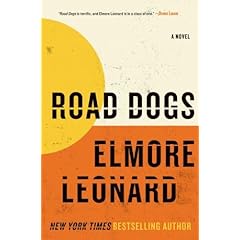
In “Making It Up as I Go Along” (AARP Magazine [don’t ask], July/August 2009), Elmore Leonard describes some of the ways in which he generates ideas for his stories. Considering his novel-pub cred (Get Shorty, Three-Ten to Yuma, Out of Sight, and Rum Punch, among many others), it seems to this here greenhorn that the man probably knows what he’s talking about. So take a look at some of these and see if any of them resonate with you:

…From Photos

Leonard describes how the main character of his novel Out of Sight started life as a photograph of a woman deputy marshal holding a pump-action shotgun. As some of you, my darling readers, already know, I am a very visual person. I can see myself picking up a magazine like National Geographic, thumbing through to an article about some 19th-century adventurer, and feasting my eyes and my creative brain on the sepia-fuzzy image of a hood-eyed man in a weather-beaten hat. Maybe he’s wearing a heel-length overcoat and carrying a pack. BOOM again–but in a good way, this time. Suddenly, I have a character named Mac Finchley, and he just stepped out of the magazine pages and into my dead-end chapter–to do what? Shoot my main character in the leg? Build a fire and cook supper? Deliver a message? Juggle spoons? The possibilities are endless, which means the ideas start piling up and the story can roll on, dude.

…From Other Writers

When Leonard needs spare style, he reads Ernest Hemingway every day. When he wants to flavor his prose with humor, he picks up Richard Bissell. Me, I turn to Stephen King when I have trouble with characterization, and to Tad Williams when I need a refresher on world-building. In my opinion, though, it’s best to use caution when reading other writers specifically for help with your own writing. Especially when you’re reading one of your favorites, it’s easy to adopt that person’s style instead of developing your own. That said, we find it natural to imitate what we love. If you focus on finding your own voice and remain aware of your literary surroundings, you should be able to glean what you need from other writers without transplanting their entire crop into your own creative field.

…From History

Moonshine and the library gave Leonard the seeds for his novel The Moonshine War. Speaking of war and not-so-shining historical moments, I have long thought that the epic battles described in the Bible’s Old Testament provide great framework for battle descriptions in fantasy stories. In ancient Roman tradition, a slave whispered “you are only a man” to the great leader as he made his triumphal entry into the city; in my novel Triad, I turned this into an antagonist’s final test of manhood. Real-world history abounds with facts and people and scenes that will spark a fire of happens-next in your mind. Grab a history book, open it to a random page, and let what you read be the next challenge your characters face. How will they overcome it? Let them tell you.

…From Real People

Leonard based a fictional judge on a real-life friend in the judicial system. For my current work-in-progress, I needed someone to get my main character into a heavy metal concert without a ticket. On the day I wrote that scene, I happened to be texting with my friend Bryan, who listens to the kind of music my MC was hearing. Jokingly, I asked Bryan if I could put him in my book. He said sure–and suddenly, my MC had the knowledgeable insider he needed, complete with a T-shirt bearing the name of Bryan’s favorite heavy metal band. Later on, it turned out that Bryan had information my MC was desperate to get, which moved the MC and other characters halfway across the country. So look around at your friends and family and see who possesses the traits your characters might need to move your story forward. You know these people–their habits, hang-ups, foibles, and faces. Once you start pondering, I promise you’ll find you know exactly who is going to help your characters take over the world. Of course, you should always ask permission before you assign a real person the role of Evil Overlord, lest you acquire too-intimate experience with a lawsuit for defamation of character.

These are only a few ways to generate the ideas that will poke, nudge, prod, or shove your story forward when you’re stuck. There are a myriad of others, and I don’t doubt that you’ve thought of some as you’ve read this article. The mental block of what-happens-next can seem as intimidating as the monolith from 2001: A Space Odyssey. But it need not be this way. Use some of Leonard’s methods to generate some ideas, or follow some of the methods that have worked for you in the past. (Share them in the comments! We all need ’em!) You’ll be skipping gaily around that monolith in no time. Or at least hacking away at it with a hammer and chisel.
To wrap up, a few particularly enjoyable and helpful quotes from Leonard:

“Try to leave out the part that readers tend to skip.”

“Dialogue, in fact, is the element that keeps the story moving. Characters are judged as they appear. Anyone who can’t hold up his or her end of the conversation is liable to be shelved, or maybe shot.” I, personally, heart this one with gusto.

“A photo of a woman marshal with a shotgun, and a prison break, gave me what I needed to write a love story.”

“After 58 years you’d think writing would get easier. It doesn’t. If you’re lucky, you become harder to please. That’s all right, it’s still a pleasure.”

And that, my friends, is WILAWriTWe.

(Support the arts! Click on an Amazon link above and buy something–anything! And I’ll get some pennies with which to buy expensive health food for my chubby cat.)

Photo credit Courtney Cantrell.

Audience Analysis

Understand your audience (photo courtesy paintMonkey on Flickr | CC BY 2.0)

Understand your audience (photo courtesy paintMonkey on Flickr | CC BY 2.0)

My dad is in his first Creative Writing class, as I’ve mentioned before. His first assignment was to write something for the class to review. The assignment was vague, but its destiny was clear: the whole class would pass judgment on whatever it was he wrote.

To make matters worse, half the students in the class aren’t even writers — they’re the editors of the school’s literary magazine. With nothing on the line, nothing new and genuine to contribute, their whole role in the class is to tear down the hard-working, soul-baring writers. The monsters!

Ahem. You can see my bias there. It would be a frightening scenario for me, and this being Dad’s first try at this, he got a little nervous. He’s a smart guy, though, and so he faced his fear by rushing to get his story written early so he could get some early feedback, and still have time to rewrite and revise.

He decided to make his something a slice-of-life scene. He picked a recent event — a big blizzard we had over Christmas Eve — and tried to capture the experience, in vivid detail. He wanted desperately to get it right, so he used every trick he knew to write the best scene he possibly could.

Then he took it to class, where the poets complained about his use of language, where the girls complained about his gender bias, and where the editors complained about his choice of genre. None of those were things he’d been working on, so this feedback caught him totally off-guard.

He did the right thing, though: he listened carefully, took detailed notes, and then on his way home he called me up to ask what to do about all those things.

A Public Speaking Process

I spent a little time giving him some specific advice for specific complaints, and a lot more time giving him some general encouragement, but the real solution came from his own experience. When we got to talking about it, he realized he’d been writing something that his class had no interest in reading. It would have made a great blog post, but the editors were looking for a story.

As soon as we had the issue in that context, he understood it completely. After all, he’s an amazing public speaker, and his problem was one he addresses every time he has any presentation to give. The solution is Audience Analysis. Before long, Dad was teaching me how to fix his problem.

He explained his whole process for preparing a speech. He always starts with a topic that he has something to say about, he spends a little time figuring out the thesis sentence that will direct how he talks about that topic, and then he moves directly to audience analysis. Once he’s got those three issues resolved, he said, there’s no need for an outline, no need to memorize a script. Once he’s got those three issues resolved, the speech is done.

Making the Connection

It’s the same in writing. I’ve talked before about picking topics, and I talk a lot about picking the right form for your document. All that leaves, then, is audience analysis. When Dad’s preparing a speech, he’s got some key issues he always has to consider. What is the occasion for the speech? Why is the audience assembling? What do they expect to take home from the speech? What kind of speech do they expect? What kind of speaker do they expect? What is their common interest? What does he have in common with them? What is their education level and interest level in his topic?

Your job as a writer is to get in the habit of asking those same sort of questions. It doesn’t matter if you write a fantastic slice-of-life — if you’re presenting it to people looking for a story, they’re going to be bored. And I can tell you from experience that a really, really awesome fantasy story will earn you nothing but blank looks and a cruel nickname if your audience isn’t into that sort of thing.

Essentially, that’s what “negotiating a connection” is all about. Every document you write needs to bridge a distance between you and a reader. Audience analysis can be a formal or an informal process, a conscious or an unconscious act, and really it happens automatically every time you sit down to write.

The problem is, unless you’re already an expert, the automatic version you’re doing is probably informal, and probably unconscious, and (to add a new element), probably insufficient, too. At best, you make more work for your readers when you just toss something out and leave it to them to “figure it out.” At worst, you can make yourself look like a fool (or, depending what you’re writing, even get somebody hurt).

Your Questions

So what do you need to know? It depends on the document type. It also depends on your skill level. There’s some stuff you can do perfectly without even trying, but there’s other things you stumble over. Maybe you’ve got great voice, but your metaphors fall flat. Maybe you can spin a good tale, but you can’t get the right level of detail when you’re giving instructions. Whatever your weaknesses are, you need to come up with the questions that will help you compensate, and connect with your audience.

Here’s a few common questions, that wouldn’t make a bad checklist any time you’re starting on a new project.

What’s my purpose?

Are you trying to entertain, or to educate? Are you requesting assistance, or passing out orders? Often a single document is trying to do multiple things (like a blog post that’s trying to educate, but in an entertaining manner). In those cases, it helps to formally consider your purpose to help you get the balance right, and make sure the document achieves all of your purposes in sufficient measure.

What’s the best document type to achieve my purpose?

Should you write a blog post or a short story? Should you put your instructions in a structured tutorial, in a printed memo, or in an email? It helps to have your purpose figured out in advance, because that can help you analyze which document type will serve you best. If your purpose is to convey an experience, a blog post can do more for you than a short story (as Dad found out in class). If your purpose is to make sure a hundred employees all perform a new procedure in the same way, a formal document is more likely to get their attention than an email.

How formal should this document be?

Some documents call for a conversational tone, but others need strictly formal tone. I know writers who think it’s a matter of personal taste, but the tone of your document should always be driven by your purpose — you should consider what you want this document to do, and what tone will best achieve that result with your anticipated audience. Sometimes you need perfect sentence structure, sometimes you need idiomatic language that would make Strunk and White wince in pain. Just make sure you’re doing the right one.

How long should this document be?

Again, it’s not a question of personal preference, but of audience effectiveness. You need to understand your topic, and understand your audience, and write a document that’s the right balance of length (meaning, hopefully, useful detail), and readability (meaning, in almost all cases, brevity). If your audience just craves the information you’re providing, spin a good long yarn. If your audience has the attention span of a two-year-old, you’ve got to pack as much information as you can into a tiny space, and make it pop.

Maybe that sounds more like prewriting than audience analysis, but the answers to all of those questions (except maybe the first), can only be found through audience analysis. You’ll have to know how interested your audience is, how educated they are, how much background information they’ve already got, and how they’re likely to respond to the information you’re presenting.

I’ve said it again and again, but writing is a mental game. If you just take the time to think it through, to really consider who your audience is and how they’re going to respond, you’ll be a better writer. If you’ve done that, then by the time you’re putting words on the page, you’re already putting the right words on the page. You’ll give them a story they actually want…and save yourself some embarrassment.

Interesting Things (Technical Writing Exercise)

Business Writing Exercise

Business Writing Exercise

Okay, look. You’re a blogger now, whether you like it or not.

I said as much a couple weeks ago, but one of the biggest challenges of blogging is making your deadline. Last week I talked about finding topics, but the best way to make an interesting document (whether it’s a blog post or a business report) is to write about something you’re interested in.

So that’s your assignment this week. You’re  going to write a blog about everything you’re interested in.

Well, okay, maybe not everything. Make a list of five to ten things you find interesting, and supplement each with two or three paragraphs of explanation. Tell us why you find it interesting, how you learned about it, what you do with it. It could be a topic of study, a favorite hobby or game, or the technical stuff you spend your time on at work. Your job is to capture a list of the things that are interesting to you, and practice making them interesting to your readers.

That also gives you a starting spot, next time you’re coming up blank for a blog post. All the things you want to say, that just won’t fit in two to three paragraphs…those are blog posts. All the things you’d need to say to convince an uncertain reader that it really is interesting…those are blog posts. And, in the meantime, your abbreviated list…that’s a blog post, too, rich with promise of more to come.

So write it up, post it wherever you call home, and share a link with us in the comments. We’re anxious to know what floats your boat.

Character Record Sheet (Creative Writing Exercise)

This is another one of those obvious writing exercises. I wouldn’t be surprised if some of you have already done it, after yesterday’s post. If you haven’t, it’s time to start.

I want you to make a Character Record Sheet for an interesting character. I’d recommend developing a character from a Work-in-Progress (or a Work-in-Sort-of-Thinking-about-It), but of course you’re welcome to make up a totally new character just for this exercise. If you actually follow through on it, I suspect that character will work its way into one of your stories eventually anyway.

Anyway. Write a Character Record Sheet. I was going to suggest you dig up an RPG CRS like I was talking about yesterday (and you can email me if you don’t have one handy) or, if you’re working any genre other than Fantasy, develop a Facebook profile for your character. Either one would give you physical descripti0n, relationship status, family background, core beliefs, profession, and personal interests.

Nursery Class Questionnaire

That was my plan, but then on Sunday at church they handed out a questionnaire for each of the kids in the nursery (and I’ve got two). We started flipping through, and some of the questions felt kind of ridiculous for that purpose, but as soon as I saw it I thought, “This would be perfect for a character profile!”

So that’s your job. Answer the nursery questionnaire for two of your characters. Obviously, your perspective is different as the writer than as a parent, but the answers should be a lot more interesting, too.

  • Child’s name
  • Birthdate
  • Time of day born, birth weight, length
  • Parents
  • Brothers and sisters and ages
  • Grandparents
  • When this little one arrived, our reaction was…
  • People said…
  • Our child likes to…
  • He/she enjoys…
  • He/she does not like it when…
  • It warms our hearts when we see him/her…
  • Our prayer for our little one is…
  • Additional remarks about this little one or thoughts to share with the congregation

Your blog readers would probably find it interesting, too. You can post your answers in the comments, but I’d encourage you to post it on your blog and just share a link with us.

Role-Playing Games and Character Profiles

Tzarm

A character sketch of my warrior/wizard/shapeshifting dragonlord, Tzarm

When I was twelve, I told a lie.

My family moved from podunk Foyil, Oklahoma, to the big city (Wichita, Kansas). I went into seventh grade with no friends, no acquaintances, and really no idea what to expect. I moved from a school with a total attendance (K-12) of about 200 students, to a middle school (7th and 8th) of twice that. It was intimidating.

I caught one lucky break, because this new school was large enough to have a dedicated Honors program, so I could block out the masses crowding the halls and just focus on the twenty kids or so I’d be taking most of my classes with. Out of those twenty, I made a couple friends quickly, and we started comparing interests.

We all liked video games, and books, and fantasy novels especially. I pointed out that I’d played some Dungeons and Dragons, and these friends were fascinated! None of them had ever played, so they asked me more about the game, about the rules, about the experience, about my characters, and I was anxious to fill them in.

Unfortunately, my whole experience of the game at that point consisted of one session — one evening with the family, three years earlier. My then-ten-year-old sister had found the skeletons and rats too gross, and my then-eight-year-old sister hadn’t had the patience to follow the story or really participate, so we’d never tried again. That wasn’t an experience that would impress these guys and secure my place as a cool character, though. So, instead, I made one up.

I told them about my shape-changing dragonlord character and his pet cockatrice, about his half-elf/half-angel girlfriend/sidekick, and then started spinning stories about all the adventures they’d been on. I had a little source material, having glanced through my dad’s Monster Manual a couple times after that one game, but mostly I was making it all up. I did a decent job, and they kept asking me for more stories, until anyone in the group could have spent an hour repeating the exploits of Dragonlord Tzarm.

It was such a popular topic, that my best friend Mike finally decided he had to try it for himself. So he saved up his allowance for several weeks, and bought a used copy of the Player’s Handbook. Then he started reading through it, figuring out how to design characters and how to play the game. He discovered pretty quickly that nothing I’d said made any real sense at all.

Designing Believable Characters

That’s an embarrassing story, but it’s also an excellent glimpse into the storytelling process. Even then, I was developing the skills I’d need to be a great writer, and when Mike called me out in front of everyone, I learned one of the most important rules: make sure your character works.

In Dungeons and Dragons, that means an adherence to some pretty rigorous numerical tables. The framework of the game allows really generous customization, but it also requires some critical elements to make the game make sense at all. Those requirements create consistency, both in the performance of that one character, and across multiple characters, multiple players, multiple stories. It creates a cohesive and rational experience out of a bunch of people doing things their own way.

Maybe you don’t care at all about role-playing games. Maybe you rolled your eyes and growled “Nerd!” when I mentioned Dungeons and Dragons. It doesn’t matter. As a storyteller, that last paragraph should have your mouth watering. The job of the storyteller is to create characters that adhere to certain rules, that behave consistently and believably, that create a cohesive and rational experience out of of a bunch of people doing things their own way.

If you make it all up willy-nilly, guessing on the fly how your protagonist might respond to this or that, you’re going to end up in the same situation I did. If your character doesn’t follow the rules, at some point you’re going to say something wrong, something so impossible even your permissive readers won’t accept it, and they’re going to call you out for it.

So how do you avoid that? Learn the game before you start talking about it. Learn the rules. If you’re writing high fantasy, the D&D Player’s Handbook isn’t too far off, but whatever genre you’re working in, the best resources you’re going to find are other, successful books in that genre. Find out how their characters behave, why their characters behave that way, and what’s consistent across them all. Learn the rules, learn what a character can be and what a character must be, and then you’re not going to make a fool out of yourself.

Prewriting, and the CRS

Of course, once you know the rules, you’ve still got to find some way to follow them. Dungeons and Dragons (like most pen-and-paper role-playing games) makes that easy with a standard form called the Character Record Sheet. When you first create a character, you figure out his vital statistics — things like name and race and lineage, but also numerical scores that represent his physical strength and toughness, his academic training and mental acumen.

Then you cross-reference all of those numbers against pages and pages of charts to figure out how hard it is for him to bash down doors or survive the effects of lethal poisons. By the time you’re done, a single page front and back is able to describe everything your character is, and everything your character is capable of within the game world. It’s amazing.

And, in case you haven’t already guessed it, that’s a process I’d recommend for every writer. If you’re familiar with D&D and you’re writing high fantasy, chances are good you’re already doing this. I know I’ve got CRSes for Daven and Claighan and even King Jason, tucked away in Creative Writing notebooks of days gone by. But even outside of fantasy, the tactic holds. If you’re writing a mainstream murder mystery you’re probably not interested in tracking the number of spells your character can memorize per day — that’s where learning the rules comes in — but whatever your genre, there are key character traits and abilities that would be worth knowing, and worth writing down.

I had a U. S. History teacher in high school who got a multi-book deal and retired from teaching mid-semester, but before she went she shared her character profile chart with me, and it was fascinating. Every character she ever named in a novel would have one of these charts, and she’d fill in a family tree, with important details about immediate kin. She had a field for favorite band, favorite type of music, favorite drink (non-alcoholic), favorite drink (alcoholic), favorite brand of cigarettes, favorite food (alone), favorite food (on a date), favorite food (impressing business clients). She needed to know what celebrity the character looked most like, and the circumstances under which the character first met his or her most recent significant other. The blank chart ran to six pages, and if you added space to fill in all the multi-line answers required, it could easily top ten.

Friend Your Characters

To my great disappointment, I no longer have that chart, but modern technology has introduced a pretty handy parallel. For a while now, I’ve been telling people to create faux Facebook profiles for their characters (or, before that, MySpace). That’s become the Character Record Sheet of the real world — it’s how we identify our key parameters so that strangers can evaluate us and generate a reasonable expectation of our reactions in a given situation.

Beyond the custom profile, MySpace and Facebook have added new tools to the writer’s chest with these silly memes that spring up all the time. Look through that paragraph up above, and think of all the things your Facebook friends have asked you to copy-and-paste — list ten things you love that are orange, or post a profile pic of you with your first pet, or excerpt a paragraph from the book nearest you (no cheating).

All those silly challenges give hints about who you are — that’s why people like them — and your readers would feel the same fascination if you could work those details into your characters, too. So pay attention. Next time a profile pic trend starts creeping down your news feed, take note of it. Maybe it’s not worth adding to your Facebook profile, but ask yourself if it’s something worth adding to your standard character profiles.

That’s the sort of thing that makes amazing characters. Maybe it won’t come up in your story what high school she went to, or what sort of nonsense he’s a Fan of, but those details inform you, the writer, as you portray this character’s actions page after page, scene after scene. If you take the time to work it out, to really friend all your characters (and see who each of them friends in turn), you’ll be ready to make a perfectly believable character from start to finish. You’ll astonish yourself with how real they become.

What I Learned about Writing this Week…from Aaron Pogue

Courtney Cantrell's weekly writing advice.

Courtney Cantrell's weekly writing advice.

Last week, Aaron posted an article on writing and procrastination and the benefits of not procrastinating on your writing. On Monday, he followed up with a writing exercise designed to help us writers write without procrastination. In keeping with that theme, I am going to share with you my story of How I Beat The System And Gave Myself A Migraine. I shall also attempt to refrain from starting every sentence with an adverbial phrase.

Once upon a time, I was a university senior in my very last semester of school. I had spent weeks upon months writing papers, taking exams, doing my homework, working at the campus security office, and discovering what it meant to be a newlywed. My big final project was to complete the first draft of the epic fantasy novel I had been working on for six years. The Vice President of Academic Affairs had asked me to speak at baccalaureate. I was stressed, nervous, elated, excited, and overwhelmed by it all. One wintry Thursday evening before finals, I was not amused to realize that I had a paper due the next day–one which I hadn’t started researching yet.

I hadn’t forgotten the paper. I hadn’t had time for the paper. I was writing an epic and gearing myself up to speak in front of a hundred students and their parents, for goodness’ sake! (And thank that same Goodness it was a December graduation; had it been the entire graduating class of Spring commencement, I think I might have had a nervous breakdown.) Completing a paper for Topics in Philosophy, a general education requirement, was not at the top of my priorities list.

Be that as it may or april, the perfectionist and academic snob in me would not be satisfied with anything less than my last-ditch, pedal-to-the-metal, ultimate procrastinator best effort. Therefore, I hied myself to the library at 7 p.m. on Thursday evening, spent three hours frantically researching and photocopying, and fled to my apartment and my longsuffering husband in order to begin writing a twenty-page thesis paper over the course of the next nine hours.

I did it.

The process was not pretty.

Around 4 a.m. or thereabouts, I began to get very, very sleepy. Now, back in the dark ages when I was this hapless, hopeless, helpless soon-to-be graduate, I was not an imbiber of coffee. I know, I know, most college students walk around with coffee practically flowing into their veins through an IV line. But not I. I despised the taste of coffee. Loathed it, even. To my senses, the smell of coffee was heavenly, and the taste of coffee was hellish. When I needed a caffeine jolt, I turned to chocolate or, in rarer cases, to Coca-Cola (though to this day, you won’t get me to endorse that stuff, either). But tonight, as the words poured from my sleep-deprived brain through my weary fingers and into my computer in ever-increasing incoherency, I knew that neither chocolate nor Coke were going to see me through to the bitter end. I knew I needed coffee.

I’d never made a pot of coffee before in my life. I knew that coffee, the coffee pot, and water were involved, but I knew nothing of amounts. I put some water in, I put a LOT of coffee in, I pushed the “on” button, and hoped for the best. What resulted was a brew that looked capable of writing my paper for me, if only I would set it in front of the computer and let nature take its course. Instead, I dumped a goodly quantity of hazelnut creamer into it so my tastebuds wouldn’t be quite as offended, settled back at my keyboard, and proceeded to guzzle more than half the pot.

Around 6:30 on Friday morning, I clicked “save” for the last time, printed out my caffeine-laden opus, and shut down my computer. The deed was done, and I was so tired and wired, I wanted to die. So I did–for about an hour. Then I got up and started getting ready to go to class and deliver my paper at 8:00.

In the meantime, my husband had gotten up and gone into the kitchen. “Hey!” he thought. “She made coffee!” And the poor man, is his sleep-befuddled elation, poured himself a cup of that mess and tried to drink it. This endeavor was not entirely successful and necessitated adding several gallons of water to the coffee. (Yes, I’m exaggerating–but not by much.)

Back to me, in the bathroom. I’m standing in front of the mirror, trying to put my contacts in, when a shimmery gray splotch appears in the upper right quadrant of my vision. Immediately, my heartrate accelerates, my blood pressure rises, and a cold, crawly sensation invades my stomach. Gamely, I toil on, trying to make myself look presentable, but to no avail. The shimmery splotch grows and curves until it forms a ring, and then it spreads outward until a pinprick speck of normal vision is all I have left. Everything else is gray shimmer. I imagine this is what blindness is like, and it terrifies me.

I knew exactly what it was; this had happened before. Occular migraine. The only cure for it was sleep and a very dark room. I gave the thesis paper to my husband, explained when and where to deliver it for me, collapsed into bed, and stayed there pretty much until it was time to deliver my baccalaureate speech eight days later. I ventured out for finals (I think I had two), but the rest of the time, I pretended the world didn’t exist and that I didn’t, either.

I made an A+ on the paper.

The End.

Great story, eh? Yeah, it’s fun to tell, and it makes for an entertaining anecdote at parties when the subject is either migraines or college life. But why am I telling it now? Well, as I stated above, it’s in response to Aaron’s writing assignment. I wanted to do the assignment, and this seemed like a good place to share it. Also, the story makes for an entertaining anecdote when the subject is procrastination.

Yes, I had my reasons and excuses for leaving that paper until the literal last minute–but the nitty-gritty of it all is that I am a procrastinator at heart. Especially when it comes to writing. There are many reasons why this is part of my personality, but those, my inklings, are another post for another time. For now, I’ll leave you with this: Aaron’s post about procrastination vs. “writing ahead” reminded me that Putting It Off ‘Til The Last Minute has gotten me into some serious discomfort, if not outright trouble. That paper could just as easily have turned out to be D-worthy. At this point in my life, neither my success nor my financial comfort depend on my meeting a writing deadline…but if I don’t get into the habit of writing ahead now, eventually my procrastinative habits are going to garner me something a lot less comfortable than an occular migraine. It would behoove me, methinks, to develop better writing habits now, so that they’ll be in place and I won’t have to expend extra effort to acquire them when the pressure’s on and the coffee runs out.

And that’s WILAWriTWe.

Photo credit Courtney Cantrell.