Skip to content

Act it Out (Creative Writing Exercise)

The lovely Kelley, writing at a coffee shop

Creative Writing Exercise

All this talk of document structure has me thinking back on some of my older projects. As I said in yesterday’s article, the series I’m working on now is highly structured — every book packed with three acts, five chapters per act, two scenes per chapter.

My older work isn’t really like that, though. My first effort at including any sort of structure in a story was King Jason’s War, and that was my fourth novel. I wonder what I’d find if I looked really closely at Taming Fire, or even The Poet Alexander….

I’d find something, that’s for sure. As I said yesterday, every story has a structure, whether it’s intentional or accidental. I’m guessing I’d find something clumsy in my first novel, and probably something a little more sound in my second (since it’s built pretty heavily on genre standards).

What would you find, if you looked at your work? That’s your exercise this week. Pick one of your works-in-progress, and chart it out. Or, if you don’t have anything of your own that would work, pick one of your favorite stories, like Larry loves to do. Either way is great exercise, because it will help you recognize the hidden structure, help you pick out the act breaks, the transitions, the different nature of the storytelling at different places.

Do a thorough analysis, and talk it through. I’d like at least 100-300 words of description, explaining what type of structure you see (3-act, 5-act, vignettes, multi-volume, etc.), how effective the structure is (Does your introduction bleed into Act II? Does your quest start before the reader is sufficiently informed?), and what you could do to improve it.

If you like what you come up with, post it on your blog! Share it, just like Courtney does with her Work-in-Progress Updates. It will help your readers understand some of what you have to deal with as a writer. Be sure to share a link with us here, too, so we can all benefit from seeing someone else’s structure analysis.

Photo credit Julie V. Photography.

The Three-Act Narrative

All your plot's a stage, and all the big reversals merely act breaks. (Photo courtesy BaronBrian on Flickr | CC BY 2.0)

All your plot's a stage, and all the big reversals merely act breaks. (Photo courtesy BaronBrian on Flickr | CC BY 2.0)

I’ve been writing books since Middle School, mostly fantasy, but these days I’m working on a long-running series of near-future science fiction cop drama romance. Getting into that genre was a big challenge for me, but even though I hadn’t written it before, I’d read all those genres.

I knew the conventions of science fiction and mystery. I knew how to build a cop drama, so when I ran into problems I hadn’t had to deal with in fantasy, I just leaned on the genre and got through it. I ran with that for three books before it hit me — I was writing formula fiction.

I mean, sure, everything I said last week about recipe cards and business letters makes a lot of sense when you’re just recording reference material. It’s different with a story, though. Right? A story is supposed to be alive. I shuddered at the thought that, in all likelihood, these books were just predictable, cookie cutter fiction.

That thought crushed me. I love this series, and suddenly three books in I had the nagging fear it was worthless, repetitive, dull. That was a Thursday afternoon, and I put everything else aside to resolve this crisis. I spent half an hour revising the plot of book three (already half written), but it was just change for the sake of change. I went back over the outlines of books one and two, looking for things I could tweak, but those books worked.

Here’s My Answer to that Thinking

Finally, I reined in the panic and stopped to think it through. I knew the whole story (all the way out to book twenty-five). It was a good story, and it certainly wasn’t predictable.

In that thought, I found my answer. The Ghost Targets series isn’t formula, it’s structured. Structure is a good thing. I still needed some comforting, though, so I found myself chasing down that path, thinking of all the creative document types that thrive under intensive structure. I said to myself, “What about haiku? What about sonnets?” Then I got a bit of a gleam in my eye, went to my computer, and wrote up a blog post called “Ghost Targets as Formula Fiction.” Here are the key paragraphs:

It all depends on what you mean when you say “formula.” There’s nothing wrong with form, like with the pre-set shape of a haiku, or how Shakespeare’s sonnets always conform to one framework (with three quatrains and then a rhyme). The books in Katie’s story are the same. The quality is only in the content, not how fresh the font or far between the chapter breaks.

But yes, she lives and solves the crime, and often talks with Door who cannot tell her where he is, but gives the key detail. And…leaves you wanting more.

The coolness lies in character and plot. Forget the frame — ask is it good, or not?

In case you didn’t catch it, I explained in the comments that the key to those three paragraphs is that they could be rewritten like this:

It all depends on what you mean when you
Say “formula.” There’s nothing wrong with form,
Like with the pre-set shape of a haiku,
Or how Shakespeare’s sonnets always conform
To one framework (with three quatrains and then
A rhyme). The books in Katie’s story are
The same. The quality is only in
The content, not how fresh the font or far
Between the chapter breaks. But yes, she lives
And solves the crime, and often talks with Door
Who cannot tell her where he is, but gives
The key detail. And…leaves you wanting more.

The coolness lies in character and plot.
Forget the frame — ask is it good, or not?

That’s right. I’m a huge word nerd. I don’t expect you to be surprised by that.

The Structure of a Story

Last week I also wrote an article about the power of poetry to the storyteller, and in the associated writing exercise I included a link to that blog post. The point I was making in that article got left out of the poetry article, but it’s worth making now — especially following that week’s Tuesday post.

Just like technical documents, stories have structure, whether it’s intentional or accidental. As I’ve mentioned before, the most useful definition for “story” is just “a beginning, a middle, and an end.” In other words, pure structure.

The easiest formal structure to map to that definition (and the one I’m using in the Ghost Targets books) is the three-act narrative. Just like a play divided into acts (and each act composed of several scenes), a story works well when it is built out of three distinct acts, each one significantly progressing the plot in its own way.

Act I

Act I is the beginning, the introduction, in which you reveal to the audience all the information they’re going to need to understand the story. If you’ve been following this blog for long, you’ll know I usually say to get right to the action — “get in late, get out early” — but even that method needs (and allows) introduction. I do recommend diving right in, but during the first act, the story that happens (whether in action or dialogue) should be revelatory — it should provide lots of information, even as it drives the plot forward.

You’ve probably heard the phrase “deus ex machina.” It’s a bad thing. It refers to a too-convenient plot development that just magically solves a significant story complication. It can be the right person showing up at the right time (for no good reason), or a sudden inheritance that solves all the protagonist’s woes (even though we’ve heard nothing about any sickly relatives), or a character suddenly having the ability to fly, just as the villain opens a trapdoor under his feet (but he’s never used or mentioned that ability at any point in the story).

Those examples all share one thing in common: parentheses. Your characters are allowed to get rescued, and inherit fabulous treasures, and even fly if you want, but fair play requires you to establish the rules before you start the game. In other words, you have to at least plant the seeds for something like that to blossom. And when do you plant them? Act I. By the end of Act I, you should be finished establishing and revealing the fundamental information necessary for the plot to your readers.

Act II

Act II, then, is when you start revealing things to your protagonist. The first act ramps up to the story, bringing the reader into the protagonist’s life even as the protagonist is beginning to grapple with a major life disruption. At some point, the protagonist should become active, aggressively seeking to get his or her life back to normal. That process is most of the plot of the book (even if it’s only a third of the page count).

Act II is the quest. Act II is the hunt for the killer. Act II is the pursuit of perfect romance (and all the pitfalls along the way).

Act I introduces what has happened to your protagonist, but Act II tells us what your protagonist does about it.

Act III

And Act III, of course, is the end. The conclusion. That’s not to say it’s the resolution (or not all of it, anyway). I’ve talked before about climax and denouement. Those two make up the very end, but just the climax and denouement aren’t usually enough to make up a whole third act. (And if they are, it’s probably because you’re not “getting out early.”)

During the third act, though, the climax and resolution become inevitable. If your story is a mystery, your detective should be well and truly investigating the crime at the beginning of the second act (that’s the quest of a mystery novel, after all). Maybe she starts with nothing, or maybe she starts with a dozen good suspects. Act II is all about finding clues, narrowing down the suspects, chasing (and eliminating) red herrings. At some point, though, your detective should find the information she needs, the vital clue, that will eventually reveal the truth.

Maybe she doesn’t recognize it at first. Maybe it points her down a path she never considered. There should still be roadblocks on her path, but past that point, her path is set. There’s one way it can go, and that’s straight to the conclusion.

Ghost Targets as Formula Fiction

That’s how I do it in Ghost Targets. Katie is my detective protagonist, and every book starts with a beginning. In the first act, I tell the reader what’s going on in her life, especially explaining where she is relative to the end of the last book. I introduce the mystery, often with Katie received a case, maybe reviewing a casefile. She’ll do some research, she’ll stick her nose in some office politics, but during the first act, most of what she does is set up to get the reader up to speed.

Then something falls into place. Maybe a fight with her boss gives her a need to prove herself. Maybe a key piece of evidence falls into place, all on its own, or she hears the voice of someone who shouldn’t be talking in her headset. Whatever it is, it changes her investigation from passive to active. She goes out. She investigates, she hits some unexpected obstacles, she learns there’s more to the story than she suspected, and she figures out how to get the right people to talk.

Then, at some point, she understands. She’s not there yet (whether “there” is an armed standoff in the Everglades or lying face-down on the floor in some villain’s underground lair), but she’s on her way. During the third act, the effects of all her decisions, all her hard work, all her successes and setbacks begin to play out. The people who come into the story at this point had to come into the story at this point, because of something that happened earlier. Same for the events that crop up, including the coincidences. Whether she knows it or not — whether the reader can see it or not — she’s drawn to the climax like a steel bead to a magnet.

Then we get resolution. Then we get an end, all neatly tied with a bow, and packaged in a shape that works, again and again. That’s good structure. Try it out sometime.

What I Learned about Writing this Week…from Graphic Novels

Courtney Cantrell's weekly writing advice.

Courtney Cantrell's weekly writing advice.

Last autumn, Aaron encouraged me to read my first ever graphic novel: V for Vendetta by Alan Moore and David Lloyd. Since then, I’ve also read the first two in Stephen King’s Dark Tower graphic novel series and Watchmen by Alan Moore and Dave Gibbons. Those friends of mine who are in the know about such things tell me that all of this is giving me a good start to my graphic novel education. Since I’m a newbie, I can’t judge; feel free to chime in and agree/disagree in the comments!
I am a writer–but when I am not writing, my next favorite creative endeavor is oil painting. I can’t remember a time when I wasn’t drawing or painting regularly. Somewhere in the world, there is a room, and in that room there are boxes, and in those boxes are The Collected Artistic Undertakings of Courtney, Ages 2-17 (Approx.). In my German high school, I took art classes equivalent to American university undergrad courses. So I think it’s safe to say that visual art has a big role in my life and is part of the way I think. Kinda funny that it took me so long to discover graphic novels…but better late than never, aye? Yea verily.

Visual and Envisioning

Graphic novels engage parts of my mind that standard novels don’t. Not only am I reading a story, I’m seeing it unfold; in a way, this is counterpart? companion? to watching a movie with subtitles. Not only do I get the pleasure of piece-by-piece revelation, I can take the delightful time to admire the artistry of characters brought to life in color, line, and shading. In the case of King’s Dark Tower series, I read the original novels long before getting my grubby little hands on the graphic versions. King’s characters were already alive in my mind…but now that I’ve seen an artist’s interpretation of King’s copious and brilliant descriptions, his characters are even more vibrant and breathtaking in my imagination.

Some of you might think that the graphic novel representations have erased my own pictures, but let me assure you: The artists’ renderings have not replaced but instead enhanced the images I’d formed of the characters and their surroundings. Suddenly, those characters are even more real–and they were pretty sugar-torting real before, lemme tell ya. And I wonder: How would it be if my own characters could become that real?

Vivid and Invigorating

If there were a Facebook group for Describing Your Characters Down To The Last Teensy Little Detail, I would not become a fan. In my own stories, I like to give a few descriptive hints, then leave the rest up to my readers’ imaginations. This might be my private rebellion against novels I’ve read in which the reader must wade through pages of frilly dress descriptions (*cough*RobertJordan*cough*), but that is another story and shall be told another time. Suffice it to say I want my readers to interact with my story as much as possible–and one way of letting them do this is to allow them the freedom to see my characters with minimal writerly interference.

But what if there were a way to make my characters more vivid and alive for me? As writers, we need to know our characters inside and out, otherwise there’s really no point to this grand and terrifying adventure we call Writing. Part of knowing someone is knowing their habits, personality traits, likes, dislikes, and history. Aaron has already given you some excellent pointers on how to figure out these things about your characters. Thanks to my graphic novel reads, I am focusing on one of his recommendations: Get yourself a visual representation of your character’s appearance.

Meet somebody online, chat with them, exchange emails, friend each other on Facebook–and you know that person, right? Wrong. For most of us, a big part of knowing somebody is knowing what they look like. (Not to mention interacting with them vis-à-vis, but that, too, is another story.) The same goes for your characters. You need to know what they look like so that they become three-dimensional in your mind. You need to know where their laugh lines are. You need to see the shine of tears in their eyes. You need to identify which crooked teeth show when they smile. The more you see them right in front of you–instead of just in your head–the better your ability to communicate that reality to your readers. Even if you tease those same readers along with nothing more than hints.

Vibrant and Unvisioned (And Yes, I Made That Word Up So The Heading Would Fit)

So take your envisioning to the next level. Get the image of your characters out of your imagination and into a form more concrete. Take that abstract vision and make it tangible. Some of us have the artistic skill to bring our characters to life through our own drawing skills. (Strangely enough, I have yet to do this myself.) For the rest of us, magazines, online photo galleries, or even clothing catalogs are the better source. What if your story were turned into a movie? Think of the actors who would play your main characters. Acquire pictures of these celebrities and peruse them as you write. Tack them to the print-outs of your Character Record Sheets. If a character “happens” to look like your best friend, older sister, or umpteenth cousin thrice-removed, use photos of those people (but don’t necessarily tell them about it). Learn what your characters really look like–and then sprinkle bits of that reality throughout your story. See if that doesn’t take your readers’ collective breath away.

And that’s WILAWriTWe!

(Click a link and buy something! Feeding a writer is that easy.)

Photo credit Courtney Cantrell.

Manage Your Metaphors

A good metaphor is a bridge for your readers. (Photo courtesy Julie Velez)

Every document is, essentially, a phone call —  a conversation between you and your readers, and you’ve got to establish a connection before you can start talking. I’ve said that before, haven’t I?

I’ve also said a good first draft is a block of marble, from which to carve that glorious statue known as a final manuscript. Oh, and telling instead of showing is the same thing as playing a game of poker with your cards on the table. Good document structure is a tower of red, yellow, and blue blocks. Poetry is magic, punctuation is alchemy, and so is blogging about your life.

Oh, and a blog itself? Do you have any idea what a blog is? I looked into it, and it turns out:

That’s an awful lot of rhetorical symbolism on one topic, but I knew before I did the Google search that I’d get something along those lines. Why? Because for a long time there were a lot of people who wanted to know what blogging was. And while I talked a few weeks ago about the importance of accurate descriptions, sometimes the very best way to describe something is to spend some time describing something else altogether.

The Power of Metaphor

I said once that technical writing is all about taking something you understand, and presenting it to your reader in a way they can understand. I called that process “translating understanding.”

We do that in a few ways. Accurate descriptions and strong illustrations help make the unfamiliar seem familiar. Detailed charts and numbers create concrete touchstones to keep the unknown rooted in the known. And metaphors harness the power of human creativity to fashion a parallel between something understood by the reader, and something only fully understood by the writer.

In other words, it’s a bridge. Your reader starts out on the far side of a chasm — their ignorance — and you have to find some way to bring them across before you can begin any real communication. A metaphor uses something already familiar to the reader to cover over that chasm and easily bring them to the other side. It’s a natural and familiar process, and one that can be immensely powerful.

The Pitfalls of Metaphor

Of course, as with any bridge, there’s a risk of falling. If you’re not careful, you’ll lose your readers partway through the crossing, and when the chasm is a bottomless pit of ignorance, getting them back out again can be a tricky process!

Here’s some of the easiest ways to lose your readers:

Making a Hasty Metaphor

Every time you create a metaphor (or simile, or any rhetorical analogy), you’re risking losing the reader, so you need to learn to respect that danger. Most of the truly egregious metaphors are the ones made in haste, when you casually say, “Well, it’s like this…” but it’s really not like that.

Get in the habit of catching yourself early, and double-check your metaphor before you commit to it.

Choosing a Poor Comparison

Obviously this ties in to the previous point, but sometimes even when you stop and think, you’ll still make the wrong choice. This usually happens for one of two reasons: either you fall in love with the elegance of your metaphor and refuse to give it up (even when it falls apart), or you rightly diagnose a good metaphor, but it’s not good for your readers.

There are no style points in technical writing. You’re creating this comparison to clarify a point for a specific audience, and if your metaphor doesn’t do that — no matter how beautiful or technically accurate it may be — it’s a poor metaphor.

Insufficiently Explaining Your Metaphor

There are times when your metaphor is good, but as a bridge, it just doesn’t quite span the gap. It’s a clean comparison, it should be a good description for your readers, but whenever they get to your metaphor, they fall through the gaps! That may not be a problem with the comparison you’ve chosen. It’s possible you just haven’t explained it enough.

Obviously, we use metaphors to save words, to increase efficiency, but imagine a perfectly constructed bridge, rising majestically out of the mists in the bottom of a canyon…but unconnected at both ends. It reaches all the way across a mile-long gap, but at each end, it stops ten feet short of the ledge.

A bridge like that could be durable, elegant, cheaply constructed but reliably made. It could be everything a project engineer ever dreamed of, but without those last ten feet on each end, it’s worthless. In the same way, a metaphor doesn’t work until you make the connection. Review your parallels, review your introduction and the little touches you add along the way, and make sure it goes the distance.

Overextending Your Metaphor

Of course, adding words to it doesn’t necessarily help. Just like a bridge that keeps going beyond the width of the gap that it’s filling, using significantly more materials and resources (and requiring…extensive…digging work, I guess?), to do a job that could just as easily be done just by pouring a thin layer of concrete across the topsoil and using a road….

Umm…yeah. Always remember, no matter how good your metaphor, that it’s just a stepping stone to your actual point. Be ready to abandon it the moment that its job is done. That’s important to remember because, no matter how good the parallel, when you’re talking about the metaphor, you’re talking about something that is inherently not your topic. Your goal isn’t to establish a parallel and just discuss that, but to establish a parallel and get the reader into the right position to start discussing your actual topic.

So use your metaphor! Bridges are useful, and so are metaphors. But use it to get where you need to be, and then switch your focus. Sometimes you’ll do that early in the document, once, and sometimes you’ll keep going back to the metaphor, again and again, but every single time you go back, make sure that you ultimately end up discussing your actual topic again. Getting readers safely across and back again is your full-time job, after all.

Photo credit Julie V. Photography.

Band Poster (Technical Writing Exercise)

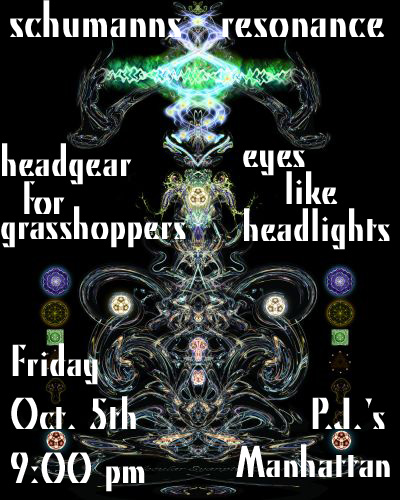
Remember last week’s article about the shape of a document? Remember that hideous image growling out at you halfway down the scroll?

Band flyer for Eyes Like Headlights at P. J.'s

Band flyer for Eyes Like Headlights at P. J.'s

GAH! Yes, that one. Man.

Well, this week your assignment is to do one better. Take a few lines of mostly nonsensical words, and turn them into something meaningful. Not just that, but something that sells. Something that makes a casually glancing passerby want to spend their Friday night at some dingy bar just to see what your band is like.

Graphic design is a real tool of the Technical Writer’s trade, and as more and more of our everyday writing goes online — and as the internet becomes more and more a visual medium — the ability to blend images and text to work together in conveying a message becomes a pretty big deal.

So get some practice. Here’s your words:

www.myspace.com/eyeslikeheadlights

eyes like headlights

cd release party

debut album

there’s no us in evolution

5909 johnson drive

mission, kansas

with left on northwood and rettig

friday, october 26

the mission theatre

all ages 21 to drink

As I told my students, you could probably find the original flyer these words came from with a little snooping on the internet, but that’s not what I want to see. I want to see your best effort, I want to see how you communicate in a mixed medium.

If you don’t have a clue where to start, I’d recommend Flickr. Search for a background image that sparks your creativity, and then copy it into Photoshop or Picnik or Paint, or even Microsoft Word. Use the tools you know, and make it as compelling as you can.

Then share it with us in the comments. I can’t wait to see what you come up with!

Write a Sonnet (Creative Writing Exercise)

The lovely Kelley, writing at a coffee shop

Creative Writing Exercise

This week you’re going to write a sonnet.

Some of you just rolled your eyes, because sonnets are child’s play. Some of you just gripped at a failing heart, because sonnets are Shakespeare-level expert stuff. If you’re in either category, you missed the point of yesterday’s post. That’s okay. I’ll say another word or two about it next Tuesday, but for now I want you to humor me.

As far as structured poetry goes, sonnets are pretty straightforward: fourteen lines, in sets of four (called quatrains) with an extra pair of rhyming lines at the end (called a couplet). The rhyme scheme is a-b-a-b, c-d-c-d, e-f-e-f, g-g, so the four lines of your first stanza might have final words that look like this:

…say

…under

…gray

…thunder.

That’s not terribly complicated. The extra complexity of it comes from the meter — you’ve got to make the whole thing iambic pentameter. Every line should be ten syllables long, and the pattern is one unstressed syllable followed by one stressed syllable (baDUM baDUM baDUM baDUM). If that all sounds too complicated, then focus on just this last part, and try to write one line. Write ten syllables, and try to make the stress work out. (And if you have to fudge it a little bit, nobody’s going to call you out, I promise.)

Once you’ve got one line done, repeat the process, saying something that follows from the first line, and now you’ve written two lines in iambic pentameter. For the third line, you’re doing the same thing, but ending on a word that rhymes with the end of the first line. It’s a little trickier, but not too bad.

Follow it through for eleven more lines, and you’re done. And, just like that, you’ve written a sonnet. Tada! You’re Shakespeare.

If you’re part of the “child’s play” group, then that’s all way too much explanation, and way too little challenge, so I’ll pile on. For those of you who can already write sonnets in your sleep, your challenge is to write one that works as a couple paragraphs of perfectly reasonable prose, like I did in this old blog post (and if you can’t spot it right away, check the comments).  That adds a little effort to the exercise. If you make something you’re satisfied with, feel free to hide it in a blog post of your own, and feel quietly superior while none of your readers appreciate your wit.

Either way, post your poem in the comments section. Sonnets are short enough to share, and difficult enough to earn you some real recognition. Share your accomplishment with us, and we’ll heap you high with praises.

Photo credit Julie V. Photography.

Loving Language (The Purpose of Poetry)

Poetry is language distilled. Even stumbling first attempts help bring your words alive.

When I was in third grade (or maybe it was second), I wrote a poem about sunset, and rest. I did it in number 2 pencil on a sheet of wide-ruled paper torn out of a 78-cent spiral notebook. I illustrated the edges, with an angry sun and an optimistic moon, and my best effort at a seagull. I can remember this in such clear detail, because I’ve still got that page. It’s creased with folds, and the pencil’s faded, but I’ve still got it, tucked away somewhere. The meter is awful.

In the summer of my twelfth year, when I came home from a week at Grandma’s to learn my dad had interviewed for and accepted a job three hundred miles away, I wrote a deeply heartfelt three-stanza poem to all the friends I’d be leaving behind. It took me three weeks to get it right, it was deeply maudlin, and in the end it proved to be packed with promises that I didn’t actually keep. I was just a kid…what did I know?

In high school, I decided to become a poet entirely on the sound principle that “chicks dig poems.” Shallow as it was, it wasn’t wrong. I can’t say with confidence that I landed any girlfriends entirely from the poetry, but I know I avoided some disasters (and saved a pretty penny on Valentine’s and Mother’s Day gifts) with some well-placed rhymes. I’ve still got a bunch of them — literally hundreds, all the ones I ever wrote to the girl who ended up becoming my wife — and I still read through them from time to time. I’m proud to say they make me smile almost as often as they make me wince.

Growing Up

Somewhere in there, though…somewhere in that last year of high school and first year of college, I started taking myself seriously. Quantity plummeted, and quality started creeping in. I started reading the work of other poets, and paying attention. I started learning why people liked Eliot, and Post, and cummings, even though I didn’t. (And, in the process, I sort of learned to like them, too.) I started studying syllabic meter, standard rhyme schemes, and stanza structures.

I wasn’t writing for chicks anymore, either. I wasn’t writing for anyone, really. I wrote my dissatisfaction with the faith of my fathers. I wrote my frustration with strict naturalists, and my pity for existentialists, and my love for the creator/god/storyteller. It was intensely personal stuff — totally unpublishable — and when I graduated from college, I pretty much left that behind me.

Except…I didn’t. I carried it with me to my blogging. I brought it to my short stories, and caught myself weaving it into my novels. I spent four years really trying to become a poet, and in the process I made myself a better writer for the rest of my life.

The Sound of Your Words

There’s several factors in that claim, some of them abstract and lovely, some of them grungy and technical, and some of them quietly practical. The best example of that last is reading my stuff aloud.

Every writing teacher will tell you to read your work aloud, before you consider it done. I have. Stephen King did. My creative writing teacher in college did, and so did three or four of my teachers in high school. It’s great advice…but it’s too much work. Everyone knows they should, but no one follows through on it.

Well, no one but the poets. Poetry, far more than prose, is the visual expression of spoken words. All language captures spoken ideas, but poetry lifts up the words, poetry traps the very expression itself, wrestles it into submission, and then puts it on display for all to see. Much of the beauty of poetry is in its demonstration of the way people speak, even more than in the thing the poem is actually saying.

Because of that, there’s no way to get a poem right without speaking it. Poets learn early to test their words against the ear, as well as the eye, and in the process they develop the habits that every writer needs to have. They also get better and better at recognizing the shapes of sounds — they develop the instincts to create beautiful-sounding phrases before they read them out loud, and they learn to recognize the bits that aren’t going to sound right, just by sight.

Of course, it helps that poets are working in smaller chunks. It’s a lot easier to make time to read a page out loud than it is to croak through eighty thousand words.

Try, Try Again

That’s one of the real benefits of writing poetry, though: high turnover. You can start a project, devote yourself whole-heartedly to it, and still be done over the weekend. As I said, I wrote hundreds of poems in high school, and dozens in college. In that same span, I wrote two novels. That means, in terms of practicing storytelling, I wrote exactly two introductions, and two conclusions. It’s hard to make huge improvement in a skill with so few repetitions.

Poetry offers a different skillset, but it’s still written communication. It still requires a negotiated connection, and a satisfying ending. I dove into every poem with the understanding that I had to convey my setting, my characters, my scene, in just a handful of words.

You can get that with short stories, and certainly with blog posts — it’s absolutely part of the reason I keep insisting you should have a blog! — but there’s a special magic to poetry.

Words Come Alive

What’s the magic? Love of language. Storytellers often talk about the magical moment when a character comes alive and starts dictating plot. I’m completely certain I’ll talk about it here. It depends a little bit on your writing style, apparently, but most writers experience it at some time — a character you’re writing starts responding to his environment, starts saying things in dialogue you’d never imagined, and starts taking actions you couldn’t possibly have predicted. It’s powerful. It makes incredibly compelling stories, and it’s one of the moments character-driven storytellers live for.

Poetry’s got something similar, but it’s not the characters. It’s the words. The language itself comes alive, and it’s mesmerizing. Not only that…you learn how to do it. You learn how to find that magical space just at the border between abstract and concrete, between spoken and written, between real and imagined — the place where the magic happens. You learn how to find that place, again and again, and eventually you make it your home.

Poetry becomes part of your language, not just a product of it, and then it’s there, wherever you go. Whatever you write, whether it’s a blog post, or a 1,000-page novel, your language writhes and dances, your words sparkle and shine, and your readers hear the harmony singing behind the story you’re telling them.

It’s not an easy task, I know. Especially if you’re already out of school. But learning poetry will make you a better writer, a better speaker, and (why not?) probably a better person, too.

Photo credit Aaron Pogue.

What I Learned About Writing This Week…from Mark Z. Danielewski

Courtney Cantrell's weekly writing advice.

Courtney Cantrell's weekly writing advice.

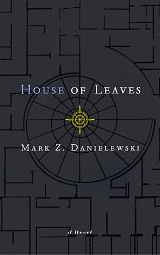
If memory serves (and, sometimes, it does–wearing a get-up not unlike that of a roller-skating carhop), I first came across Mark Z. Danielewski’s House of Leaves in a Facebook® ad. Yep, that’s right: I succumbed to a social networking site’s shameless commercial lures. I went with the flow, I yielded to temptation, I clicked a click that click-clicking clickers should refuse to click. Shame on me.
Insanity Ensues

Or maybe not shame on me. From first glance on Facebook ad to purchase at the bookstore, House of Leaves looked and sounded interesting, and it delivered on its promise in bizarre and enjoyable fashion. Here is my summary:

[[[the story of Johnny (told mostly in footnotes), who reads Zampano’s book and starts going crazy as a result <<<the non-fiction book written by crazy (?) old man Zampano (who is blind) *about* Will’s movie and house {{{the “home movie” shot by professional photographer Will, whose house is larger on the inside than on the outside; the more he explores, the larger and more labyrinthine it gets–and there’s something lurking in it♡♡♡THE LOVE STORY OF WILL AND HIS WIFE, KAREN♡♡♡the “home movie” shot by professional photographer Will, whose house is larger on the inside than on the outside; the more he explores, the larger and more labyrinthine it gets–and there’s something lurking in it}}} the non-fiction book written by crazy (?) old man Zampano (who is blind) *about* Will’s movie and house>>> the story of Johnny (told mostly in footnotes), who reads Zampano’s book and starts going crazy as a result]]]

No. I’m not kidding. That summary gives you only a hint of what this book is really like.


I thoroughly enjoyed this book.

And I’m not kidding about that, either.

Insanity Finds the Perfect Audience

I like puzzles. I enjoy figuring things out. I love a good challenge. House of Leaves promises and provides challenge in abundance, both plotwise and visually (what with parts of the text missing or backward or upside down and so forth). The plot contains a labyrinth for me to figure out, and the text itself is an even more challenging maze. And the core of it all is a love story that satisfies the girl in me. I won’t deny that a couple of times, I was squeeing on the inside.

I am the perfect audience for Danielewski’s weird novel.

Insanity Is Not For Everyone

If you’ve been paying attention, my scruffy little inklings, you’ll have noticed that I am bounding up to and leaping onto the bandwagon a bit late. Aaron already covered the subject of audience analysis quite well–in his article on audience analysis. He even challenged you to describe your own audience so you’ll have a clear picture of their needs and expectations. There’s really little for me to add to what he has already told you. Which would kind of nullify the entire point of my article, except that thinking about House of Leaves made me realize that it’s the perfect example of what Aaron’s talking about.

You see, Danielewski’s target audience is narrow; I happen to be right smack in the middle of his bull’s-eye. (Let that tell you something about me or not.) I’m also the target audience for Tad Williams. Lois Lowry. Jennifer Roberson. Roger Zelazny. Jane Austen. Stats about me aside, what makes me their target audience is that they write stories I love. Danielewski wrote a story that terrified me, enthralled me, offended me, engaged me. He wrote a story I love.

But not everyone is going to love it. I have two friends in particular who tried to read it and couldn’t get past the fiftieth page. Those two are not Danielewski’s target audience. Stick a Tom Clancy novel under my nose, and you’ve lost me–because I am not Clancy’s target audience. In the past, I have picked one of his novels off the shelf at the bookstore, paged through it–and put it back. Nowadays, I’m not likely even to pull a Clancy off the shelf, not even to peruse the cover. Some of you aren’t likely to set foot in the sci-fi & fantasy section. You’re not the target audience, and those authors aren’t going to be negotiating a connection with you.

Your Readers’ Brand of Insanity

You’ve gotta find it. That particular combination of ingredients, those specific characters whose personalities and interactions generate the stories your target audience wants to fall in love with. Every target audience has its own brand of crazy. You’ve gotta figure out what your readers’ brand of crazy looks like. Forget the self-indulgent (yes, I’m daring to call it that) I-write-for-the-sake-of-writing/I-write-for-myself business. Nobody’s gonna buy that attitude, and if you put that attitude into your writing, nobody’s gonna buy that, either.

If you’re writing, you’re writing for somebody, and that somebody isn’t you. You have a target audience, and they’re dying to get their hands on your story. Your job is to figure out who they are, so that you’ll know which spices should flavor your written concoction. Writer, do your job and know your audience. It’s the only way you’re gonna put that manic, acquisitive gleam into their eyes. It’s the only way you’re gonna negotiate the connection that makes somebody out there say, Yes, this story is my kind of crazy. I’m ready to read. Let’s do this thing.

And that’s WILAWriTWe.

(Click a link! Feed a writer! Thus speaketh the FCC.)

Photo credit Courtney Cantrell.

The Shape of a Document

When you do it right, good writing is easy as pie. (Photo courtesy Joebeone at Flickr | CC BY 2.0)

When you do it right, good writing is easy as pie. (Photo courtesy Joebeone at Flickr | CC BY 2.0)

Last fall I taught my first college-level writing course — Technical Writing at Oklahoma Christian University (my alma mater). My class consisted of a bunch of computer science and information technologies students, and a handful of English majors. It was an interesting mix.

I wasn’t out to teach them how to do my job. I did ask, first day of class, how many of them had considered becoming a Technical Writer after graduation. The answer (quite predictably) was none. When I got around to asking what they were planning on doing, every one of them named a profession that would require some proficiency with technical writing, even if it wasn’t their main job description.

So my goal wasn’t to teach them every aspect of technical writing, but to teach them what technical writing is, and why they should care. The answers I came up with became the seeds of this website, because more and more we all have to write, and we’re all eventually judged by what we write, and it’s really easy to get it right if you just know what to look for.

One of my favorite classes, and probably the most effective demonstration of that concept, was the third week of class. I came prepared with an outline, a handful of visual aids, and a bit of a sense of mischief.

My Haiku

I started the lecture with the first of the visual aids. It was a Notepad document, some plain text with no formatting whatsoever — just a bunch of words. I did leave in line breaks and punctuation, but I dropped everything to lower-case to increase the impact of the message.

So this is what they saw:

schumann’s resonance

headgear for grasshoppers

eyes like headlights

friday

october 5

9:00 pm

p. j.’s

manhattan

I said, “Anyone know what this is?”

One of my Computer Science majors said, “A haiku?” I almost laughed at that. I’d actually had, “Gibberish? A poem?” in my own notes for possible student guesses.

I just said, “What about this?” and opened the second document.

the jackpot

10:00 pm

$5.00

eyes like headlights

daleria

the remember

january 5, 2008

Somebody said, “An advertisement, maybe?” I heard whispery voices treading dangerously close to the right guess, so I went ahead and put up the third document.

www.myspace.com/eyeslikeheadlights

eyes like headlights

cd release party

debut album

there’s no us in evolution

5909 johnson drive

mission, kansas

with left on northwood and rettig

friday, october 26

the mission theatre

all ages 21 to drink

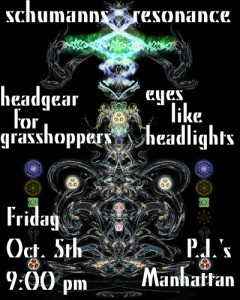
That third line gave it away, and I said, “What I’ve got here is the text from a bunch of band flyers. That first one looked like complete nonsense when I showed you just the unformatted words, but you’d recognize the information instantly if I showed you this.”

Band flyer for Eyes Like Headlights at P. J.'s

Band flyer for Eyes Like Headlights at P. J.'s

The point of all that? I told my students then, and I’m telling you now, the words that go on a band flyer don’t mean a thing until you put them in the shape of a band flyer.

Document Types

I talked before — a long, long time ago — about document types, and what they offer. As a writer, approaching a known document type (especially when it’s a template) makes your job easier. Instead of a blank page, you’ve got a form. Instead of a bunch of information, you’ve got answers. Everything you need to say already has a nice, clean place for it, and it’s easy to tell what you need to do, and when you’re done.

Doesn’t that sound nice? It’s the secret ingredient of Technical Writers everywhere. It’s how we survive all the documentation requirements and ridiculous deadlines they throw at us. We never start from scratch. We always have a map.

There’s more to it than that, though. As writers, these document types sometimes feel like shortcuts that were invented to make our lives easier, but it’s never about the writer. Technical Writing is always about the readers, and document types have a lot to offer the readers.

Take a standard business letter, for instance. Once you learn the format, it tells you (the writer) which information to include. How cool is that? But its real purpose — the reason it’s so important for you to get it right — is to act as a map telling the reader where to find the bits that interest him.

A recipe card is an even clearer example, divided into sections for ingredients, preparation instructions, and serving directions. All of that information could be written out in essay form. It could even be told as a narrative story:

When Mary wanted to bake an apple pie, she started by going to the grocery store and picking up two pie crusts, a half-pound bag of flour (even though she’d only need two tablespoons of it for this recipe) and some ground nutmeg. She already had some of the ingredients at home, including more than enough sugar and salt, and a whole batch of fresh-picked apples!

That’s the same words, but they don’t serve the same purpose. Readers have to work harder to get the information they need (like ingredients for a shopping list, or preparation instructions when they’re double-checking to make sure it doesn’t burn). In other words, just like with the band flyer, when you put the core elements of a recipe down in the expected format, the shape of a recipe card adds information to your document.

Learning Your Shapes

So what’s the point? Nobody’s going to collect their recipes in short story format, and nobody’s building band flyers single-spaced in Notepad!

The problem is…some of us are. Some of us are writing essays (or short stories, or abstracts, or SEO-optimized outlines) when we should be writing blog posts. Some of us are writing blog posts when we should be writing short stories. Some of us are writing casual emails when we should be writing business letters (even if we’re delivering that business letter through an email client).

It’s easy, when you’ve got to convey some information, to immediately reach for the document type you’re most comfortable with. Maybe that’s textspeak, or 140-character paragraphs. Maybe that’s 10-page papers, dense with context, even if your only purpose is to announce dinner plans for Friday.

I said in the intro to this article that we’re all writers, and it’s really easy to get it right if you just know what to do. One of the things you need to do, every time you start to write anything that matters, is stop and consider your audience. Stop and think about the readers who are going to be looking at the shape of your document, trying to spot the bit of information they need.

Then figure out where it’s supposed to be, and put it right there. Easy as pie.

Strip Poem (Technical Writing Exercise)

Business Writing Exercise

Business Writing Exercise

Your assignment this week is to create a strip poem. And no, it’s not as naughty as it sounds.

Later this week, I’m going to spend a lot of time talking to the creative writers about poetry, and on Friday they’ll get to write sonnets. I wouldn’t expect sonnets out of my technical writers, but I still recommend that you take the time to read Thursday’s article, when it comes around. Poetry is language distilled, and technical writing is all about efficiency, brevity, and impact. The approaches are different, but the destination is the same.

So this week I want you to be poetic, too. We talked last week about the importance of punctuation — the meaning conveyed by dots and dashes — and now’s your chance to get your hands dirty and see how accurate that post really was. You’ll get to practice recognizing the impact of punctuation (and whitespace, and document design).

How? Find a suitable document, strip out the formatting and punctuation (or rearrange it to fit your needs),  and make a poem out of something entirely prosaic. Maybe you’ll find inspiration in a random Google search, or in the menu at the Chinese place you visited for lunch. Maybe you’ll find it in the subject lines in your email inbox, or the Tweets your friends have published. Whatever your source, turn it into a poem. Express your creativity, without writing a word.

As a special treat, here’s mine:

Unstressed Syllables, by Aaron Pogue

Acronyms, active and passive,
Voice-blogging cards on the table.

Character chronology, conflict resolution.
Cycle creative writing, Dean Koontz!
Document metadata! Document structure!
Document types!

Drafts, dreaming, editing feedback….
Filling in the blanks.

Grammar rules, Marble Statue. Mightier than the Sword.

NaNoWriMo: narrative and exposition.
Negotiating a connection.
Organization methods plot poetry.

Point of view practice:

Writing….

Prewriting….

Revising….

Rewriting….

Robert Jordan.

Stack-and-smash storytelling teaching Technical Writing.
The blank page. The end.

The human condition.

Tips and tricks, Unstressed Syllables.
WILAWriTWe (working title).
Worldbuilding writing exercise….