Skip to content

On the Public Domain: The Value of Free Art

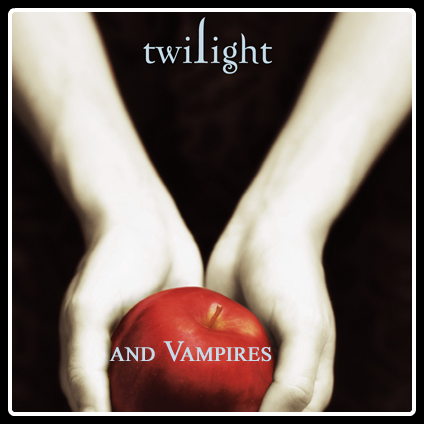
Yesterday I told you about my impossible dream of someday seeing a version of Twilight with vampires in it. And I said all that in the context of a conversation about the public domain.

So what is the public domain? Well, remember way back when we talked about the cost of making money off copyright? I said that, essentially, all copyright really does is give you the luxury of taking your fans to court.

Well…essentially, the public domain is the opposite. A work of art that’s “in the public domain” is free to be infringed-upon by any and all, and nobody gets to sue anyone over it.

Finding Value in Free Art

Does that sound a little crazy? It’s actually how most of human art has been produced.

You see, copyright is a relatively new concept. It started some 300 years ago. Before then, we didn’t have the beneficence of a government-enforced monopoly encouraging artists to pursue mastery and fame. Instead, we had to settle for the work of petty amateurs like Michelangelo, Leonardo da Vinci, John Milton, and Shakespeare.

Artists regularly study each other’s methods, and practice them — recreating styles, effects, characters, even whole scenes. Historically, that’s how new artists learn the fundamentals of their craft.

And it’s quite normal for new fantasy writers to make up stories that are either King Arthur, Robin Hood, or Lord of the Rings. We laugh about it sometimes, poking fun at the more egregious cases like Eragon, but it’s actually a pretty valuable learning experience all around.

Of course, if your story is just a scene-for-scene retelling of a copyrighted work, you’re going to get sued. And if it’s a retelling of one of those public domain works, you won’t be able to sue anybody else. So is a project like that even worth pursuing?

“Free Speech” vs. “Free Beer”

It depends on your goals. If you just want to make a fortune off selling rights (or suing pirates), then the more original your story is, the better.

I don’t know many artists who work that way, though. I know a lot more who’d dive wholeheartedly into a public domain project like that if they had a great idea, resigned to the reality they’ll never make a dime off that work.

There’s no real reason to believe that, though. In fact, there’s a lot of confusion out there about how free art works.

Luckily, the people who’ve been promoting free software for the last couple decades have come up with some great ideas on the topic. One of the things they like to point out is that there’s a difference between “free speech” and “free beer.”

Art in the public domain is free of cumbersome legal restrictions (and, with them, the burdens they place on the creators). That doesn’t mean the creator has to give it away for free, though.

If you walk into a Barnes and Noble looking for A Tale of Two Cities, you’d better expect to pay for it on your way out. That’s a public domain book, and your local bookseller is happy to provide it for the low, low price of $9.99 (same as you’d pay for last year’s Dan Brown paperback sitting on the shelf next to it, which might still be under copyright when your great grandchildren are browsing for something to read during a shuttle ride to Starport Jove).

How to Use Free Art in Your Writing

So where does that leave you, as a writer? It leaves you with a wrenching moral dilemma, is where, but I’m not going to bring that up for a couple weeks yet. I’d prefer to let you enjoy your innocent bliss for a little while longer.

It also leaves you in a place of power, though. Copyright has convinced so many of us that any kind of copying is wrong, and so the bulk of today’s artists are trying to do it with one hand tied behind their backs.

Borrowing technique and style from other artists is how art is done, and there is a tremendous amount of art ready to be borrowed from. Come back tomorrow, and I’ll talk a bit about how to use free art in your writing.
On the Public Domain: Twilight…and Vampires!

For Memorial Day this year, we threw a big party. Actually…I should rephrase that. For Memorial Day this year, my wife threw a big party. All I did was mow the lawn, and that begrudgingly. She was still kind enough to invite me, though.

Anyway, it was a bit of a last-minute thing, but we had a pretty impressive turnout. We’re all a bunch of married couples for the most part, so these things usually end up dividing pretty evenly along gender lines — husbands in one room pouring drinks or watching the game, wives in another talking or playing games.

This time went a little differently, though, because in the time since our last big party, I’ve founded a writer’s group or two, and a couple of my writer friends were there this time. So the three of us ended up sitting off to one side talking shop for the whole evening.

I’d been discussing this Consortium stuff with Courtney for nearly a month at that point (and railing against copyright while I was at it), but it was my first time to bring either up with Becca. I like to think Courtney prodded me into sharing my brilliant secrets with Becca, but it’s far more likely I just butted into their conversation and turned it toward my own interests.

Either way, we did end up talking copyright, and public domain, and Becca (who’s relatively new to the writing world) didn’t immediately grasp what I was getting at. She asked me to explain what the public domain actually was, and even after I’d done that, she wanted to know why I thought it was such a great thing for artists.

She was the first person who asked me to defend that claim, and honestly, I had to cast about a bit to find a good explanation. The public domain is great for artists (that’s what I’m talking about for the rest of the week), but I couldn’t immediately think of a great explanation why.

The real beauty of the public domain is that it frees artists to express themselves in the manner most suited to their artistic vision — even if that manner happens to be one somebody else has already perfected and popularized. Parodies are already protected under copyright law (sort of), but there are all kinds of real, valuable creative works that could be built on existing creative works.

The best example I could come up with quickly was Pride and Prejudice and Zombies. If you’re not already familiar with the title, somebody took the classic (and public domain work) Pride and Prejudice, and inserted a zombie plague into the existing storyline. Pride and Prejudice is still there, completely intact, but it’s got the occasional tangent into fantasy adventure somewhere betwixt Hertfordshire and London.

It’s a decent example of what can be done with public domain work, but it’s imperfect because it’s comical. It’s not that much different from a parody.

Derivative art doesn’t have to be funny, though. It just so happens that this one is, and sure enough, Becca laughed aloud at my description. Then she asked if Courtney or I had read “the Twilight thing like that.”

Neither of us knew what she was talking about, so then it was her turn to cast about for an accurate description of a bizarre concept. And the whole time she was working on that, I kept thinking silently, “Please let it be Twilight…and Vampires! That would be hilarious. Please tell me someone wrote Twilight…and Vampires!”

The Value of the Public Domain

Because that would be a fun book, right? The frivolous and chaste aristocratic love story from Twilight, but with the added element of dangerous and interesting fantasy monsters. I’d actually read that one.

Alas, it’ll never happen. Not in time for any of us to see it, anyway — Twilight‘s under strict copyright until 70 years after Meyer dies.

There’s plenty of public domain art out there, though, and it’s got a lot to offer you in your writing. Come back tomorrow for a brief discussion of the value of the public domain.

What I Learned about Writing this Week…from Words

Words matter.

I don’t know if you’ve realized that, my dear inklings, but it has come to my attention a few times. Recently, I noticed this strange phenomenon when I was trying to send a message on Twitter. (For those in the know, this process is called “tweeting” — in my eyes, a particularly interesting word choice.) I was trying to tell Julie that Aaron puts a lot more faith in my artistic skills than I do. Twitter’s spellchecker, in its oh-so-helpful way, tried to correct my hastily-typed and therefore misspelled “faith” to “Gauguin.”

While I wouldn’t mind having some Gauguin native to my artistic talent, that isn’t exactly what I wanted to communicate. (Not to mention my skepticism that Aaron has the power of Gauguinic infusion.)

On Facebook, by means of the well-known “Flair” application, I discovered a series of amusing buttons which display photos of official signs. One such sign reads:

Please present your octopus.

This leads to all sorts of confusing questions. Is presenting an octopus like presenting arms? Is there a ceremonial aspect to consider? What if I don’t have an octopus to present? Or did the author of the sign mean that I should gift my octopus with something? Even if I had an octopus, what sort of gifts do octopuses like? Or is it octopi?

The implications are staggering.

Groucho Marx once said,

Outside of a dog, a book is man’s best friend. Inside of a dog, it is too dark to read.

I would venture the claim that Mr. Marx played with the prepositions on purpose to put together this pithy pun. Sometimes, creating confusion is the whole point of a particular communication (and yes, I do realize I’m having an alliterative moment; and no, I don’t know why), as well as eliciting chuckles and eyerolls from one’s audience. Nothing wrong with that…as long as the doing of it is intentional.

Did You Really Mean To Say That?

Which brings us, naturally, to the real point of today’s article. What? No, I’m not just reciting anecdotes for your collective amusement! This is serious business, people! We’re talking about learning here!

*ahem*

We all know the shenanigans that can happen when newspapers over-edit their headlines in the interest of brevity. Students start cooking grandparents, mushrooms suddenly have gender, and cows wield axes against farmers. It’s chaos, I tell you, all because someone wanted to save space and left out a “the” here or an “an” there. When elimination, addition, or switcheroo of words isn’t intentional, it leads to a breakdown of communication — and communication, gentle readers, is what we writers are all about.

But more about that in a minute. Ready for another antidote anecdote? A couple of years ago, I was in the process of editing the first draft of my novel Triad, and I recorded the following observations:

So, I’m editing Chapter 16 of my book, and a spelling error caught my eye. This wouldn’t be such a big deal — it could just be a typo, y’know — except that I’ve observed the same error in multiple places in the manuscript. Apparently, I don’t know the difference between “rein” and “reign.”

Of the two, the one I need most in the story is “rein”–as in, the reins of horses, taking the reins, reining a horse (or a person) in, etc. What I actually used in my first draft is “reign”–as in, a monarch’s reign, the reigning ruler, etc.

Note to self: There is quite a difference between

  • “I reined in the horse”
  • and “I reigned in the horse.”

The latter would be, I imagine, fairly uncomfortable, not to mention a thing of impossibility in our dimension, Greeks and Trojans notwithstanding.

Shades of Mr. Marx again. My initial word choice — “reign” — changed the meaning of every sentence in which I used the word. I was expressing something I didn’t mean to express, while losing the essence of what I really wanted to say. I wasn’t communicating.

Oh, and speaking of loss, I was losing the meaning, not loosing it. In penning this article, I perused global Facebook status updates. I found people loosing friends, love, common sense, information, abilities, games, control, nothing, slippers (Et tu, Cinderella?), hair, phones, “close ones,” money, weight, sparks, minds, focus, and the ever-ephemeral “it.”

As a result of all this loosing (or loosening?), I’m picturing various denizens of the Net with somewhat manic looks on their faces, releasing handfuls of hair to the breeze or tossing their cell phones out of windows, all while shouting, “You’re free! You’re free!” Some of them, surely, are going to end up giving away or receiving things they never expected to give or get, like one Facebook user who claimed she “deserves to loose” — which brings French cities to mind.

The loosen-lose-loose(-loos?) conundrum also makes me think of their-there-they’re, your-you’re, and it’s-its. But I’m not here to give you a grammar lesson; your very own Little, Brown Handbook can do that far better than I.

Deliberate Connection

Aaron and I both have talked about this. When you write, you are negotiating a connection with your readers. You’re taking your idea, converting it into written language, and presenting it in words you want your readers to understand. If you don’t choose your words wisely, that understanding won’t take place. You won’t forge the connection between your ideas and your readers…or between your soul and your readers’. (And yes, readers and readers’ was intentional.) If you don’t connect with your readers, you might as well be talking to yourself…and sometimes, even your Self won’t have a clue what you’re trying to say.*

So pay attention to your words. I know, it seems a terribly obvious thing to say — but we writers need such reminders from time to time. Write with flair and abandon, but don’t let your words meander all willy-nilly! Deliberate over your verbs. Make each adjective deliberate. (See what I did there?) Make every word count. And please don’t forget to present your octopus.

And that’s WILAWriTWe!

(Click the Amazon link, purchase something, and contribute to the Courtney Cantrell Writerly Writership fund.)

Photo credit Julie V. Photography.

*A few weeks ago, I wrote myself a note: “The eyes are open, but the armpits are sated.”
…Huh?

On Word Count: How Long Should It Be?

Yesterday I gave you some of the reasons why writers (and people who deal with writers) spend so much time talking about word count. It all started with a story about the word count of Ivanhoe, though, which rocked my world.

I dealt with a lot of these same issues when my little sister started writing for the first time. She sent me a list of questions about writing, and right up near the top was, “How long should it be? How long is a book? How long is a chapter?”

Those are good questions, but the answers are complicated — not least because she was really asking in terms of pages, but as I explained yesterday, pages aren’t a very helpful metric for measuring. That said, there are some common or average numbers you can use when generalizations are good enough.

For instance, an average page (filled mostly with text) will hold something on the order of 250 to 333 words. (250 word per page is by far the most common number I’ve heard quoted, but I almost always find in practice that it ends up somewhere a bit above 300.)

Some Precise and Helpful Values

In fiction we talk about documents of varying lengths. There’s the short story, which Poe famously demanded “must be able to be read in one sitting.” That’s precision for you!

Then there’s the novella, which everyone famously defines as, “Umm….”

If you give them some time, they might add, “Well, it’s longer than a short story and shorter than a novel.”

So how long is a novel? That will get you another, “Umm….”

Hard Numbers

If you dig hard enough, these are some of the most common numbers you’ll see given:

  • Short story: 5,000-15,000 words
  • Novella: 20,000-40,000 words
  • Novel: 50,000+ words

Lots of people use the 50,000 number to define novels, but unless you’re writing books for kids in grade school, most publishers and agents don’t seem to be interested in anything under 70-80,000.

There’s also some wisdom floating around lately that really long books (anything over 120,000 words) cost too much to print, so publishers would rather see something at or around 100,000 words. I can’t vouch for that, but I’ve heard it often enough that I feel like I should repeat it.

As to Shannon’s other question, how long should a chapter be…that’s an even more subjective question. The right answer to all of these (of course) is “long enough…and no longer.”

For my own stuff, I aim for chapters somewhere between 4,000 and 6,000 words. That’s room enough for two complete scenes, on average, plus transitions, and it gives me 15-25 chapters per book, which I divide evenly into a 3-act or 5-act structure depending on the genre and plot.

Figure Out Your Own (Technical Writing Exercise)

The lovely Kelley, writing at a coffee shopSo how long is the stuff you’re writing? And how long does it need to be?

I’ve talked a lot about books because they’re a very visible medium. It’s incredibly likely, though, that no matter what you’re writing, there’s somebody you work with (or should work with) who cares about its word count.

If you’re a blogger, you’ve probably heard something close to Poe’s advice for short stories. “Blog readers are busy people, so be sure to keep it short.” Some people are even generous enough to suggest targets.

I’ve heard 600-800 words quoted as an ideal, and I know at least one popular blogger who aims for 400 words per post. Still, like always, the right answer depends on your style, your material, and your target audience.

So what can you do? Make a guess how much time your readers will be willing to spend reading one of your posts. Then figure out how long it takes to sit and read 100 words (by reading someone else’s blog posts, not your own), and that will give you a rough target word count.

If you’re a manager sending out memos or a copywriter preparing sales text, you could probably benefit from the same exercise. Either way, your readers are busy people. Make sure you know exactly how much you’re asking of them.

If you’re writing fiction, it’s a little easier, because those people are always talking about word count. Spend some time on Google, and get to know your genre. Figure out what the average or suggested word count is for your target audience, and do what you need to hit that.

In every case, you can make your job easier (and make your writing better) by finding someone who’s already done it right, and using that as a model. Now that I think about it, you should really turn that process into a habit. It’s how we do everything from mastering style to designing new document templates. Come back next week for more on that very topic!

On Word Count: Why Writers Care about Word Count

Yesterday I talked about a bit of a nasty surprise I got trying to finish off an old childhood classic: it was longer than Moby Dick!

Well, okay, no it wasn’t. Moby Dick is 210,000 words long, and Ivanhoe is only 175,000. Still, that’s a chunk.

175,000 words is about as long as the sixth Harry Potter novel (168,923 words), and 2 1/2 times the length of the first one (76,944).

Standard Measurements

And that’s exactly why writers like to talk about word count — it allows direct comparisons between books of very different sorts. It’s valuable to know the comparative sizes of different works (and absolute sizes of individual works), for lots of reasons:

  • Pricing services like editing. It takes a lot less time to edit a 200-page photo book with 20,000 words than a 200-page  novel with 70,000, and editors need a standard way to charge for that.
  • Estimating a book’s read time. That’s what I ran into with Ivanhoe. Funny enough, I ran into the same problem with the Harry Potter books when I got to Goblet of Fire. They’d been getting longer with each volume, and I’d noticed that, but book two was 9,000 words longer than book one, book three was 20,000 words longer than book two, and book four was 83,000 words longer than book three. The book itself wasn’t that dramatically bigger, because it used smaller font and less white space to get a lot more words per page. (And if you’re curious, book five — the longest — was longer than Moby Dick by a good 20%.)
  • Allocating storage. Whether it’s on your bookshelves at home or in the sprawling stacks at Barnes and Noble, space for books is at a premium, and the size of the book matters a lot in determining where it will fit (or if it will fit). Now that things are going digital, there’s a lot less white space juggling, and a lot more interest in word count, since that’s a much better predictor of final file sizes.
  • Knowing what to expect. That’s probably the biggest value of accurate comparisons. If I get lost in a land of fantasy and adventure for a couple hours longer than I’d expected, that’s no problem, but if I pay $9.99 expecting to get a novel and end up with a short story, I’m going to feel a little ripped off.

Of course, with the exception of editorial services, most of the world deals with those same issues and gets by on a much simpler metric: page count. That’s a lot easier to keep track of, because it’s printed right there on the page!

Writing for the Page (and Not Writing for the Page)

The reason page count doesn’t work in the writing/publishing world is because, like I showed with the Harry Potter example, it’s such a flexible thing. If an editor wanted to charge me $100 a page to review my novel, I could single-space that sucker and slap an 8 point font on it and get myself a hell of a deal.

Tracking word count makes it easy to know how much content is in a document, and that’s usually the information we really want.  Once you’ve got the content nailed down, it’s almost an afterthought to distribute those words across an arbitrary number of pages — based on issues of style as much as anything else.

How Long Should It Be?

Of course, knowing why writers and publishers care about word count probably isn’t enough. You still need to know what to do with it.

Come back tomorrow, and I’ll tell you how to figure word count, and provide some rough word count targets for various writing projects.

On Word Count: e-Reading Ivanhoe

A few weeks ago Trish took the kids to Wichita to visit her family. That gave me a weekend all to myself, so I scheduled every moment of my three days of alone time and filled two pages of my scribblebook with a big ol’ run-on To Do list.

That list was a thing of grace and beauty…so, naturally, I shared it on Facebook. When my friend Jennifer looked it over, the task that struck her enough to elicit a comment was “Finish Ivanhoe.” She thought that seemed a little frivolous compared with all the other heavy work I had to do.

And, y’know, it was. That was the whole reason I’d added it. At the beginning of the weekend I was mostly done with the book — somewhere around chapter 35 out of 44 — and I thought it would be good to add a little bit of recreation into my busy work schedule. It would also help my self-esteem to have at least one item I could cross off the list without working too hard.

That’s…not how it turned out. Finishing off Ivanhoe devoured huge chunks of my weekend, and I could never understand why it was taking so long to get through those last ten chapters.

I didn’t find out until Monday afternoon. See…I’d been reading it as an e-Book on my cell phone, so I didn’t have the constant visual feedback that a paper book would have given me as to how much material was still left.

Instead, I was guessing based off two things: the memory that I read this story when I was eight (so how long could it possibly be?), and the number of chapters in the Table of Contents. Apparently Scott was a little reckless with his chapter sizes, though, and the ones at the beginning were considerably shorter than the ones at the end.

Oh, and also apparently I was a magnificent reader at age eight. Because Monday I finally finished the book over my lunch break, and then out of maddening curiosity, I pulled up the plain text version of it on Project Gutenberg, pasted it into Google Docs, and asked for a word count.

Google had to think about it for a while, but eventually I got my answer:

175,752 words

And that’s just the chapter text, not counting the volumes of front matter and back matter.

That’s three times the length of most of my novels. That’s even longer than the longest I’ve ever written (which was, itself, way too long). That’s an undertaking.

Why Writers Care about Word Count

And that would have been handy information to have at the beginning of my weekend!

Actually, word count is almost always really handy information. It’s one of the things I’m really looking forward to in a future dominated by e-Books — we’ll have easy and immediate access to numbers like that (as long as we remember to check, anyway).

Anyway, this week I’m going to talk about why everyone cares so much about word count, and what exactly are the magic numbers when it comes to word count.

On Copyright: How to Protect Your (C) (and Why You Shouldn’t)

This week we’re talking about getting paid for your writing, and yesterday I mentioned that copyright was originally created to promote creative expression — that basically the government established an artificial monopoly to an intangible good, and they back it up with (legal) force.

They earnestly believed a system like that would encourage young people considering possible career options to have faith that pursuing an art could be a viable job opportunity. Is that what it’s done for you?

For me, personally, copyright has never created an incentive to produce art. Copyright is a nuisance — an obligation on the artist, just like all the marketing and sales stuff we’ve got to do these days, instead of focusing on creative expression.

I want  to talk about that today. Really these are the same topics we discussed yesterday, but I want to address the darker side of them: what it costs you to get paid by copyright.

Defending your Copyright

I talked about it a little yesterday, but even though you automatically own the copyright to any work you create as soon as you create it, that ownership can be a pretty flimsy thing. If you don’t choose to go through the paperwork and filing fees to register your work with the Copyright Office, it can be incredibly difficult to establish your rights in court.

Worse than that…if you’re not careful, it’s incredibly easy to lose your rights, even to a work that you have registered. The same laws that grant artists ownership of their intellectual property also place the burden on the artists to protect those rights.

If people start misappropriating your work and you don’t stop them, it can be ruled that your works have entered the public domain. I’ve heard that given as an explanation for what happened with Calvin of Calvin and Hobbes (last paragraph).

So for you to benefit from your copyright at all (including just long enough to sell it off to a publisher), you’re personally obligated to police any use of your material — a full-time job in itself — and take on the costs and difficulties of preventing anyone using your work. That means, at the very least, sending off a Cease and Desist letter, and in all likelihood taking someone to court to force compliance.

That’s usually someone who admired your work enough to consider it worth sharing, and you’re stuck sending lawyers and federal agents to punish them for it. If you don’t, though, you could easily lose your right to ever get paid for that product (sort of).

Oh, and even when you do commit to defending your work, and you invest in a good lawyer and a fancy suit for your court dates, there are fair use exceptions to muddy the water. The problem is that they’re vague, meaning neither you nor the infringer ever really knows if a use is allowed until you’ve both spent the time and money to hash it out in a court case.

Limitations of Copyright

Litigating for pay isn’t a terribly artistic process, and even if we liked the idea, most artists couldn’t afford it. That’s where the publishers come in, because they do have the resources to do all the policing and lawyering.

You get to sell them your copyright (and with it, all your control over the work and most of the profits from selling it), and they’ll make sure it pays off. They’re the ones who’ve convinced our government to enact brutally restrictive intellectual property laws in the U. S. (and to force other countries around the world to follow suit), because copyright does pay them to do what they want to do.

What they do isn’t “create art,” though. Copyright props up a warehousing and distribution industry and (of course) a significant portion of the legal industry, but it’s hard to see how copyright “encourages young people to pursue an art” by forcing them to put roofs over the heads of some poor starving lawyers.

And, in the end, all copyright does is keep people from seeing your creation, discussing it, and being inspired by it. The only thing it’s even capable of doing is restricting your audience.

There Are Alternatives

But that’s how it has to be, right? I mean, they invented copyright for a reason. And as the corporate suits and the lawyers have been reminding us lately, you can’t compete with free.

There are alternatives, though. There are other ways to do business as a writer (or any other kind of artist). We’re going to talk about them throughout the month of July.

Intrigued? Come back next week for a discussion of the public domain, what it is, and how you can use the public domain in your writing.

On Copyright: How Copyright Works

Yesterday I talked a little bit about how I got paid to write — both the method that paid me $200 to do something fun, and the method that has paid me…well, considerably more to do something tedious and practical. And, really, that’s the issue.

It’s easy for my bosses to evaluate the value of my documentation at work, because it’s a required component of a system with a fixed value. Art, though….

Art’s tricky, because it’s hard to put a price tag on fun. See, writers want to do creative writing — it’s fun — and readers want new stories for the same reason.

There’s clearly some value there, and some very clever men got together at some point in the distant past and decided the world needed some kind of incentive to encourage creative types to make the time for things like creative writing, so the consumer types — that is to say, the public — could have access to it. The system they dreamed up is copyright.

Friendly Note:

I’m talking about copyrighting here — protecting your creative works through legal force. That’s a different thing from copywriting — creating new written material (often) for marketing or sales purposes. For more on that, check out my friend Julie Roads.

Copyright (and, really, the whole umbrella of “Intellectual Property”) attempts to encourage creativity by guaranteeing that creators get paid to make new things. It does that by granting to a manufacturer (the creator) an arbitrary, fiat, and transferable monopoly on the sale of a product (the creative work).

Registering Your Copyright

The nice thing about copyright is that it’s easy. You technically own the copyright to anything you create, as soon as you create it. You don’t have to register your work in order to own the copyright to it.

Of course, owning the copyright is only really valuable when you have to defend it in court, and that process will go a lot smoother if you can present your registration form than if you show up with, “I wrote it on July sixth. Pinky swear.”

Anything you’re particularly concerned about protecting can be registered online with a minimum of fuss (and a $35 filing fee) by visiting the e-Copyright Office at eco.gov. I’ve registered a couple of my novels (in a batch, so it was just one filing fee), before engaging in what seemed like some slightly risky behavior, but I wouldn’t go so far as to say I recommend it.

If you’re trying to protect your work, though, you’ll get even more mileage out of a simple statement. Anything you publish (and “publish” here simply means “make public,” so it would certainly include blog posts and Facebook Notes) that you want protected would do well to bear a standard copyright statement.

Copyright © 2010 Unstressed Syllables. All rights reserved.

The clearer your copyright statement, the less likely it is that someone will accidentally misuse your material. That also makes it harder for willful infringers to get away with their malfeasance (and it makes their reckoning bigger when one comes due).

Getting Paid for Your Copyright

If you use it right, copyright can get you paid in two ways. First, it provides enough of a safeguard that you can, with reasonable confidence, invest the time and money to print and publish a book in the confidence it will sell.

That does require you to have a market of readers ready to buy your books. But if you do have that market, you can rest assured that you’re the only one selling to them.

Then you can also generate income using the legal bludgeon that copyright provides. When people share your work or appropriate it as their own, you can threaten them with legal action if they don’t pay a licensing fee (a popular tactic among photographers, apparently), or you can just go ahead and take them to court.

Obviously the facts of the case have a lot to do with determining the amount of the reward, but if you can show that the infringement was willful (that’s where your blatant copyright statement comes in handy), then you can charge hundreds of thousands of dollars of punitive damages. That’ll pay a few bills!

Of course, most writers never participate in any of that. Even the successful ones with big book deals tends to spend very little time printing and binding books or fighting cases in Federal court.

It’s far more common for writers to sell their copyright. If you can find a big corporation (with lots of lawyers constantly at the ready), and convince them your book is worth selling, you can sell them your intellectual property rights in exchange for a cash advance and a small portion of the proceeds from any sales.

Or, if you’re truly savvy and willing to do some of the business-side legwork, you can sell “the rights” to a single work to lots and lots of different buyers for lots and lots of small portions of the proceeds from sales. Hearing Dean Wesley Smith discuss the resale of individual rights makes me feel more confident in copyright than I have in years.

Protecting Your Copyright

That’s the dream. A magic bakery that pays you again and again and again for a book you wrote once, years ago. Most of those rights you sold took away your control over your work, though.

That’s a big drawback, and it’s not the only negative aspect of copyright protection for creators. As you may have noticed in some of the discussion above, there’s a real and constant burden on the writer to actively protect the copyright on a creative work.

That’s an awful lot of time spent not writing. So come back tomorrow and I’ll talk a little bit about how to protect your copyright…and whether you should.

On Copyright: Eschaton

I’ve already told the sad story of how I graduated, gave up on my dream, and took a day job. I’ve also since admitted that it wasn’t really all that bad, thanks to some dedicated friends — including one who came to Tulsa to work with me.

That was Toby, and before he came to work with me, he happened across a job posting he thought I might be interested in, and passed it along. When I dug a little deeper, I discovered it wasn’t exactly a job offer. It was a writing competition on the web forum for a game that didn’t actually exist.

They wanted a staff writer, though, and that sounded to me like a ridiculously cool gig. So I put in my submission — 1200 words or so adapting an Arthurian legend to their sci-fi space-warfare universe — and waited to hear back with comments.

What I got was a big official-looking envelope in the mail, and a nine-page contract that spelled out in intricate detail what they wanted me to write, who owned what “game concepts,” how much new material they expected me to provide, and when I could hope to get paid. The answer to that last one was an optimistically-worded “never.”

It was clear, reading through that document, that they had put a lot of thought into intellectual property rights. They reserved to themselves the universe (since they’d already come up with a setting that was integral to their game engine), and they asserted the right to reject any story material that they felt ran contrary to their universe, but other than that they were anxious to protect my rights.

For page after page they clarified that any characters, new settings, storylines, plot developments, representations, or descriptions I provided them would remain my own creative works completely under my control until such time as the game secured full funding and they could pay me a real salary. In the meantime, I’d provide them with stories and grant them the limited one-time right to publish them on the website (since that was the whole point), and if we parted ways I’d be able to do with them whatever I wished (assuming, of course, I could sufficiently scrub them of references to the larger universe).

It was, honestly, one of the most flattering documents I’ve ever read, and it showed — on the part of a technically-minded programmer and a somewhat-savvy business major — a surprising respect for my status, my expertise, and my rights as an artist.

It was also entirely unnecessary. The envelope also contained a $200 check to serve as a retainer until such time as they secured funding, contingent (of course) on my acceptance of the contract. For 200 bucks and a fiction writing gig I’d have signed over the rights to my firstborn. I mailed the signed contract back to them, and started flooding their inboxes with far more story than they could have possibly anticipated.

Getting Paid to Write

For me, that check was a more emotional validation than all the respectful legalese. It was the first money I ever earned writing stories, and that made it special. (It was also the last penny I ever saw from that project, but who’s counting?)

We all want to get paid to write. If you didn’t, you wouldn’t be here (not on a Thursday, anyway). It’s a tough dream to realize, though, even if you’re willing to settle for work like that. (I probably ended up clearing less than a dollar an hour on the work I did for them, but it was a lot of fun.)

But right now, there are basically two models for getting paid as a writer. Professional writing can pay you a handsome salary to show up at work and sit at a desk all day, where you’ll write really boring stuff.  Creative writing is a lot more fun, but it’s ridiculously hard to break into the market, and even when you do, it pays a wildly erratic salary.

If you’re trying to play that game, you’ve got my sympathy. You’ve also got a lot of factors to consider, and I’ve been considering them for most of a decade. So come back tomorrow and I’ll tell you the ins and outs of how copyright generates income.

What I Learned about Writing this Week…from Jeff Long

Or: Pop Quiz, Hotshot

Today, dearest inklings, I have a pop quiz for you. Oh noes! Not da quiz! Quick, everbody pull out your handhelds and scroll through past WILAWriTWes! Cram for this impromtu test as fast as you can!

*ahem* Just kidding. No cramming necessary. This is an easy one, I promise. Ladies and gentlemen, you may open your test envelopes now…drumroll, please…and here you go:

From the options below, choose the one that best completes the following statement.

For as long as Courtney can remember, reading has been one of her…

  • (a) major vices.
  • (b) favorite escape mechanisms.
  • (c) favorite guilty pleasures.
  • (d) best teachers.
  • (e) all of the above.

Of course, any one of those answers would be correct; but, as you might have guessed (educatedly, I assume), (e) is the most applicable. I’m not sure how old I was when I started learning to read (in English), but it was well before I started first grade (which is when German schools typically begin teaching reading). “Voracious reader” is such a cliche term — but really, I have been constantly hungry for books and books and more books for as long as I can recall.

In 2009, I read 49 books. I don’t know how many I read per year as a teenager, but I do know I used to read a lot more than I do now. And, without lengthening this preamble any further, my favorite of these guilty pleasures have always been those that transport me to another world, another time, another place…while retaining some connection to my real world, that the child within me might ever believe and hope that those alien, fantastical wonders could be around my very next corner.

Descent Into Fantasy

As of this writing, I am just over halfway through The Descent by Jeff Long. My task for this WILAWriTWe is to talk about this novel without giving you too many spoilers — because this novel is getting a high READ THIS! recommendation from me. The story is full of fascinating twists and ooh-I-like-this moments, and I don’t want to rob anyone of the pleasure of discovery. So I will attempt to tread gently.

Long’s novel is set in our modern world (the first scene taking place in “modern” 1988). Incident by incident and character by character, individuals and cities and nations discover an ancient network of subterranean caves and tunnels apparently spanning the entire globe. And lest anyone get the idea that the story concerns the joys of spelunking: This ancient, subterranean cavesystem is inhabited by an ancient, subterranean race of sub(?)-humans — who are not terribly pleased about the surface dwellers’ invasion of their territory.

From one scene to the next, Long takes his readers on a journey from the surface into the depths. But don’t expect Verne-esque dinosaurs and giant mushrooms; Long’s below-ground world is more reminiscent of a place where Gollum might feel at home. Exposure to gases metamorphoses normal, healthy tissue into something we don’t want to recognize. Pale, fishy white is the only native skin color. The things that live down there don’t like the light…and they are always hungry.

Nope, it’s not a happy fantasy. But it is utterly fascinating and what I call an UPDA read: UnPutDownAble. In fact, as I’m writing what you’re reading, I’ve had to leave the book on the other side of the room, hoping that out-of-sight will help me resist picking it up. Since I’m writing about the book, thereby unable to keep it out-of-mind, this ploy is not working terribly well.

Light in the Darkness

Long’s story unfolds from the point-of-view of four main characters and a handful of side characters. At the halfway mark, the two MCs I’m most interested in are deep within and going ever deeper into the cave-tunnel system. Among other interesting and spooky things, they discover a lichen that sprouts a stalk to attract flatworms. (What is it with two WILAWriTWes in a row referencing worms, anyway?) These stalks glow in the dark, their sheer numbers dispelling the darkness with phosphorescent light. This light is a visual and emotional relief to the explorers, who are adapting to their extended time underground but still long for the simple yet magnificent blessing of sunshine.

In the same way, Long lets the reader return to the light by interspersing the explorers’ scenes with briefer scenes taking place aboveground. Most of these involve the other main characters, who have a vested interest in below-ground happenings. But Long also mixes it up with events concerning individuals who make but a single appearance on this story’s stage. Their particular purpose is to hint at what the subterranean inhabitants are up to while Our Heroes carry on the adventure.

Three Scene Types

Thus, halfway through the novel, Long is telling his story with a particular combination of scenes that best keeps me hooked:
one or two protagonists wholly immersed in the fantasy world
a handful of side characters dabbling in the fantasy world
and a sprinkling of foils and antagonists to continue piquing my curiosity about the true motivations of the fantasy world’s denizens.

Dear inklings, I couldn’t put this book down even if I wanted to.

A novel of this type — with multiple POV-characters, set in multiple arenas — is a courageous undertaking not for the faint of heart. Were I the type to keep my feet on the ground at all times, I would advise you not to try this at home. I would tell you that you need more practice first (as do I). I would advise you not to attempt a noveling feat of this sort until you have oodles and gobs of writing experience under your belt.

Laugh in the Face of Danger

But oodles and gobs of experience can get uncomfortable, especially when crammed under a belt. So join me, dear readers, in throwing caution to the wind. Let’s not be intimidated by the magnitude of any undertaking. Yes, this sort of story is complicated. Yes, it requires diligence and vigilance (there those are again) in keeping your characters straight — in your head as well as on the page. Yes, we need to prepare before we strike out on such a quest.

But strike out upon it we should! Try it, if you haven’t already. Tell us in the comments if you have — and share the ups and downs, ins and outs of your experience. Tell us in the comments if you’ve wanted to embark upon so ambitious an enterprise — and share what’s been holding you back. Let’s grab each other’s hands and plunge into the darkness of the writerly unknown…and trust that there will be plenty of phosphorescent lichen-stalks to light our way.

And that’s WILAWriTWe. Please excuse me now — I’m off to check my closet for Narnia. Or maybe do some more reading. It’s practically the same thing.

(Click the link! Buy a product! Save a writer!)

Photo credit Julie V. Photography.